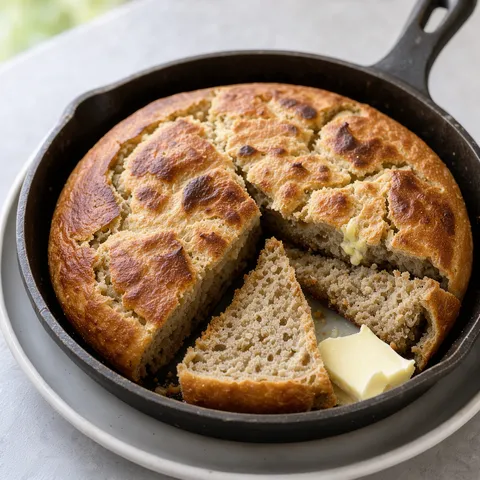
Estonian Barley Soda Bread Karask
An Estonian bread & pastry. Takes 1 hr 5 min, 26 cm, 8 slices. Difficulty: medium.
At a glance
- Total time
- 1 hr 5 min
- Serves
- 26 cm, 8 slices
- Difficulty
- Medium
- Cuisine
- Estonian cuisine
- Dish type
- Bread & pastry
- Allergens
- Gluten, Milk, Eggs
Ingredients
Dry ingredients
- 250 g barley flour
- 100 g plain flour
- 1 tsp bicarbonate of soda
- 1 tsp salt
- 1 tbsp caster sugar
Wet ingredients
- 400 ml kefir (at room temperature)
- 1 egg
- 50 g butter (melted and lukewarm) + 10 g for the pan
Equipment
- Oven
- Cast-iron frying pan
- Precision scales
- Mixing bowls
- Balloon whisk
- Silicone spatula
Method
- Prepare the oven and pan: Preheat the oven to 200°C. Grease the base and sides of a 24-26 cm cast-iron frying pan with the 10 g butter. Karask is traditionally baked as a wide, flat loaf, and the cast-iron pan gives a crisp crust at the edges
- Mix the dry ingredients: Weigh the barley flour, plain flour, bicarbonate of soda, salt and sugar into a large bowl and whisk for 30 sec. If the bicarbonate is not evenly distributed at this stage, the bread will have bitter yellow spots
- Whisk the wet ingredients: In another bowl, whisk the kefir, egg and lukewarm melted butter. The kefir must be at room temperature, as cold kefir makes the butter clump
- Combine: Pour the wet mixture into the dry and mix with a spatula in 15-20 strokes, until no dry flour remains. Do not overmix: barley flour is low in gluten, but the plain flour toughens. The batter should be thick and sticky, like a cake batter. The acid in the kefir reacts with the bicarbonate at once, so put it in the oven without delay
- Spread in the pan: Pour the batter into the pan and level the surface with a wet spatula to about 2 cm thick. Score a light criss-cross on top with the tip of a knife, so the crust cracks evenly
- Bake: Bake on the middle shelf of the 200°C oven for 25-30 min (check at 25 min), until the top is deep golden and browned in the cracks. A skewer pushed into the centre should come out dry, and the bread should come away slightly from the sides of the pan
- Rest: Leave the karask in the pan for 5 min, then turn it out onto a board and let cool slightly for 10 min. Cut while hot, the inside looks doughy, but once it cools a little the moisture evens out
- Serve: Cut into 8 slices. Serve warm with butter and salted herring, cheese or soured cream. The slightly sweet, nutty flavour of the barley should come to the fore
Chef's note
Karask is one of Estonia's best-known barley breads, and as it contains no yeast, it is quick to make. The original recipe uses pork bacon in the dough; here it is made with beef. If you like, add 100 g fried beef bacon dice with their fat (and reduce the salt by 1/2 tsp). It rises in the same way as Brown Soda Bread, the Irish loaf on this site, and what sets karask apart is the barley flour, kefir and egg and baking it flat in a cast-iron pan. Barley flour is sold in health food and organic shops. Buttermilk or diluted yoghurt can be used instead of kefir.
Frequently asked questions
- Why does karask get bitter yellow spots?
- If bicarbonate isn't spread evenly through the dry flours, bitter yellow spots are left in the bread. So whisk the dry ingredients for 30 seconds.
- Why does karask dough go into the oven without resting?
- The acid in the kefir reacts with the bicarbonate straight away. So the dough must go into the oven without resting.
- Why must the kefir be at room temperature?
- Cold kefir makes the butter clump. Use room-temperature kefir and lukewarm melted butter.
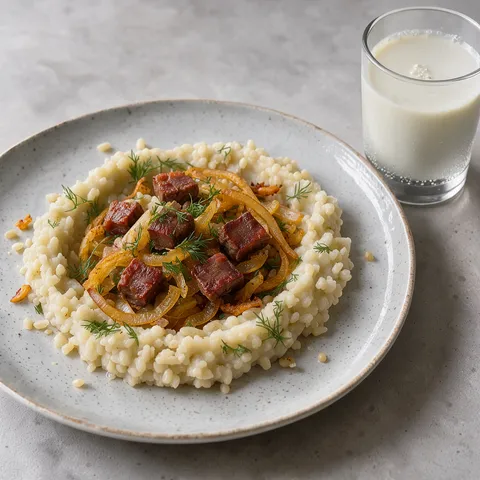 Estonian Potato and Barley Mash1 hr 15 min · Main course
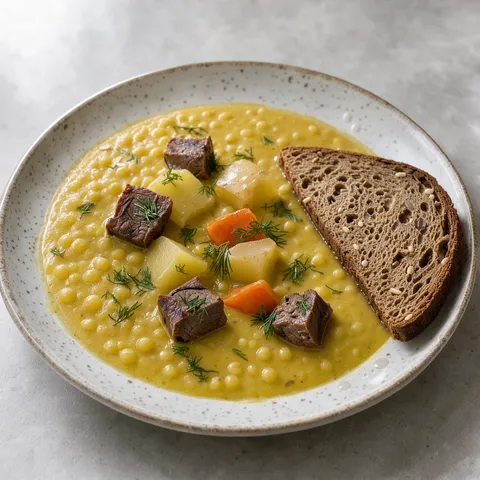 Estonian Smoked Yellow Pea Soup1 hr 25 min · Soup
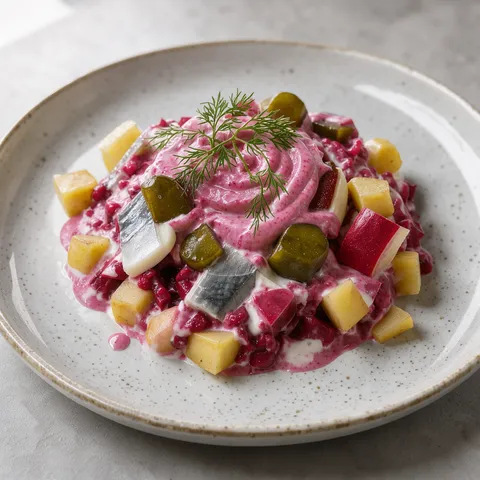 Estonian Beetroot and Herring Salad1 hr 30 min · Meze
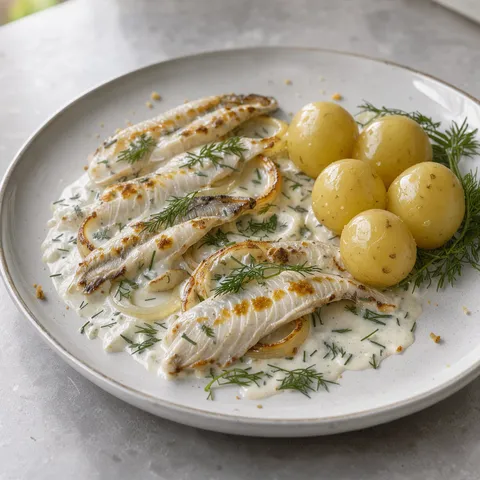 Estonian Baked Sardines with Dill55 min · Main course
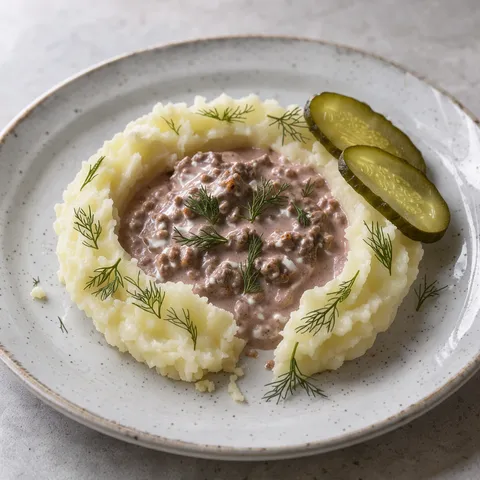 Estonian Soured Cream Mince Sauce55 min · Main course
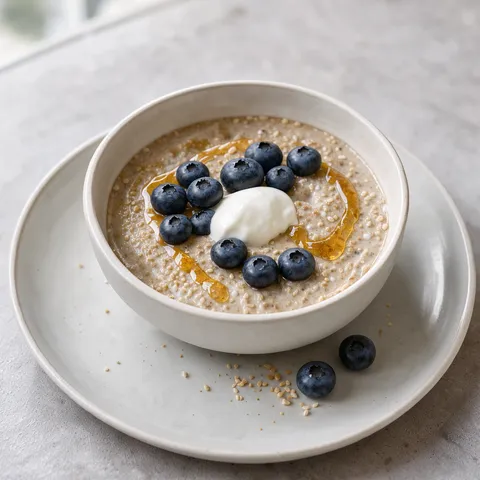 Estonian Toasted Grain Flour with Kefir45 min · Dessert