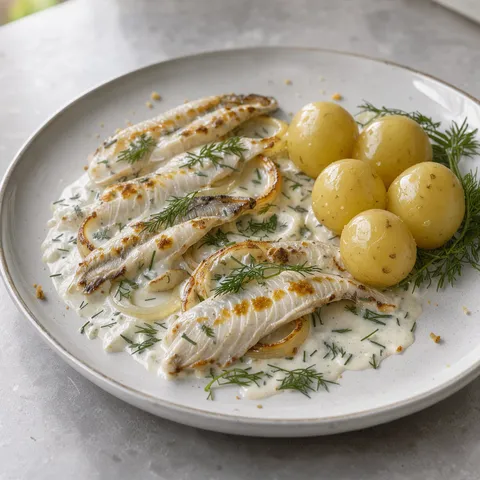
Estonian Baked Sardines with Dill Silgusoust
An Estonian main course. Takes 55 min, Serves 4. Difficulty: medium.
At a glance
- Total time
- 55 min
- Serves
- Serves 4
- Difficulty
- Medium
- Cuisine
- Estonian cuisine
- Dish type
- Main course
- Diet
- Gluten-free
- Allergens
- Milk, Fish, Mustard, Sulphites
Ingredients
Fish
- 800 g small fresh sardines (about 20, in place of Baltic herring)
- 1 tsp salt
- 1/4 tsp black pepper
- 2 tbsp sunflower oil
Sauce
- 250 g soured cream
- 1 tsp mustard
- 1 tbsp lemon juice
- 1 bunch dill (half for the sauce, half for serving)
- 1/4 tsp salt
- 1/4 tsp black pepper
Potatoes
- 1 kg small waxy potatoes
- 1 tsp salt
- 20 g butter
To serve
- 1 lemon
Equipment
- Kitchen scissors
- Chef's knife
- Chopping board
- Baking tray
- Oven
- Mixing bowls
- Balloon whisk
- Saucepan
- Probe thermometer (optional)
Method
- Clean the fish: Cut off the sardine heads with scissors, slit open the bellies lengthways and scrape out the innards with your finger. Rinse the belly cavity under cold running water. Press with your thumbs along both sides of the backbone to open the fish out like a book, then pull out the backbone from tail to head. Pat the butterflied fish dry with kitchen paper, as wet fish steams in the oven
- Salt: Lay the butterflied sardines on a plate, sprinkle the insides with 1 tsp salt and the pepper and leave for 10 min. The salt firms the flesh and stops it falling apart in the oven. Meanwhile, start preheating the oven to 200°C (conventional)
- Start the potatoes: Wash the potatoes and start them, unpeeled, in a saucepan of cold water. Add 1 tsp salt and cook for 15-18 min once boiling, until a knife slides in easily. Starting in cold water cooks them evenly inside and out. The potatoes are timed to be ready with the fish
- Make the sauce: On a chopping board, finely chop half the dill with a chef's knife. In a bowl, whisk the soured cream, mustard, lemon juice, chopped dill, 1/4 tsp salt and the pepper for 1 min. The sauce should be smooth, glossy and slightly sour. Keep it in the fridge until the fish is cooked, as the cold sauce makes a fresh contrast with the hot fish
- Prepare the tray: Drizzle 1 tbsp sunflower oil over a 30×40 cm baking tray. Arrange the sardines skin side up in a single layer, the edges slightly overlapping. Spread the remaining 1 tbsp oil over the fish with your hand. The oil crisps the skin and stops the fish sticking to the tray
- Bake: Put the tray on the middle shelf of the 200°C oven and bake for 15-18 min, until the skin is lightly browned at the edges and the flesh flakes easily with a fork. The internal temperature of the thickest fish should reach 63°C. Overcooked sardines dry out and their smell turns sharp
- Finish the potatoes: Drain the potatoes, peel them while hot if you like, and toss with the 20 g butter. The butter spreads over the hot potatoes at once and makes the skins shine. Keep warm with the lid on
- Serve: Chop the remaining dill. Put the hot potatoes on a plate with 4-5 sardines alongside and drizzle some of the oily juices from the tray over the potatoes. Serve the cold sauce in a separate bowl, scattered with dill, with lemon wedges
Chef's note
Silgusoust (silgu soust, Baltic herring sauce) is a well-known Estonian herring dish. In traditional versions the fish is fried in oil and cooked in an oniony sauce of milk and soured cream, and baked versions with soured cream and dill are also made at school and at home. This recipe is a home adaptation that serves oven-baked fish with a cold sauce of soured cream, mustard and dill on the side. Since Baltic herring (räim) is not available in Türkiye, small fresh sardines or large anchovies are the closest substitute. The sauce keeps for 1 day in the fridge.
Frequently asked questions
- Why do baked sardines end up looking boiled?
- Wet fish steams in the oven. So pat the opened sardines dry with kitchen paper, oil the tray and lay them skin side up.
- How are the sardines cleaned and filleted?
- Cut off the head with scissors, slit the belly open along its length and scrape out the guts. Open the fish like a book and pull out the backbone from tail to head.
- What internal temperature should the sardines reach?
- The thickest fish should reach 63°C inside. Overcooked sardines dry out and smell stronger.
 Estonian Potato and Barley Mash1 hr 15 min · Main course
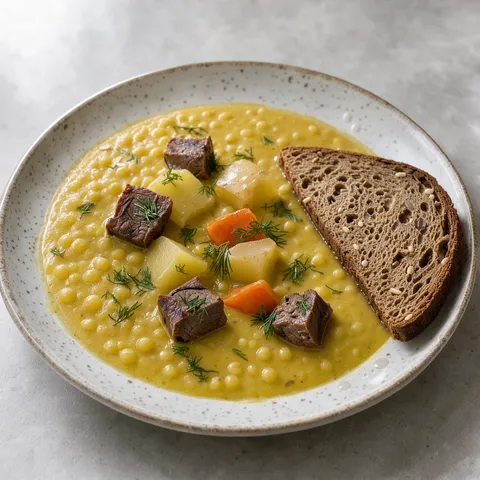 Estonian Smoked Yellow Pea Soup1 hr 25 min · Soup
 Estonian Beetroot and Herring Salad1 hr 30 min · Meze
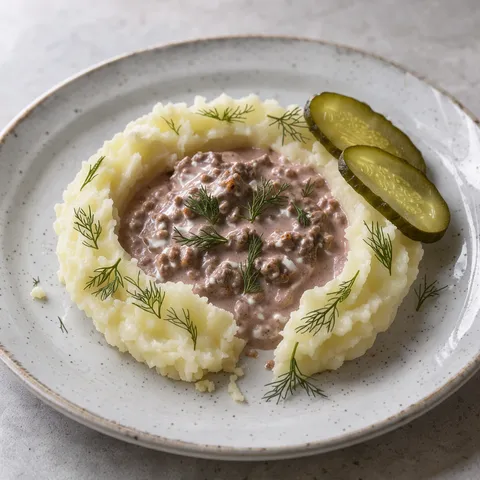 Estonian Soured Cream Mince Sauce55 min · Main course
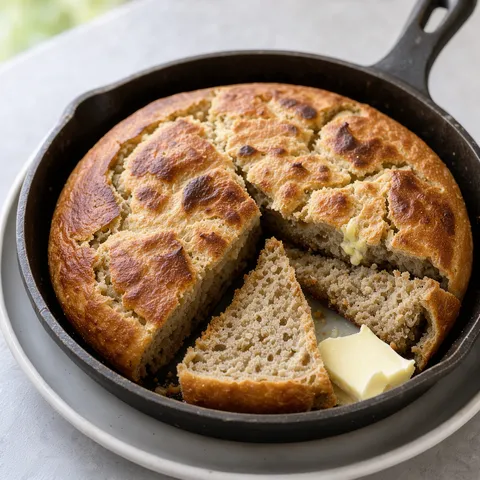 Estonian Barley Soda Bread1 hr 5 min · Bread & pastry
 Estonian Toasted Grain Flour with Kefir45 min · Dessert