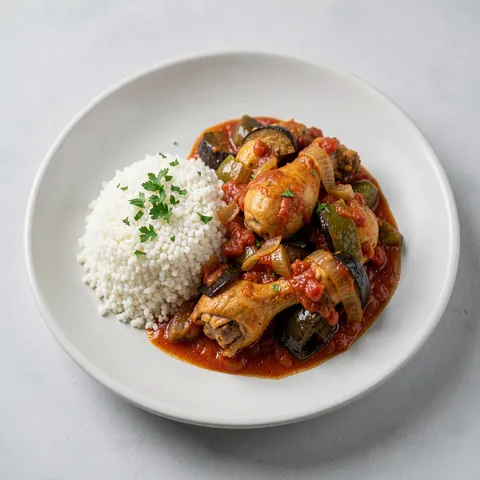
Ivorian Sealed-Pot Chicken Stew Kedjenou
An Ivorian main course. Takes 1 hr 15 min, Serves 4. Difficulty: medium.
At a glance
- Total time
- 1 hr 15 min
- Serves
- Serves 4
- Difficulty
- Medium
- Cuisine
- Ivorian cuisine
- Dish type
- Main course
- Diet
- Gluten-free
- Allergens
- Contains none of the 14 listed allergens
Ingredients
Chicken
- 1 whole chicken (1.5 kg, skin on, free-range chicken is used in Côte d'Ivoire)
- 1.5 tsp salt
- 1/2 tsp black pepper
Vegetables and aromatics
- 2 large onions (thickly sliced into half-moons)
- 4 ripe tomatoes (about 500 g, roughly chopped)
- 1 small aubergine (about 200 g, 2 cm cubes)
- 1 green pepper
- 4 garlic cloves
- 30 g fresh ginger
- 1 habanero or Scotch bonnet chilli (whole, pricked in two places with a needle)
- 3 thyme sprigs
- 2 bay leaves
- 2 tbsp sunflower oil (optional)
- 50 ml water
To serve
- attiéké or plain white rice
- 1/4 bunch flat-leaf parsley
Equipment
- Chef's knife
- Chopping board
- Pestle and mortar
- Cast-iron casserole
- Baking paper
- Probe thermometer
- Kitchen scissors (optional)
Method
- Joint the chicken: Cut the chicken into 8 pieces with poultry shears or a heavy knife: two drumsticks, two thighs, two wings and the breast halved on the bone. Leave the skin on, as its fat melts into the sauce as it cooks. Pat dry with kitchen paper and rub every side with the salt and pepper
- Make the aromatic paste: Pound the garlic and ginger with a pinch of salt using a pestle and mortar to a coarse paste. Pounding draws out more flavour than chopping with a knife, and the paste blends straight into the sauce
- Layer: Spread half the onions over the base of a heavy cast-iron casserole and drizzle with the oil if using. Arrange the chicken pieces on top, skin side up, and spread the aromatic paste over them. Scatter over the tomatoes, aubergine, pepper cut into strips and the remaining onion, and tuck the whole habanero, thyme sprigs and bay leaves in between. Add the 50 ml water down the side. This is the essence of kedjenou: the chicken and vegetables cook almost without water, in their own steam
- Seal the pot: Lay a sheet of baking paper over the mouth of the pot and press the lid down firmly on top. Traditionally the mouth of the clay pot (canari) is sealed with a banana leaf. The paper does the same job and keeps the steam in
- Cook and shake: Put the pot over a medium heat and heat for 8-10 min until you hear bubbling inside. Lower the heat and cook for 45-50 min. Every 10 min, without lifting the lid, pick up the pot by its handles with both hands and shake it a few times, up and down and in circles. A spoon never goes in: shaking stops the base catching and coats the chicken in sauce without breaking it up
- Check: Open the lid, watching out for the steam. The vegetables should have melted into a thick, tomatoey sauce. A thermometer in the thickest part of the thigh should read at least 75°C, and the meat should come away from the bone easily. Remove the habanero, or for chilli lovers crush it with a spoon and stir it into the sauce
- Adjust the sauce: If the sauce is too thin, reduce it uncovered over a low heat for 5 min. If too thick, add a few spoonfuls of hot water. Season to taste. It should be a thick, glossy sauce that coats the chicken
- Plate: Put a mound of attiéké or rice on each plate. Place two pieces of chicken alongside and spoon over plenty of the vegetable sauce. Scatter with chopped parsley and serve hot
Chef's note
Kedjenou is a dish of the Baoulé people, and its name comes from a verb meaning 'to shake'. Traditionally the clay pot is buried in embers with its mouth closed with a banana leaf; a cast-iron casserole is the best home substitute. It is also made with guinea fowl (pintade). In Côte d'Ivoire it is most often served with attiéké, which soaks up the sauce.
Frequently asked questions
- Why is kedjenou cooked with almost no water?
- The essence of the dish is that the chicken and vegetables cook in their own steam, so only 50 ml water goes in the bottom. That is why the pot lid is sealed tightly with baking paper.
- Why isn't a spoon used for kedjenou?
- Without opening the lid, hold the pot by its handles and shake it from time to time. Shaking stops the bottom catching and coats the chicken in sauce without breaking it up.
- How does a whole habanero affect the heat?
- Prick the habanero with a needle and cook it whole, so the heat stays under control. If you like it hot, take the chilli out once cooked and mash it into the sauce with a spoon.
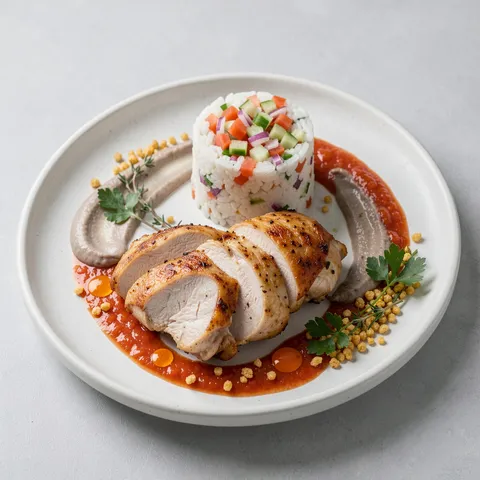 Kedjenou 2.01 hr 25 min · Main course
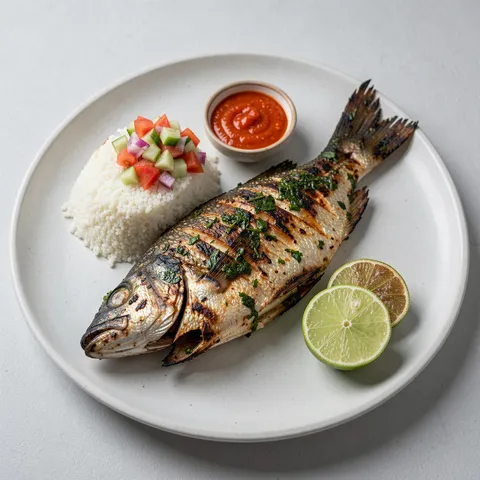 Attiéké and Poisson Braisé1 hr 10 min · Main course
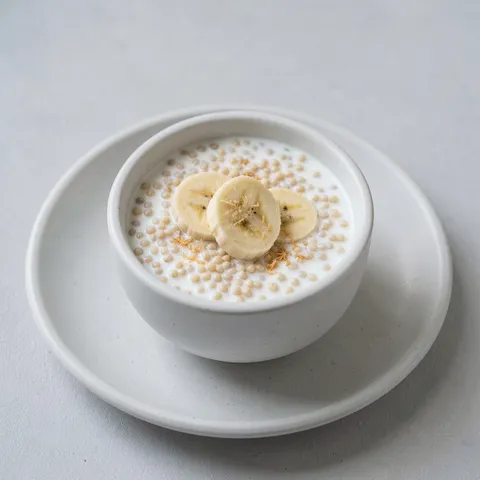 Ivorian Millet and Yoghurt Pudding1 hr · Dessert
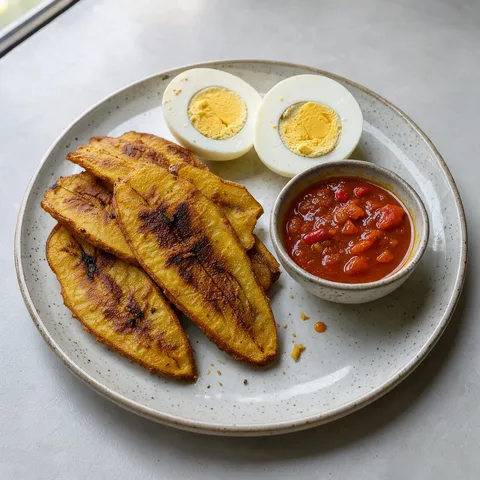 Ivorian Fried Plantain with Chilli Sauce50 min · Starter
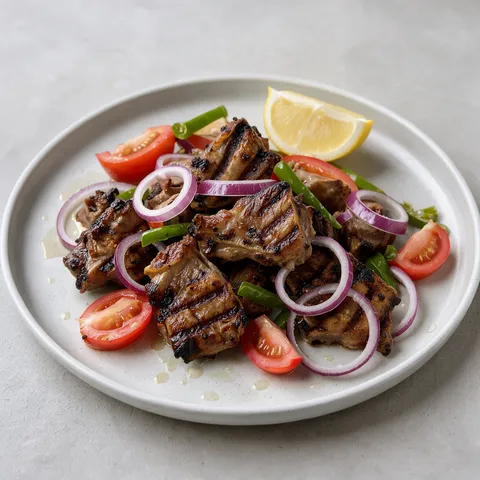 Ivorian Spiced Chargrilled Lamb50 min · Main course
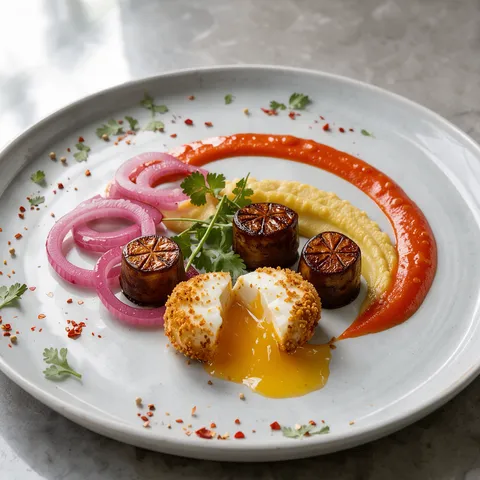 Alloco 2.01 hr 10 min · Starter
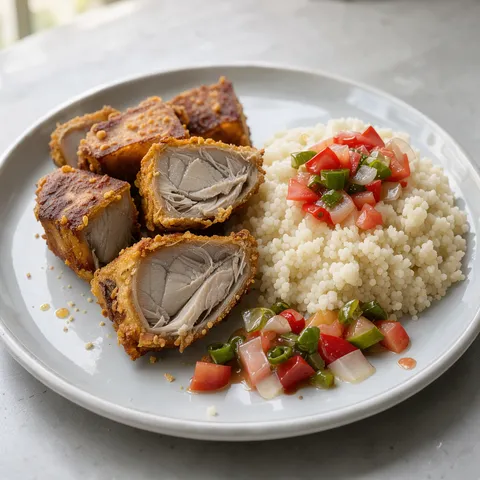 Ivorian Tuna and Cassava Couscous36 min · Main course