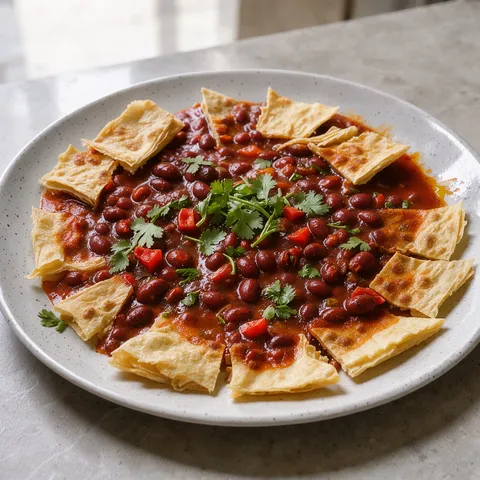
Ugandan Chapati with Spiced Beans Kikomando
An Ugandan main course. Takes 1 hr 20 min · +8 hr soaking, Serves 4. Difficulty: medium.
At a glance
- Total time
- 1 hr 20 min · +8 hr soaking
- Serves
- Serves 4
- Difficulty
- Medium
- Cuisine
- Ugandan cuisine
- Dish type
- Main course
- Allergens
- Gluten, Fish, Mustard
Ingredients
Beans
- 250 g dried borlotti beans
- 1 litre cold water for soaking
- 1 litre water (for boiling)
Stew
- 3 tbsp sunflower oil
- 1 onion (finely chopped)
- 2 garlic cloves (crushed)
- 1 carrot (grated)
- 1 green pepper (diced)
- 1 tbsp tomato paste
- 2 tomatoes (grated)
- 1 tsp curry powder
- 1 tsp salt
- 1/2 tsp black pepper
- 2 tbsp chopped coriander
Chapati
- 400 g plain flour
- 1 tsp salt
- 1 tsp caster sugar
- 3 tbsp sunflower oil (for the dough)
- 230 ml lukewarm water
- 2 tbsp plain flour (for the worktop)
- 4 tbsp sunflower oil (for folding and cooking)
Equipment
- Mixing bowls
- Pressure cooker
- Colander
- Cling film
- Heavy-based saucepan
- Box grater
- Wooden spoon / spatula
- Rolling pin / oklava
- Cast-iron frying pan
- Chef's knife
- Chopping board
Method
- Soak and pressure-cook the beans: Soak the beans in 1 litre cold water for 8 hr, then drain. Bring them to the boil with 1 litre water in a 6 litre pressure cooker and skim (5 min), then lock the lid, cook over a low heat for 15 min once the cooker reaches pressure and let the pressure release naturally (about 10 min). The beans should be soft but whole. Drain, reserving 300 ml of the cooking water. In an ordinary pan this step takes 1 hr 15 min
- Knead the chapati dough: While the beans cook, mix the flour, salt and sugar in a bowl, add the 3 tbsp oil and the lukewarm water and bring together. Knead on the worktop for 8 min until very soft and elastic. Cover with cling film and rest for 20 min. Ugandan chapati is richer and softer than its Indian cousin, and the kneading and resting give it that softness
- Build the stew base: Heat the 3 tbsp oil in a 24 cm heavy-based saucepan over a medium heat, soften the onion for 6 min and stir in the garlic for 1 min. Add the carrot and green pepper and cook for 3 min, then add the tomato paste and curry powder and fry for 1 min
- Cook the stew: Add the grated tomato and cook for 4 min. Add the beans, the 300 ml cooking water, salt and pepper and cook over a low heat for 15 min until the sauce thickens. Crush some of the beans lightly against the side of the pan with a wooden spoon to thicken the sauce. Stir in the coriander and keep hot
- Fold the chapatis: Divide the dough into 8 pieces (about 80 g each). Roll each piece out thinly into a 20 cm circle, brush the surface with half a tsp of oil, roll it up tightly and coil the roll over itself like a snail. Rest the snails for 5 min. This folding creates layers that open up leaf by leaf as they cook
- Roll out and cook the chapatis: Roll each snail out again into a 20 cm circle. Heat a 28 cm cast-iron frying pan over a medium heat, put a chapati in the dry pan and cook for 1 min until bubbles appear on the surface. Turn, brush the top with half a tsp of oil and cook for 1 min, then turn again, brush the other side with oil and cook for another 30 sec. Both sides should be golden-flecked. 8 chapatis take about 20 min. Wrap the cooked ones in a stack in a cloth
- Cut into strips: Roll up the chapatis and cut them into 2 cm wide strips with a chef's knife
- Serve: Pile the strips from two chapatis on each plate, pour over plenty of bean stew and toss the strips lightly through the sauce. In Kampala kikomando is loved as a cheap, filling street food by students and workers
Chef's note
Kikomando is a Ugandan street food that brings chapati and beans together, and there are different stories about where its name comes from. The original recipe usually uses ready-made soup and spice mixes; here it is flavoured with tomato paste and curry powder. Leftover chapatis can be used the next day for an egg-filled rolex. Dried black-eyed beans work in place of borlotti beans too.
Frequently asked questions
- How do I get layered chapatis for kikomando?
- Roll the dough out thin, brush it with oil, roll it up tightly and coil it like a snail. This folding creates layers that open up leaf by leaf as the chapati fries.
- How long do the borlotti beans take without a pressure cooker?
- In an ordinary pot the bean step takes 1 hour 15 minutes. Soak the borlotti beans for 8 hours beforehand.
- How is kikomando served?
- Roll up the chapatis and cut them into strips 2 cm wide. Pile the strips on a plate and pour the bean stew over them.
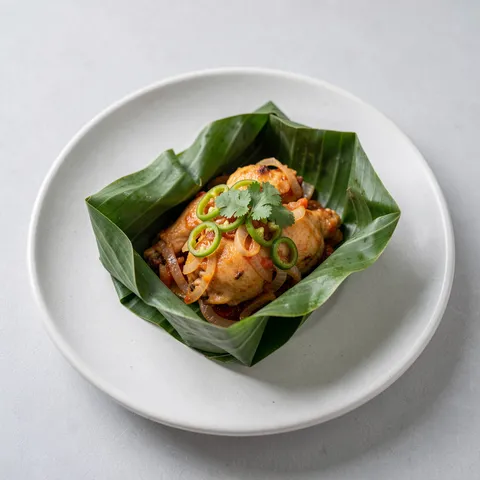 Chicken Steamed in Banana Leaves2 hr 15 min · Main course
 Ugandan Chapati and Omelette Roll1 hr 15 min · Bread & pastry
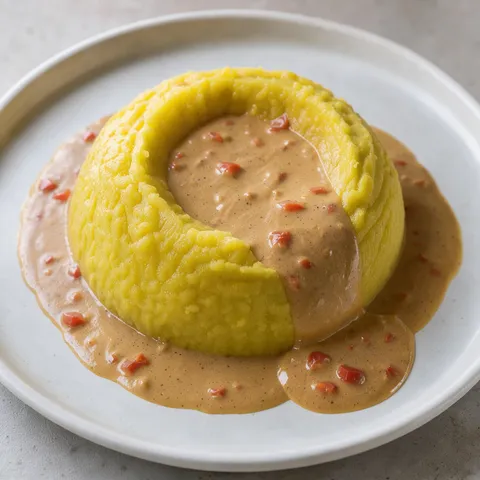 Matooke and Binyebwa1 hr 15 min · Main course
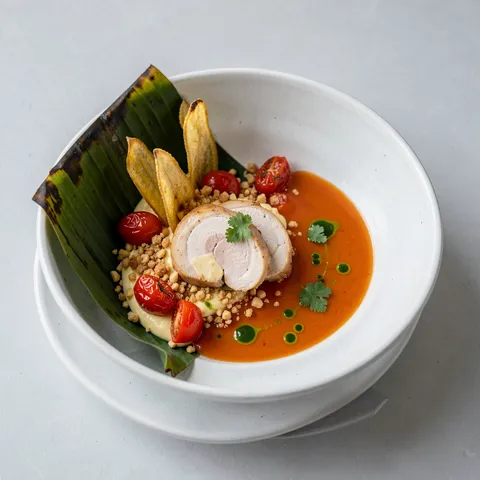 Luwombo 2.01 hr 15 min · Main course
 Ugandan Plantain and Bean Stew1 hr 3 min · Main course
 Ugandan Fried Banana Dough Diamonds40 min · Bread & pastry