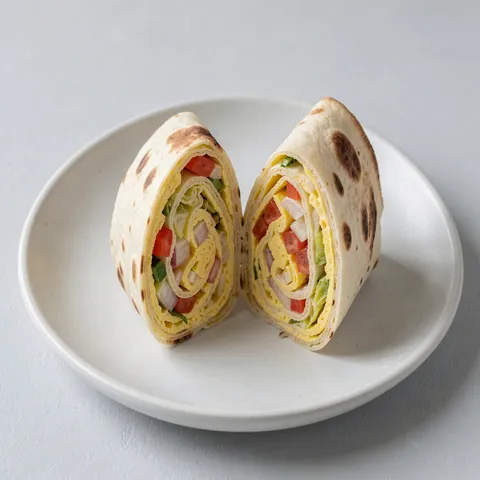
Ugandan Chapati and Omelette Roll Rolex
An Ugandan bread & pastry. Takes 1 hr 15 min, 4 pieces (4 servings). Difficulty: medium.
At a glance
- Total time
- 1 hr 15 min
- Serves
- 4 pieces (4 servings)
- Difficulty
- Medium
- Cuisine
- Ugandan cuisine
- Dish type
- Bread & pastry
- Allergens
- Gluten, Eggs
Ingredients
Chapati (makes 4)
- 300 g plain flour
- 1/2 tsp salt
- 1 tsp sugar
- 3 tbsp sunflower oil
- 170-180 ml lukewarm water
- 4 tbsp sunflower oil for folding and cooking
Omelette
- 8 eggs
- 1 small red onion
- 1 medium tomato
- 100 g white cabbage
- 1/2 green pepper
- 1/2 tsp salt
- 1/4 tsp black pepper
- 2 tbsp sunflower oil
Equipment
- Mixing bowls
- Rolling pin / oklava
- Frying pan
- Chef's knife
- Chopping board
- Silicone spatula
Method
- Knead the dough: Mix the flour, salt and sugar in a bowl, add the oil and rub it in with your fingers. Gradually add the lukewarm water and knead for 8 min until you have a soft, smooth dough that comes away from your hands. Cover and rest for 20 min. The rested gluten relaxes, so the dough doesn't spring back when rolled
- Fold: Divide the dough into 4 balls. Roll each ball into a thin 25 cm circle, brush the surface with 1 tsp oil and roll it up tightly from one edge like a pencil. Coil the roll around itself like a snail and tuck the end underneath. Rest for 10 min. This folding gives the chapati a soft texture with layers that pull apart
- Roll out: Press each snail down lightly and roll it out into a circle 20-22 cm across and about 3 mm thick
- Cook the chapatis: Heat a frying pan over a medium-high heat. Put a chapati in the dry pan and turn it after 1 min, when bubbles appear on the surface. Brush the top with 1 tsp oil, turn and brush the other side with oil too. Cook for 3 min in total until both sides are golden-flecked and puffed in places. Stack under a cloth, where they stay soft in their own steam
- Chop the vegetables: Cut the cabbage into very thin strips, the onion and pepper thinly, and the tomato into small dice after removing the seeds. The seedy juice of the tomato would make the omelette watery and stop it sticking to the chapati
- Prepare the eggs: For each rolex, beat 2 eggs with a fork in a bowl with a quarter of the vegetables, salt and pepper. Salt draws water out of the vegetables, so beat just before cooking
- Cook the omelette: Heat 1/2 tbsp oil in the frying pan over a medium heat, pour in the egg and tilt the pan to spread it into a 20 cm circle. After 1 min, while the top is still wet, lay the chapati on the omelette and press down with a spatula. The wet egg sticks to the chapati like glue. After 1 min, flip with the spatula and heat the chapati side for 30 sec
- Roll: Transfer to a chopping board, omelette side up, and roll up tightly from one edge. Cut in half diagonally with a knife. Make the remaining three rolexes in the same way
- Plate: Stand two halves upright on each plate, cut sides up, so the spiral layers of chapati and omelette show. Serve hot
Chef's note
The name rolex comes from 'rolled eggs' said in a Ugandan accent. It is the best-loved street food of Kampala, sold from morning until late at night, and is now considered one of the emblematic dishes of the country. You can make the chapatis in advance and keep them wrapped in a cloth, so that at serving time only the omelette needs cooking.
Frequently asked questions
- How does the omelette stick to the chapati in a rolex?
- Lay the chapati over the omelette while its top is still wet and press down with a spatula. Wet egg sticks to the chapati like glue.
- Why are the tomato seeds removed?
- The seedy juice of the tomato thins the omelette and stops the chapati sticking. That is why the seeds are removed and the tomato is diced small.
- How do you get layered, soft chapati?
- Brush oil over the rolled-out circle and roll it up. Coiling the roll like a snail and rolling it out again gives a layered texture. Cooked chapatis stay soft in their own steam under a cloth.
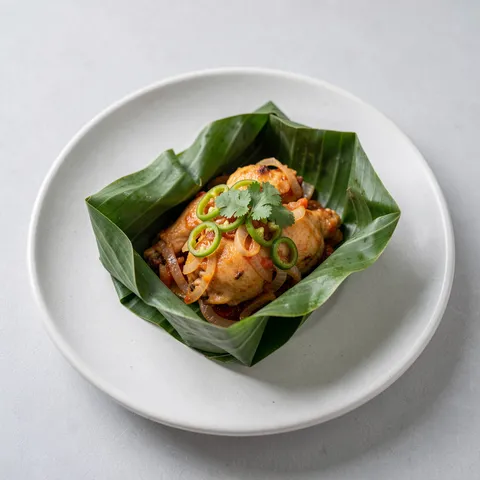 Chicken Steamed in Banana Leaves2 hr 15 min · Main course
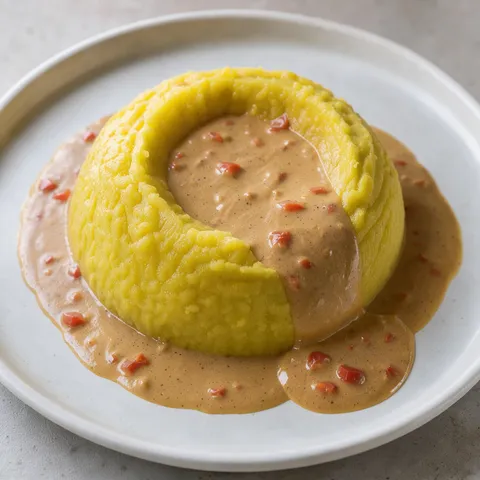 Matooke and Binyebwa1 hr 15 min · Main course
 Luwombo 2.01 hr 15 min · Main course
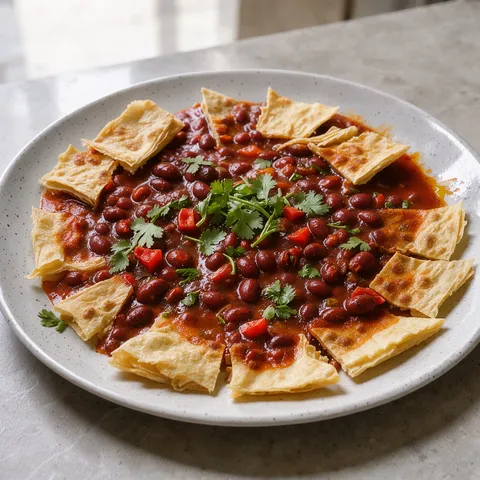 Ugandan Chapati with Spiced Beans1 hr 20 min · Main course
 Ugandan Plantain and Bean Stew1 hr 3 min · Main course
 Ugandan Fried Banana Dough Diamonds40 min · Bread & pastry