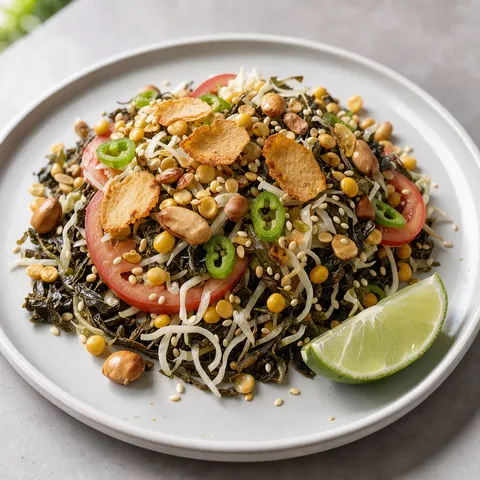
Burmese Fermented Tea Leaf Salad Lahpet Thoke
A Burmese meze. Takes 45 min · +2 hr soaking, Serves 4. Difficulty: medium.
At a glance
- Total time
- 45 min · +2 hr soaking
- Serves
- Serves 4
- Difficulty
- Medium
- Cuisine
- Burmese cuisine
- Dish type
- Meze
- Diet
- Gluten-free
- Allergens
- Fish, Crustaceans, Peanuts, Sesame
Ingredients
Tea leaves
- 120 g fermented tea leaves (lahpet)
- 3 tbsp garlic oil (reserved from frying)
- 1 tbsp lime juice
- 1 tbsp fish sauce
- 1 garlic clove (crushed)
- 1 green chilli (finely chopped)
Crunchy toppings
- 80 g yellow split peas
- 60 g raw skinned peanuts
- 8 garlic cloves (thinly sliced)
- 2 tbsp white sesame seeds
- 2 tbsp dried shrimp (optional)
- 650 ml sunflower oil (for frying)
- 1/4 tsp salt
Vegetables
- 200 g white cabbage (shredded hair-thin)
- 2 tomatoes (deseeded, thinly sliced)
- 1 green chilli (thin rings)
To serve
- 1 lime (4 wedges)
Equipment
- Mixing bowls
- Saucepan
- Probe thermometer
- Colander
- Frying pan
- Chef's knife
- Chopping board
- Pestle and mortar (optional)
Method
- Soak the split peas: Rinse the yellow split peas and soak them in plenty of cold water for 2 hr. Drain and pat thoroughly dry with kitchen paper: wet pulses make the hot oil spit and do not crisp up
- Heat the oil: Put the 650 ml oil in a small, deep 14 cm saucepan: it will be about 4 cm deep. Heat over medium heat to 170°C, checking with a thermometer. While the oil heats, toast the peanuts in a dry frying pan over medium-low heat for 6-8 min, until flecked with gold, adding the sesame seeds for the last 1-2 min, and transfer to a plate. If using dried shrimp, warm them in the same pan for 2 min and pound roughly in a mortar
- Fry the split peas: Add the split peas to the oil in two batches and fry for 4-5 min, stirring occasionally with a slotted spoon. When the bubbling dies down and the peas turn golden and hard, lift them out with the slotted spoon onto kitchen paper and sprinkle with salt while hot. They crisp up further as they cool
- Fry the garlic: Turn off the heat and wait 3-4 min for the oil to drop to 150°C. Add the garlic slices and fry over low heat, stirring constantly, for 2-3 min, until light golden, then lift out immediately with the slotted spoon. Garlic keeps colouring after it leaves the pan, and garlic that darkens turns bitter. Set aside 3 tbsp of the frying oil in a small bowl: this garlic oil goes into the tea leaves. Once cool, strain the remaining oil and use it for other frying
- Prepare the tea leaves: Put the lahpet in a bowl, add the reserved 3 tbsp garlic oil, lime juice, fish sauce, crushed garlic and chopped green chilli and mix. Leave to infuse for 10 min: the leaves absorb the oil and turn glossy. Taste: lahpet is bitter and sour, and if it is too harsh, add another drop of oil
- Prepare the vegetables: Shred the cabbage hair-thin with a sharp knife, leave it in cold water for 5 min and drain well: it turns crisp. Deseed and thinly slice the tomatoes and slice the chilli into thin rings
- Mix: Just before serving, combine the cabbage, tomatoes, chilli and tea leaf mixture in a large bowl. Add three-quarters of the split peas, peanuts, garlic, sesame seeds and shrimp and mix quickly by hand or with two spoons. The crunchy toppings soften if they wait, so the mixing is done just before the salad goes to the table
- Plate: Put the salad on a flat plate in a loose mound. Scatter the remaining crunchy toppings over it, so that golden garlic, yellow split peas and peanuts show among the dark green tea leaves. Put the lime wedge at the side and serve immediately
Chef's note
Lahpet is made by steaming tea leaves and fermenting them in containers for months, and it is bought ready-made. Lahpet is hard to find in Türkiye and Europe. If unavailable, steep about 25 g loose green tea leaves in boiling water for 20 min, drain and squeeze thoroughly by hand (it makes about 120 g) and use in place of lahpet. The lime, fish sauce and garlic are added in the "Prepare the tea leaves" step, but in this case infuse for 20 min instead of 10 min, so that the leaves take on the sour, salty flavour fully. This substitute comes close to the sour, astringent taste but does not give the depth of fermented lahpet, so the identity of the dish remains slightly different. In Myanmar lahpet is offered to guests on a lacquered tray with separate compartments for the crunchy toppings (lahpet ohk), and everyone makes their own mix. Dried shrimp and fish sauce are also traditional products bought ready-made. If the lahpet you buy is already oily and spiced, reduce the garlic oil and lime. Tea leaves contain caffeine: bear this in mind at dinner.
Frequently asked questions
- When are the crunchy toppings mixed into lahpet thoke?
- Mix them in just before serving. If the toppings wait, they go soft.
- Why does fried garlic turn bitter?
- Garlic keeps colouring after it leaves the pan, and garlic that darkens turns bitter. So lift it out with a slotted spoon as soon as it turns light golden.
- Why are the split peas dried before frying?
- Wet pulses make hot oil spit and don't crisp up. So dry the soaked yellow split peas thoroughly with kitchen paper.
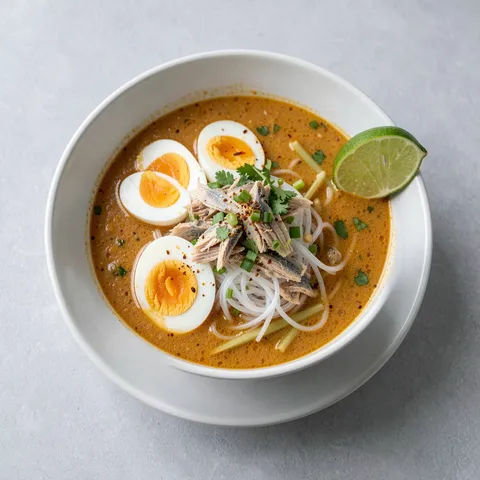 Burmese Lemongrass Fish Soup with Rice Noodles1 hr 10 min · Soup
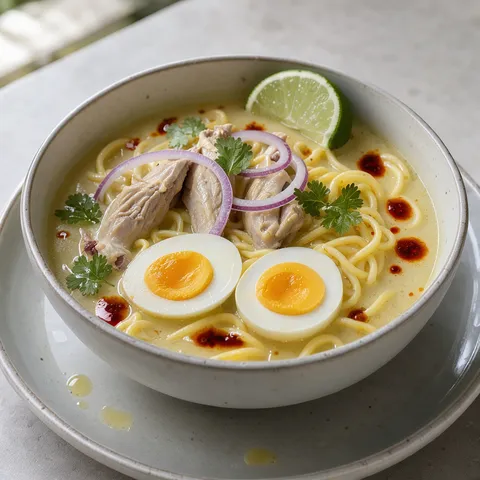 Burmese Coconut Chicken Noodle Soup1 hr 5 min · Main course
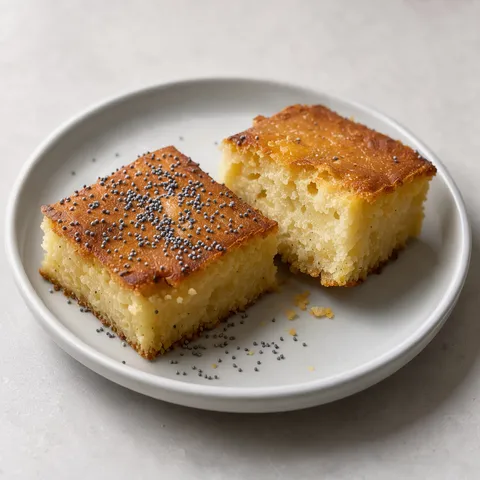 Burmese Semolina Cake with Coconut Milk1 hr 40 min · Dessert
 Mohinga 2.01 hr 25 min · Main course
 Shan Rice Noodles with Chicken Sauce55 min · Main course
 Shan Homemade Chickpea Tofu Salad35 min · Meze