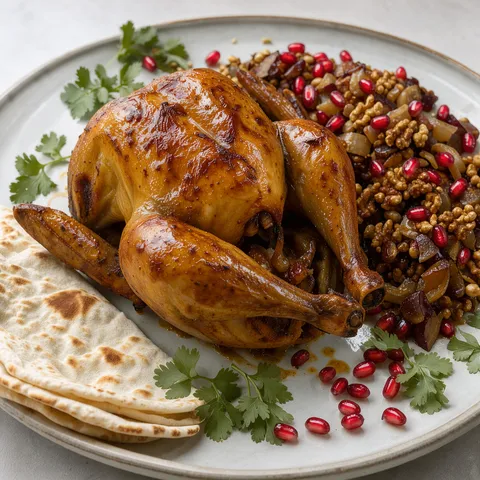
Lankaran-Style Chicken with Walnuts Levengi
An Azerbaijani main course. Takes 2 hr, Serves 4. Difficulty: medium.
At a glance
- Total time
- 2 hr
- Serves
- Serves 4
- Difficulty
- Medium
- Cuisine
- Azerbaijani cuisine
- Dish type
- Main course
- Allergens
- Gluten, Milk, Tree nuts
Ingredients
Chicken
- 1 whole chicken (about 1.6 kg)
- 1 tsp salt
- 1/2 tsp black pepper
- 30 g softened butter
Levengi filling
- 250 g walnuts
- 3 medium onions (about 450 g)
- 80 g alcha lavashana (sour plum leather) or 120 g sour dried plums
- 150 ml hot water
- 2 tbsp pomegranate molasses (if no fruit leather)
- 1 tsp salt
- 1/2 tsp black pepper
- 1/2 tsp coriander seeds (ground, optional)
To serve
- seeds of 1/2 pomegranate
- 1/2 bunch coriander
- 2 Lavash (Basics) or plain pilaf
Equipment
- Mixing bowls
- Muslin
- Food processor
- Box grater
- Oven
- Baking tray
- Probe thermometer
Method
- Soak the fruit leather: Tear the lavashana into small pieces, leave it in the 150 ml hot water for 10 min, then mash with a fork to a thick purée. Lavashana is the sour element of levengi and cuts through the rich sweetness of the walnuts and onion. If you cannot find fruit leather, soak the sour dried plums in the same water for 15 min, remove the stones and mash, topping up the sourness with pomegranate molasses if needed
- Prepare the onions: Grate the onions, put the grated onion in muslin and squeeze out the juice thoroughly. Unsqueezed onion makes the filling watery: it overflows as it cooks inside the chicken and you end up with a steamed stuffing. About 250 g of squeezed onion should remain
- Grind the walnuts: Pulse the walnuts in a food processor to fine sand, stopping before they release their oil and turn to a paste. In Lankaran the walnuts are pounded on a stone: the aim is a slightly grainy texture
- Mix the filling: Knead the walnuts, onion, plum purée, salt, pepper and coriander together by hand in a bowl for 2 min. The mixture should be a thick, spreadable paste and should taste distinctly sour and salty: it balances out when it meets the neutral meat of the chicken. Set aside 3 tbsp of the filling
- Prepare the chicken: Preheat the oven to 190°C. Pat the chicken dry inside and out with kitchen paper. Loosen the skin from the breast and thighs with your fingers, taking care not to tear it. Spread the 3 tbsp of reserved filling in a thin layer under the skin over the breast and thighs. Stuff the remaining filling into the cavity without packing it in: the filling expands a little as it cooks
- Close and truss: Close the opening of the cavity with cocktail sticks, like a seam. Tie the ends of the drumsticks together with kitchen string and tuck the wings under the back. Rub the outside with salt and pepper and spread the softened butter over the whole surface
- Roast: Put the chicken breast side up in a roasting tin and add 100 ml water to the bottom. Roast at 190°C for 1 hr 20 min, spooning the liquid from the bottom over it every 20 min. If the skin gets too dark in the last 20 min, cover loosely with foil. The thickest part of the thigh and the centre of the stuffing should read at least 74°C on a thermometer: when you wiggle the leg, the joint should be loose and the juices should run clear
- Rest: Rest the chicken for 10 min after it comes out of the oven: the juices redistribute through the meat. Remove the cocktail sticks and string, and strain the fatty juices from the bottom of the tin into a small sauce jug
- Plate: Put the whole chicken on a large plate and spoon some of the levengi from the cavity alongside in a thick mound. Scatter over the pomegranate seeds and coriander leaves. At the table the chicken is carved into pieces, and each piece is eaten with a little levengi and lavash or pilaf
Chef's note
In Lankaran and Astara levengi is made with both chicken and fish: the same filling is stuffed into the belly of a fish too. Lavashana is a sour plum leather dried at home in Azerbaijan but mostly bought ready-made; choose one without additives. The chicken generously serves 4: for a larger chicken, add 10 min to the cooking time for every 250 g.
Frequently asked questions
- Why is the juice squeezed out of the onion for Levengi?
- Unsqueezed onion makes the filling watery. The filling then overflows as it cooks inside the chicken and turns into a steamed stuffing. Squeeze the grated onion thoroughly in muslin, and about 250 g should remain.
- How do you tell when Levengi is cooked?
- With a thermometer, the thickest part of the thigh and the centre of the stuffing should be at least 74°C. When you move the leg the joint is loose, and the juices run clear. Rest the chicken for 10 minutes after it comes out of the oven.
- What can I use if I have no lavashana?
- If you can't find lavashana, soak sour dried plums in the same water for 15 minutes, remove the stones and mash them. If needed, make up the sourness with pomegranate molasses. Lavashana is the sourness of levengi and cuts through the rich sweetness of the walnuts and onions.
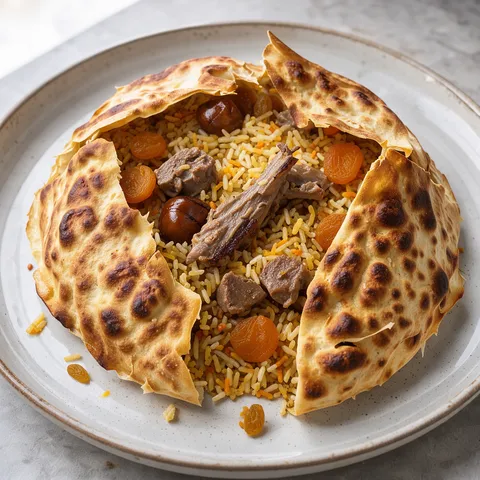 Shah Plov3 hr · Main course
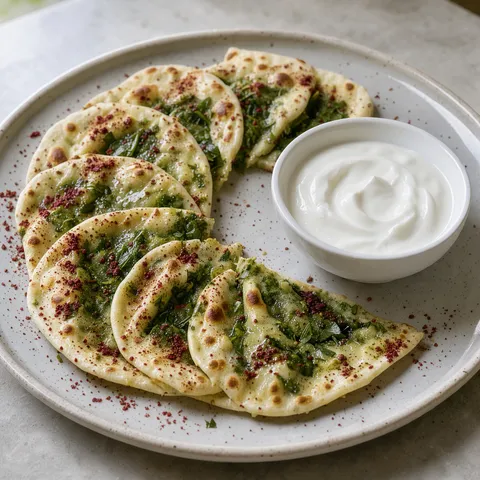 Azerbaijani Herb-Filled Flatbreads1 hr 20 min · Bread & pastry
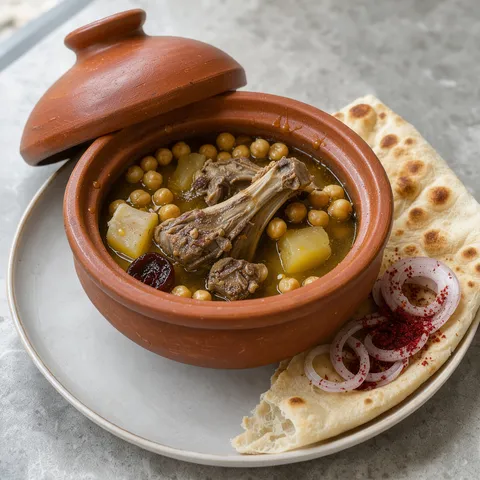 Sheki-Style, Cooked in Clay Pots4 hr 45 min · Soup
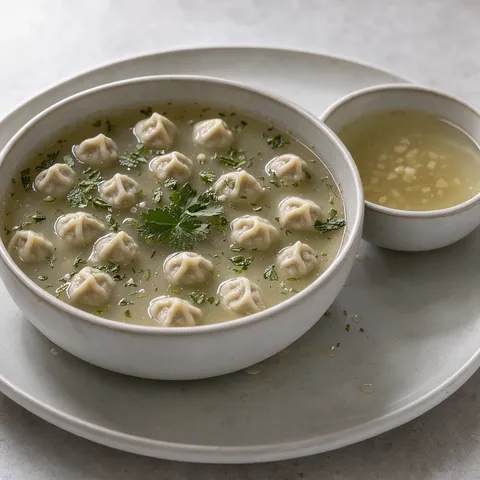 Tiny Lamb Dumpling Soup1 hr 50 min · Soup
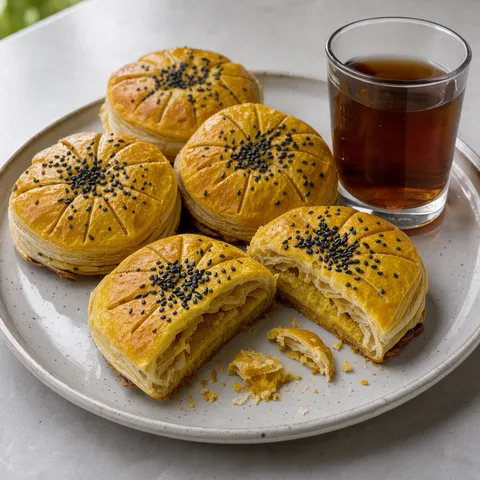 Layered Novruz Pastries with Fennel and Turmeric2 hr 55 min · Bread & pastry
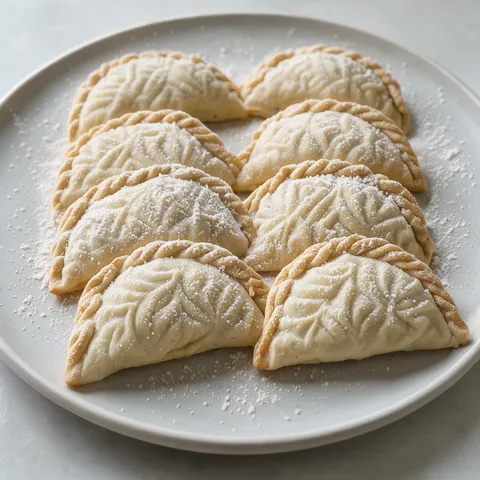 Novruz Pastries with Almonds and Cardamom2 hr 10 min · Dessert