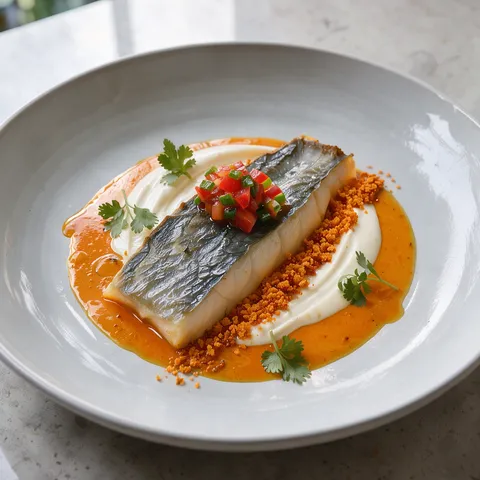
Moqueca Baiana 2.0
A Brazilian main course. Takes 1 hr 25 min, Serves 4. Difficulty: challenging.
At a glance
- Total time
- 1 hr 25 min
- Serves
- Serves 4
- Difficulty
- Challenging
- Cuisine
- Brazilian cuisine
- Dish type
- Main course
- Allergens
- Gluten, Milk, Eggs, Fish, Tree nuts, Celery, Sulphites
Ingredients
Fish
- 4 sea bass fillets (150 g each, skin on, pin-boned)
- 6 g salt
- grated zest of 1 lemon
- 1 tbsp neutral oil
- 15 g butter
Fish stock and pirão
- heads and bones of the sea bass (gills removed, ask the fishmonger)
- 1 litre cold water
- 1/2 onion
- 1 bay leaf
- 50 g cassava flour
- 1 tsp dendê
- salt
Coconut milk
- 100 g unsweetened desiccated coconut
- 350 ml hot water (about 85°C)
Moqueca emulsion
- 1 small onion
- 1 red pepper
- 2 ripe tomatoes
- 2 garlic cloves
- 1/2 fresh chilli
- 1/2 bunch coriander stalks
- 40 ml dendê (palm oil)
- 40 g cold butter (cubed)
- juice of 1/2 lemon
- salt
Vinagrete
- 2 tomatoes (skinned, deseeded)
- 1/2 yellow pepper
- 1/2 red onion
- 1 tbsp coriander leaves (chopped)
- juice of 1/2 lemon
- 2 tbsp olive oil
- salt
Dendê farofa
- 80 g cassava flour
- 15 g dendê
- 15 g butter
- 1 garlic clove (grated)
- 1/2 tsp salt
- grated zest of 1/2 lemon
To finish
- coriander shoots
- flaky salt
Equipment
- Saucepan
- Ladle
- Fine sieve / chinois
- Blender
- Muslin
- Balloon whisk
- Stick blender
- Chef's knife
- Frying pan
- Plating tweezers
- Cast-iron frying pan
- Silicone spatula
- Probe thermometer
Method
- Start the fish stock: Wash the heads and bones in cold water, as blood and traces of gill make the stock bitter. Put them in a pan with the cold water, onion and bay leaf. As it nears the boil, skim off the foam with a ladle, lower the heat and simmer gently for 25 min. A hard boil clouds the stock and gives it a glue-like taste. Pass through a fine sieve and keep about 600 ml clear stock warm
- Make the coconut milk: While the stock cooks, blend the coconut with the hot water in a blender for 2 min, pour into muslin and squeeze out every last drop. You get about 300 ml thick milk, which is the body of the emulsion
- Cook the moqueca base: Roughly chop the onion, pepper, tomatoes, garlic and coriander stalks. Cook with 1 tbsp dendê in a pan over medium-low heat for 12 min, without colouring, until the vegetables release their juices and soften. Add 200 ml of the coconut milk and 200 ml of the fish stock and simmer gently for 10 min. This stage gives the sauce of a classic moqueca in concentrated form
- Make the emulsion: Blend the base for 1 min, until completely smooth, and press through a fine sieve. Return to the pan and bring to 70-80°C over low heat. Whisk in the cold butter cubes one at a time, then add the remaining dendê in a thin thread. The sauce should be glossy, orange and thick enough to coat a spoon. It splits if it boils, so keep it warm at about 60°C until serving, and finish with the lemon juice and salt
- Make the pirão cream: Bring the remaining 350 ml fish stock to the boil in a small saucepan. Sprinkle in the cassava flour like rain, whisking constantly, and cook over low heat for 8 min, scraping the bottom. Blend with a stick blender for 30 sec into a silky purée and season with dendê and salt. Loosen with the remaining coconut milk until it falls slowly from a spoon. In the classic, pirão is coarse and thick, but here it becomes a cream spread under the fish
- Cut the vinagrete: Cut the tomatoes, yellow pepper and red onion into 3 mm dice (brunoise). Mix with the lemon juice, olive oil, coriander and salt and leave for 10 min. Drain off the excess liquid before serving, otherwise it leaks onto the plate and breaks the emulsion. This vinagrete is the fresh, raw counterpart of the vegetable rings of the classic
- Toast the dendê farofa: Melt the butter and dendê in a pan over medium heat and stir the garlic for 30 sec. Add the cassava flour and toast, stirring constantly, for 5-6 min, until orange-gold and crunchy like sand. Add the lemon zest and salt and spread on a plate lined with kitchen paper to cool slightly
- Prepare the fish: Pull out any remaining pin bones with tweezers. Scrape the back of a knife over the skin to remove moisture and pat thoroughly dry with kitchen paper. Sprinkle the flesh side with the salt and lemon zest and leave for 10 min, as the salt firms the flesh slightly. Dry the surface again before cooking, as damp skin will not crisp
- Cook the fish: Heat a cast-iron pan over medium-high heat and add the neutral oil. Lay the fillets in skin side down and press with a spatula for 20 sec so the skin does not curl. Cook for 4 min without touching, until the skin is deep golden and crisp and the flesh is 3/4 opaque from the edges. Turn, add the butter and spoon the foaming butter over the flesh for 30-60 sec. Take off the heat when the thickest part reaches 52-55°C on a thermometer. The flesh should flake into thin layers but stay juicy
- Plate: In the centre of a warm deep plate, put 2 tbsp pirão cream and spread lightly with the back of a spoon. Pour the orange moqueca emulsion around the cream like a pool. Place the fish skin side up on the cream. Put a small mound of drained vinagrete on the skin and a line of dendê farofa beside the fish. Finish with coriander shoots, a few grains of flaky salt and a few drops of dendê on the emulsion. Serve at once, before the skin loses its crispness
Chef's note
The four elements of the classic moqueca are separated here: the coconut and dendê sauce becomes an emulsion bound with butter, the vegetable rings become a raw vinagrete, the pirão becomes a silky cream from the fish stock, and the fish is cooked with crisp skin instead of being poached in the sauce. Farofa is a side dish in the classic, but here it joins the plate as the only crunchy texture. If you buy the fillets ready-prepared, ask the fishmonger for the sea bass heads and bones for the stock.
Frequently asked questions
- Why does the moqueca emulsion split?
- The sauce splits if it boils. Whisk in cold butter cubes at 70-80°C and keep the sauce warm at about 60°C until serving.
- How do I get crisp fish skin?
- Scrape the skin with the back of a knife and dry it well with kitchen paper, then dry the surface again before cooking, as damp skin won't crisp. Cook the fillets skin-side down, pressing with a spatula.
- Why does fish stock turn bitter or cloudy?
- Blood and gill residue on the heads and bones make the stock bitter, so rinse them in cold water first. A hard boil makes it cloudy, so skim the foam and lower the heat.
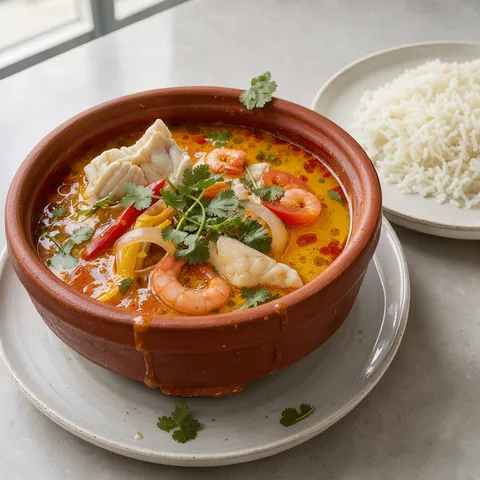 Bahian Coconut Fish Stew1 hr 10 min · Main course
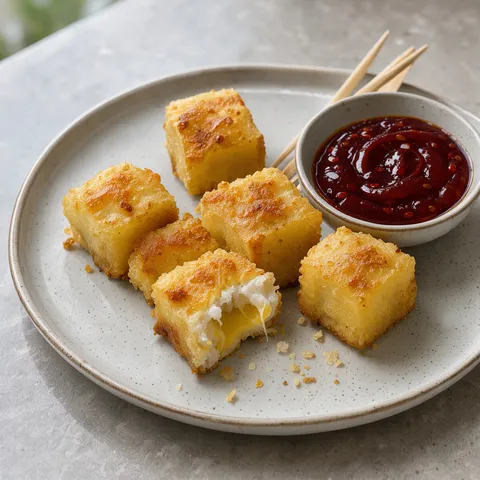 Brazilian Fried Tapioca Cheese Cubes1 hr 5 min · Meze
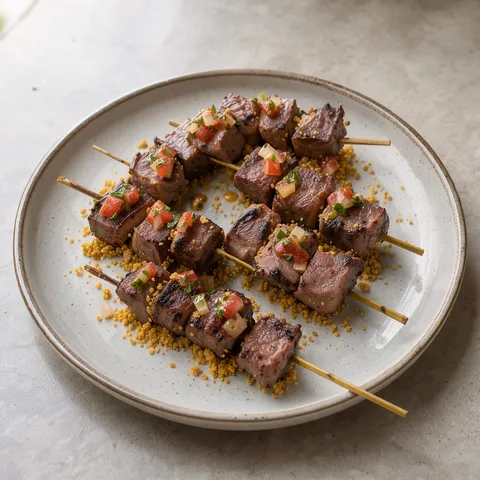 Brazilian Street Picanha Skewers1 hr 2 min · Meze
 Brazilian Coconut Condensed Milk Balls1 hr 19 min · Meze
 Brazilian Cachaça and Lime Cocktail12 min · Drink
 Bolo de Laranja1 hr 10 min · Patisserie
 Tutu de Feijão1 hr 5 min · Main course