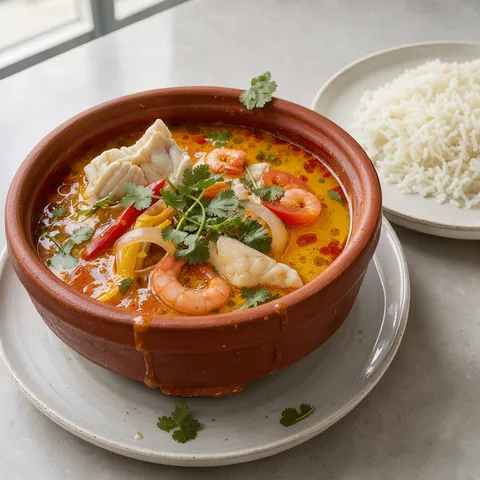
Bahian Coconut Fish Stew Moqueca Baiana
A Brazilian main course. Takes 1 hr 10 min, Serves 4. Difficulty: medium.
At a glance
- Total time
- 1 hr 10 min
- Serves
- Serves 4
- Difficulty
- Medium
- Cuisine
- Brazilian cuisine
- Dish type
- Main course
- Diet
- Gluten-free
- Allergens
- Milk, Eggs, Fish, Crustaceans, Tree nuts
Ingredients
Fish
- 600 g thick white fish fillet (sea bass, mottled grouper or white grouper, 5 cm pieces)
- 250 g medium prawns (peeled)
Marinade
- juice of 1 lemon
- 3 garlic cloves (crushed)
- 1 tsp salt
- 1/2 tsp black pepper
Coconut milk
- 150 g unsweetened desiccated coconut
- 500 ml hot water (about 85°C)
Stew
- 2 onions (1 cm rings)
- 3 ripe tomatoes (1 cm rings)
- 1 red and 1 yellow pepper (rings)
- 1 fresh chilli (thin rings)
- 1 tbsp olive oil
- 3 tbsp dendê (palm oil)
- 1 bunch coriander (stalks separate, leaves roughly chopped)
- 4 spring onions
- salt
Rice
- 250 g long-grain rice
- 1 tbsp sunflower oil
- 500 ml boiling water
- 1 tsp salt
To serve
- 1 lemon (sliced)
Equipment
- Blender
- Muslin
- Heavy-based saucepan
- Saucepan
- Chef's knife
Method
- Make the coconut milk: Put the desiccated coconut and hot water in a blender and run for 2 min. Pour into a sieve lined with muslin, twist the muslin and squeeze out every last drop. You get about 450 ml thick white milk. Hot water extracts the fat better, and milk made with cold water stays thin
- Marinate the fish: Put the fish pieces and prawns in a large dish and toss gently with the lemon juice, garlic, salt and pepper. Marinate in the fridge for 20 min. Marinating for longer lets the acid of the lemon cook the surface of the fish and turn the texture mealy
- Start the rice: Meanwhile wash the rice, toast it in the oil for 2 min, add the boiling water and salt, cover and cook over the lowest heat for 15 min, then leave to steam for 10 min
- Build the layers: Brush the olive oil over the base of a wide, shallow, heavy-based pan (a clay pot if you have one). Layer half of the onion, tomato and pepper rings and scatter over the coriander stalks. Lay the fish pieces on top in a single layer and cover with the remaining vegetable rings. Moqueca is not stirred and cooks in its steam in layers, which stops the fish breaking up
- Add the milk and cook: Pour the coconut milk in around the edges, so that the liquid comes halfway up the fish. Cover and, once it begins to boil over medium heat, reduce to low. Cook for 12 min without stirring, only shaking the pan gently from time to time
- Add the prawns and dendê: Nestle the prawns among the vegetables and drizzle the dendê over the surface. Cover and cook for another 3-4 min. It is ready when the prawns are pink and curled and the fish flakes opaque white when pressed with a fork. Dendê goes in at the end because its smell becomes heavy if boiled for long
- Season: Check the salt and spoon the sauce over the fish. The sauce should be orange, glossy and slightly runny. Take off the heat and scatter over the chopped coriander leaves and spring onion rings
- Plate: Bring the pot straight to the table. Put a ladleful of white rice in a deep plate, add two or three pieces of fish, a few prawns and the vegetable rings, and pour over plenty of the orange sauce. Top with coriander and a lemon slice and serve hot
Chef's note
Dendê is the red-orange palm oil that is the signature of Bahian cooking. It is not made at home and is sold in Latin American or African grocers. If you cannot find it, you can colour 3 tbsp olive oil with 1 tsp sweet paprika, but the flavour will be different. The moqueca capixaba of Espírito Santo uses no dendê or coconut milk and is cooked in a black clay pot with olive oil and annatto.
Frequently asked questions
- Do you stir moqueca?
- No. Moqueca cooks in its own steam in layers, and this keeps the fish from breaking up.
- Why is the dendê oil added at the end?
- Dendê smells heavy if it boils for a long time. That is why it goes in at the last stage with the prawns.
- Why is the coconut milk made with hot water?
- Hot water extracts the fat better. Milk made with cold water stays thin.
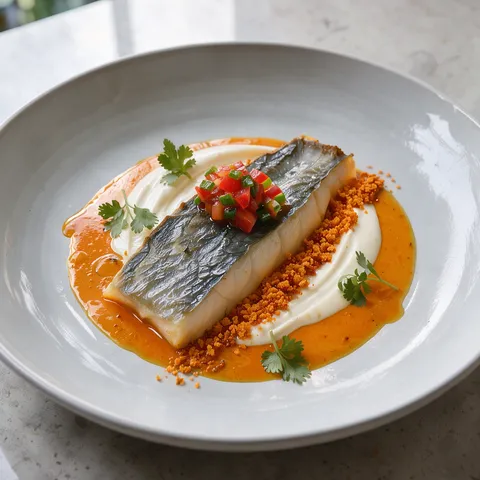 Moqueca Baiana 2.01 hr 25 min · Main course
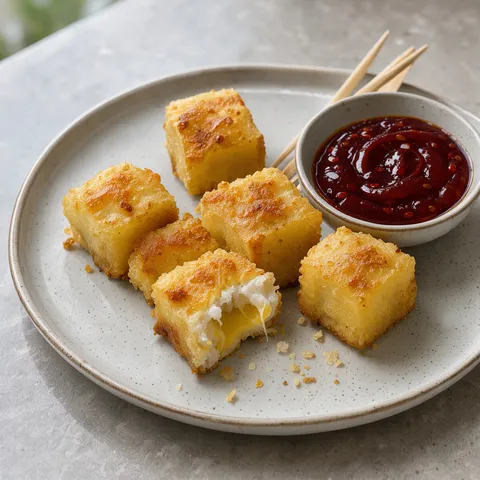 Brazilian Fried Tapioca Cheese Cubes1 hr 5 min · Meze
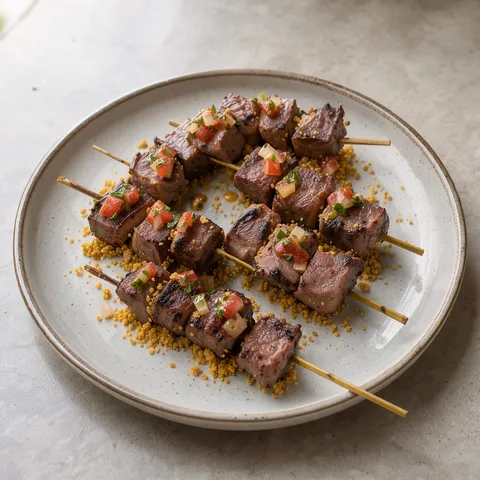 Brazilian Street Picanha Skewers1 hr 2 min · Meze
 Brazilian Coconut Condensed Milk Balls1 hr 19 min · Meze
 Brazilian Cachaça and Lime Cocktail12 min · Drink
 Bolo de Laranja1 hr 10 min · Patisserie
 Tutu de Feijão1 hr 5 min · Main course