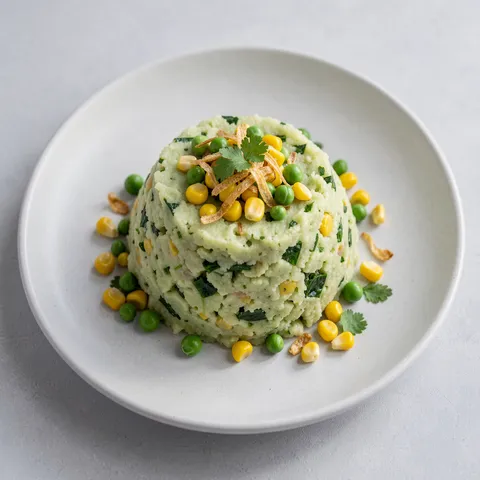
Kenyan Green Potato Mash Mukimo
A Kenyan side dish. Takes 50 min, Serves 4. Difficulty: medium.
At a glance
- Total time
- 50 min
- Serves
- Serves 4
- Difficulty
- Medium
- Cuisine
- Kenyan cuisine
- Dish type
- Side dish
- Allergens
- Gluten, Milk
Ingredients
Mash
- 1 kg floury potatoes (4-5 large)
- 250 g fresh or frozen green peas
- 2 cobs fresh sweetcorn (about 250 g kernels)
- 250 g spinach (in Kenya pumpkin leaves, so use them if you can find them)
- 2 litres water
- 1.5 tsp salt
- 40 g butter
- 1/4 tsp black pepper
Onion oil
- 2 tbsp sunflower oil
- 1 medium onion (finely chopped)
- 1 garlic clove
To serve
- a pinch of coriander
- meat stew or nyama choma alongside
Equipment
- Saucepan
- Colander
- Potato masher
- Frying pan
- Mixing bowls
- Chef's knife
- Chopping board
Method
- Prepare the vegetables: Peel the potatoes and cut into even 4 cm pieces, as pieces of the same size cook at the same rate. Hold the corn cobs upright on a board and strip off the kernels with a knife, working from top to bottom. Wash the spinach, remove the thick stalks and roughly chop
- Boil the sweetcorn and peas: Bring 1 litre water to the boil with 1/2 tsp salt in a separate small saucepan. Boil the sweetcorn kernels for 6 min, then add the peas and boil for another 3 min. The peas should stay bright green: boiled for too long, they turn grey and floury. Drain and set aside
- Boil the potatoes: Put the potatoes in a large saucepan with 1 litre cold salted water and set on the hob. Starting in cold water lets the inside cook before the outside falls apart. Once boiling, cook over a medium heat for 15 min
- Add the greens: Add the spinach on top of the potatoes, cover and cook for 3-4 min, until a knife slides into the potatoes without resistance and the spinach has completely wilted. The green colour of mukimo comes from cooking and mashing the greens together with the potatoes
- Drain and dry: Drain, reserving 100 ml of the cooking water. Return the potatoes and spinach to the pan and shake over a low heat for 1 min to drive off excess steam. Dry potatoes absorb butter and flavour better, while a wet mash turns gluey
- Mash: Mash with a potato masher or, Kenyan-style, by pressing with a thick wooden spoon. Add the butter and pepper and keep mashing, adding a little cooking water if needed. The texture should be not a smooth purée but a dense, pale green mash with small pieces here and there. Do not use a blender: the potato starch is released and the mash turns gummy
- Fold in the vegetables: Fold three-quarters of the sweetcorn and peas into the mash so the colours are evenly distributed. Season to taste
- Make the onion oil: Heat the oil in a small frying pan and fry the onion for 6-7 min until golden, then add the garlic and stir for 30 sec. Fold half into the mukimo and set the rest aside for serving
- Plate: Pack the mukimo into a wet bowl and invert onto a plate to make a green dome. Scatter over the remaining sweetcorn and peas, the onion oil and the coriander. Serve hot with a stew or chargrilled meat alongside
Chef's note
Mukimo is the festive dish of the Kikuyu people of central Kenya, mashed in huge pots for weddings and first circumcision ceremonies. Traditionally pumpkin leaves (malenge) are used for the green colour, and spinach is the closest substitute. Some households also add cooked beans to the mash. It goes very well with nyama choma.
Frequently asked questions
- Why isn't mukimo made in a blender?
- A blender breaks down the potato starch and makes the mash gluey. If you mash with a potato masher or a thick wooden spoon, you get a dense texture with a few small lumps.
- Why do peas turn grey?
- If peas are boiled for too long they lose their bright green, turn grey and go floury. That is why they are added after the sweetcorn and boiled briefly.
- Why are the potatoes shaken in the pot after draining?
- Shake them over a low heat for a minute to let the excess steam escape. Dry potatoes absorb the butter and flavour better, while wet mash turns sticky.
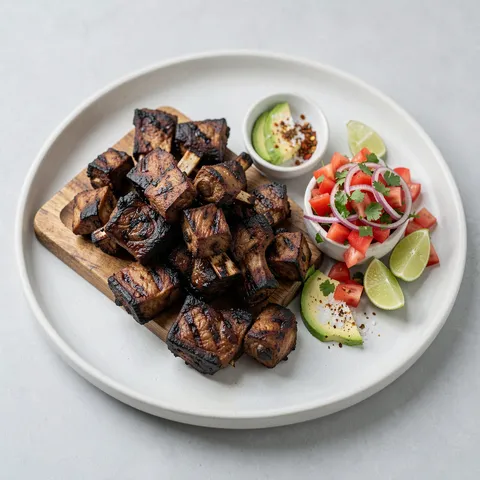 Nyama Choma and Kachumbari2 hr 15 min · Main course
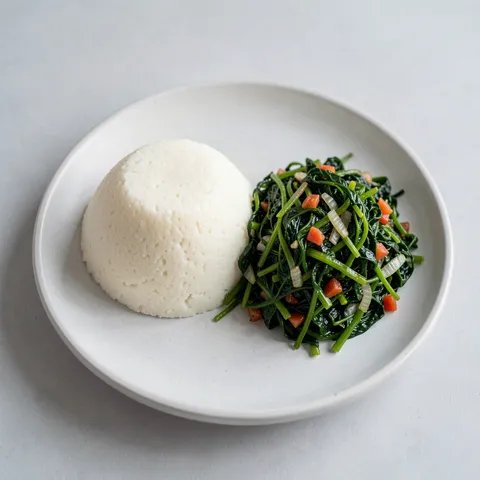 Ugali and Sukuma Wiki50 min · Side dish
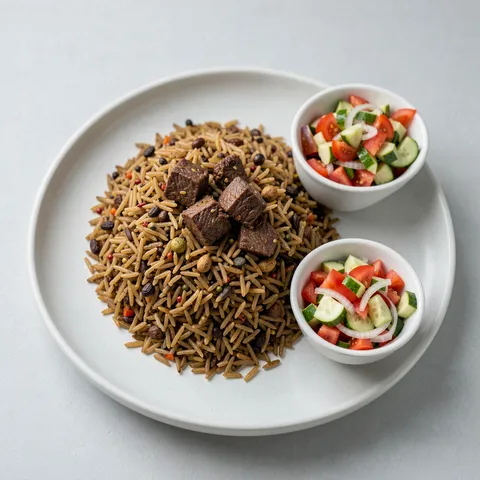 Kenyan Pilau1 hr 50 min · Main course
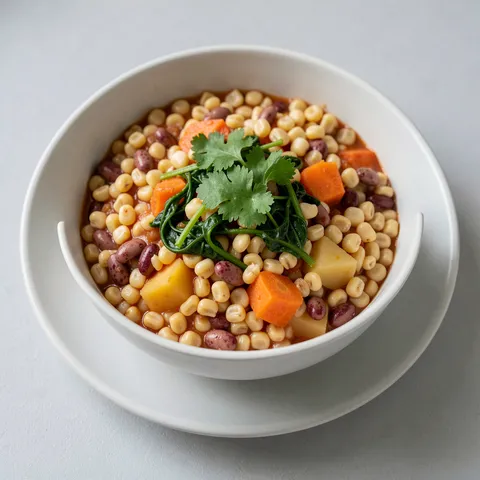 Kenyan Maize and Bean Stew2 hr · Main course
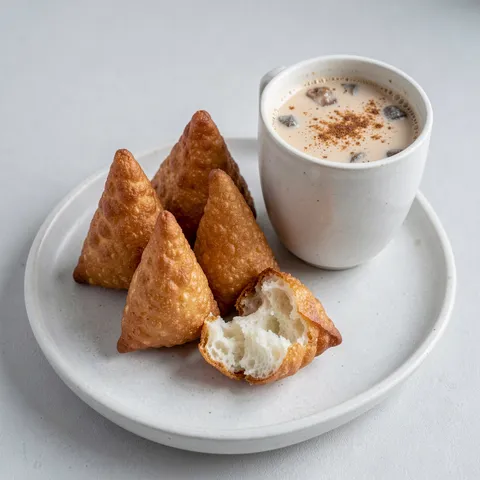 Kenyan Coconut and Cardamom Doughnuts1 hr 30 min · Bread & pastry
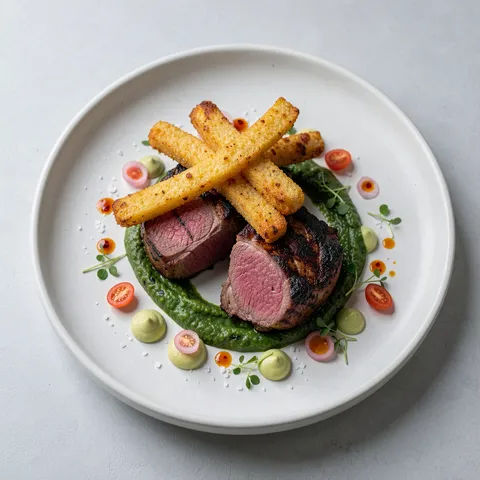 Nyama Choma 2.01 hr 30 min · Main course