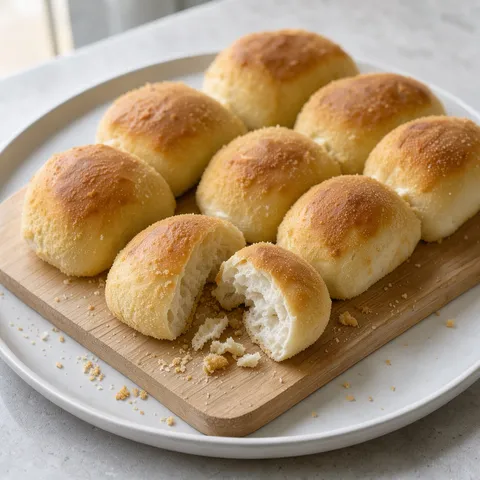
Soft Filipino Breakfast Rolls with Breadcrumbs Pandesal
A Filipino bread & pastry. Takes 2 hr 40 min, Makes 20. Difficulty: challenging.
At a glance
- Total time
- 2 hr 40 min
- Serves
- Makes 20
- Difficulty
- Challenging
- Cuisine
- Filipino cuisine
- Dish type
- Bread & pastry
- Allergens
- Gluten, Milk, Eggs
Ingredients
Dough
- 500 g plain flour
- 7 g fast-action dried yeast
- 60 g caster sugar
- 1 tsp salt
- 1 egg
- 240 ml lukewarm milk (about 35°C)
- 60 g soft butter
Coating
- 50 g fine dried breadcrumbs (Basics)
Tray
- 1 sheet of baking paper (for a 30×40 cm tray)
Equipment
- Mixing bowls
- Dough scraper
- Cling film
- Baking tray
- Precision scales
- Baking paper
- Oven
- Stand mixer (optional)
- Probe thermometer (optional)
Method
- Knead the dough: Mix the flour, sugar, yeast and salt in a large bowl. Add the egg and lukewarm milk and bring together with a dough scraper. Turn out onto the work surface and knead for 8 min, then add the soft butter in 3 batches, kneading for another 4-5 min until each addition is fully absorbed. In a stand mixer with the dough hook, 8-10 min in total on medium speed is enough. The dough should be smooth, soft and slightly sticky. When a piece is stretched thin, it should form a translucent membrane without tearing
- Prove: Shape the dough into a ball, place in a lightly oiled bowl and cover with cling film. Leave to rise in a warm place for 1 hr, until doubled in size. It is ready when a fingertip dent fills back slowly
- Shape a log: Turn the dough out onto the work surface and press out the air with your palms. Press into a 30×20 cm rectangle, roll up tightly from a long side and seal the seam. Roll the log with both hands to stretch it into an even cylinder 50 cm long
- Coat in breadcrumbs: Spread the breadcrumbs on a long tray. Roll the log in the breadcrumbs to coat the whole surface. The breadcrumbs give pandesal its familiar light, crisp, sandy surface
- Cut and weigh: Cut the log into 20 equal pieces (about 46 g each) with a dough scraper and check them on scales. Even pieces bake evenly. Press the cut sides of each piece into the breadcrumbs
- Second prove: Arrange the pieces, cut sides facing up and down, on a 30×40 cm tray lined with baking paper in rows of 4×5, 2 cm apart. Cover loosely with cling film and leave to rise for 40 min, until one and a half times their size. Preheat the oven to 190°C during the last 15 min of rising. The rolls touch each other as they rise, which is why the sides of pandesal stay soft
- Bake: Place the tray on the middle shelf of the oven and bake for 15-18 min, until pale golden brown on top. A roll should sound hollow when tapped underneath, and the internal temperature should be around 90°C
- Cool and serve: Let the rolls cool slightly on the tray for 10 min, then transfer to a wire rack. Pandesal is best eaten warm, with butter or split open and filled with cheese
Chef's note
Pandesal comes from the Spanish "pan de sal" (salt bread), but today it is a slightly sweet, soft breakfast roll. In the Philippines it is bought hot from neighbourhood bakeries early in the morning and eaten with coffee. Use the breadcrumbs from the recipe in the Basics section, as the finely ground part sticks better to the surface. The baked rolls can be frozen and reheated in a 160°C oven for 5 min.
Frequently asked questions
- Why is the outside of pandesal lightly sandy and crisp?
- The dough is shaped into a log and rolled in fine breadcrumbs, and the cut sides are pressed into the crumbs too. The breadcrumbs give pandesal its familiar lightly crisp, sandy surface.
- Why do the sides of pandesal stay soft?
- For the second rise, the pieces are placed 2 cm apart and touch each other as they prove. That is why the sides of pandesal stay soft.
- How do you tell when pandesal is done?
- The tops should be a light golden brown. When you tap the underside of a roll, it sounds hollow, and the internal temperature is around 90°C.
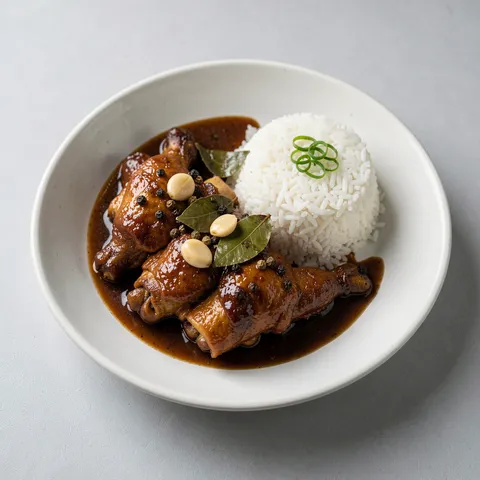 Filipino Chicken in Vinegar and Soy Sauce55 min · Main course
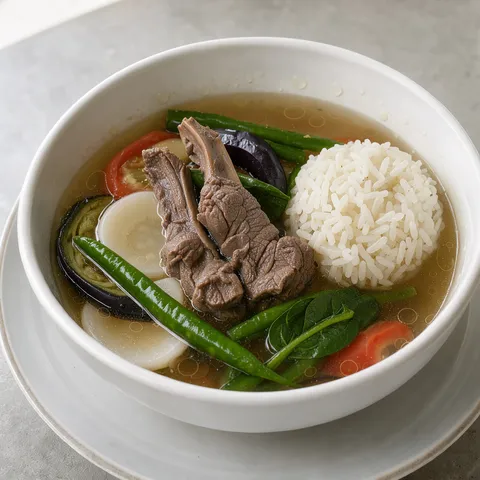 Sour Tamarind Beef Soup1 hr 20 min · Soup
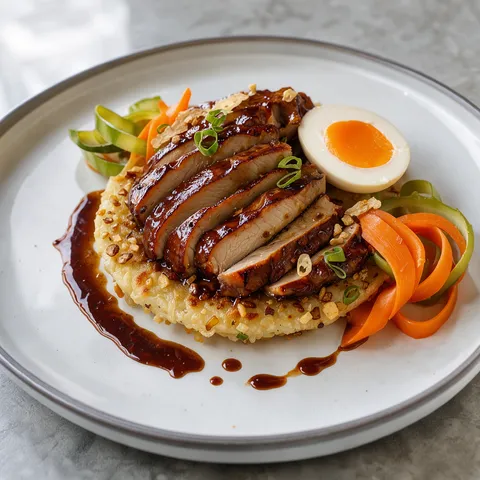 Chicken Adobo 2.01 hr 20 min · Main course
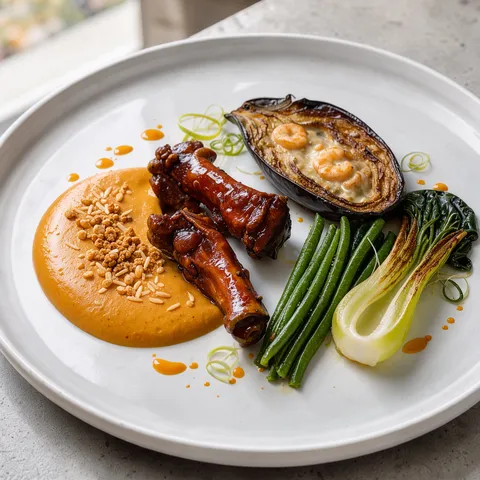 Kare-Kare 2.01 hr 30 min · Main course
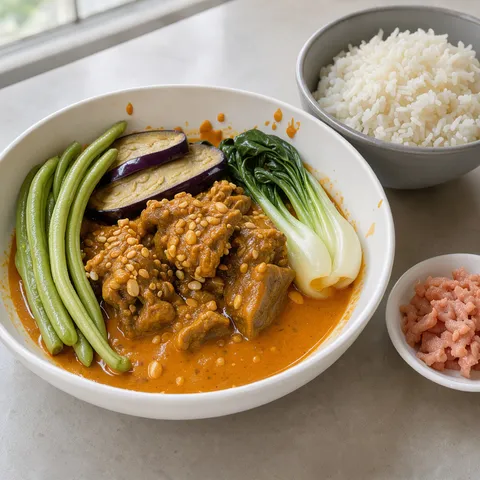 Filipino Oxtail Stew in Peanut Sauce3 hr 15 min · Main course
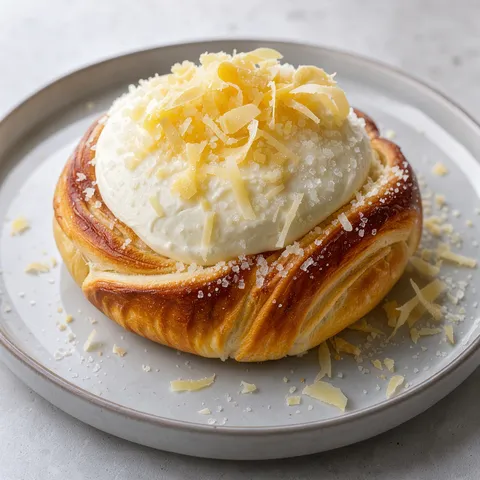 Filipino Butter and Cheese Buns4 hr 10 min · Bread & pastry