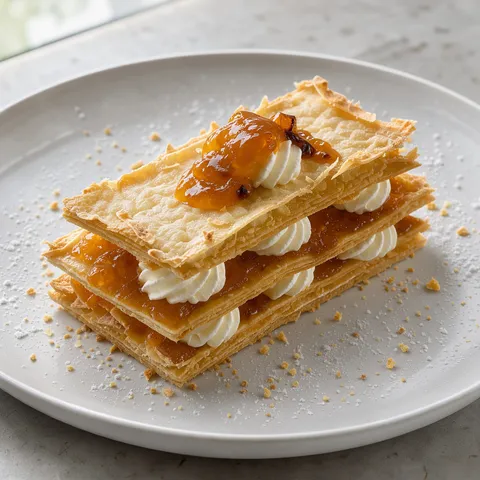
Pastafrola 2.0
An Argentinian dessert. Takes 1 hr 20 min, Serves 4. Difficulty: professional.
At a glance
- Total time
- 1 hr 20 min
- Serves
- Serves 4
- Difficulty
- Professional
- Cuisine
- Argentinian cuisine
- Dish type
- Dessert
- Diet
- Vegetarian
- Allergens
- Gluten, Milk, Eggs
Ingredients
Quince paste
- 700 g quince (2 medium, about 450 g once peeled and cored, cut into 1.5 cm cubes)
- quince peel and cores (for the muslin bundle)
- 250 ml water
- 100 g caster sugar
- juice of 1/2 lemon
Tart layers
- 120 g plain flour
- 60 g cold butter (cubed)
- 40 g caster sugar
- 1 egg yolk
- 1 tbsp iced water
- a pinch of salt
- zest of 1 lemon (half for the dough, half for the lemon sugar)
Clotted cream-style cream
- 200 ml cold whipping cream (at least 30% fat)
- 80 g cream cheese (at room temperature)
- 2 tbsp icing sugar
- 1/2 tsp vanilla extract
Lemon sugar and finishing
- 2 tbsp caster sugar
- 1 tbsp icing sugar
Equipment
- Pressure cooker
- Vegetable peeler
- Chopping board
- Muslin
- Food processor
- Box grater
- Rolling pin / oklava
- Baking paper
- Chef's knife
- Baking tray
- Oven
- Hand mixer
- Mixing bowls
- Piping bag
- Colander
- Stick blender
- Sauté pan
- Wooden spoon / spatula
- Fine sieve / chinois
Method
- Prepare the oven and quince: Preheat the oven to 180°C. Wash the quince, rub off the down, peel with a peeler, quarter and remove the cores, and cut into 1.5 cm cubes on a board. Tie the peel and cores in muslin. Put the cubes and the muslin bundle in a 6-litre pressure cooker and add the 250 ml water. The pectin in the peel and cores makes the paste set (about 10 min)
- Pressure-cook the quince: Lock the lid, and once it reaches pressure over high heat (about 6 min), move to the lowest heat and cook for 8 min, then turn off the heat and let the pressure release naturally (about 8 min). The quince should be soft enough to mash easily with a fork. Do the next three steps while the cooker is under pressure
- Make the tart dough: In a food processor, pulse the flour, sugar and salt for 3 sec, finely grate half the lemon zest on the fine side of a grater and add it, add the cold butter cubes and run for 15 sec, until it resembles coarse sand. Add the egg yolk and iced water and run for 10 sec, until the dough begins to clump. If you overprocess, it turns tough. Bring the dough together by hand (about 4 min)
- Roll out and cut the dough: Roll the dough between two sheets of baking paper to 24×28 cm, 3 mm thick. Remove the top paper and cut into 16 rectangles of 6×7 cm with a chef's knife, without separating the cuts. Prick each rectangle in several places with a fork, slide onto a tray with its bottom paper and rest in the freezer for 10 min. Cold butter evaporates in the oven and gives a crisp, sandy texture, while dough that warms up curls
- Bake the tart layers: Put the tray on the middle shelf and bake for 12-14 min, until the edges are pale golden. Take out and, while hot, separate the cuts with a knife and cool the layers flat on the tray for 10 min. A layer lifted while hot breaks, and crisps as it cools
- Whip the clotted cream-style cream: As the quince comes off pressure, beat the cream cheese and icing sugar in a bowl with a hand mixer on low speed for 30 sec until smooth, add the cold cream and vanilla in a thin stream, and whip on high speed for 1.5-2 min, until soft peaks form that stand on a spoon. If you overwhip, the cream splits. Fill a piping bag and put it in the fridge
- Purée the quince: When the pressure has dropped, open the lid, drain the quince through a colander, set aside 60 ml of the liquid and discard the bundle. Blend the quince, the 60 ml liquid, 100 g sugar and the lemon juice with a stick blender for 1 min until completely smooth
- Thicken the paste: Transfer the purée to a 28 cm sauté pan and cook over medium-high heat for 22-25 min, stirring constantly with a wooden spoon. The purée spits, so use a long-handled spoon. The colour goes from pale yellow to deep amber, and a line drawn across the base of the pan with a spoon should stay open for 2-3 sec. About 270 g of paste is produced. Transfer to a bowl and let it cool. It firms up as it cools
- Prepare the lemon sugar: Rub the caster sugar and the remaining lemon zest together with your fingertips in a bowl for 1 min, until the sugar is damp and smells of lemon. This sugar gives the plate both aroma and a light crunch
- Layer: Put a dab of paste in the centre of 4 plates so the tart does not slide, and set a tart layer on each. Spread 25 g of warm paste thinly over it with a spoon and pipe 5 small rosettes of cream. Set the second layer on top and repeat the paste and cream, and finish with the third layer. That makes 3 layers per plate. Of the 16 layers, 12 are used, and the remaining 4 are spare and for the broken pieces to scatter over the plate
- Plate: Pipe a rosette of cream on the top layer and put a dessertspoon of paste in the middle. Scatter the lemon sugar and broken pieces of tart over the empty part of the plate, dust the icing sugar through a fine sieve along the edge of the plate and serve immediately. The tart layers soften as they absorb moisture, so the layering is done just before serving
Chef's note
A modern dessert that rebuilds the three elements of classic pastafrola, the quince paste, the buttery tart pastry and the crispness of the diagonal lattice, as a mille-feuille of brittle tart layers, warm quince paste and clotted cream-style cream. Quince paste comes out in under an hour with a pressure cooker, and the muslin bundle of peel and cores supplies the pectin, so the paste sets without gelatine. Out of quince season, it can be made with frozen quince or a mix of apple and pear, but the paste will be softer. The tart layers stay crisp for 2 days in a closed container, and the paste and cream keep in separate containers in the fridge for 2 days.
Frequently asked questions
- Why aren't the tart layers lifted while hot?
- A layer lifted while hot breaks. Cut the edges with a knife straight out of the oven, then let the layers cool flat on the tray so they crisp up.
- When should I assemble the pastafrola 2.0 layers?
- Assemble just before serving. The tart layers soften as they take in moisture.
- Why does the cream cheese cream split?
- If overwhipped, the cream splits. Whisk the cream cheese with the icing sugar, add the cold cream and stop once soft peaks form that stay on the spoon.
 Quince Lattice Tart2 hr 55 min · Dessert
 Argentine Three-Colour Grated Salad45 min · Salad
 Argentine Pan-Fried Chicken with Chimichurri28 min · Main course
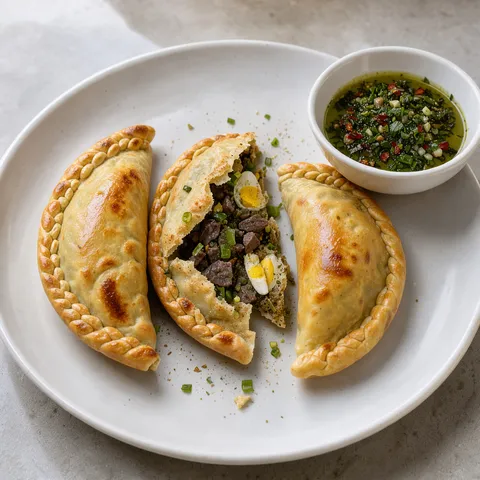 Argentine Knife-Cut Beef Empanadas1 hr 50 min · Bread & pastry
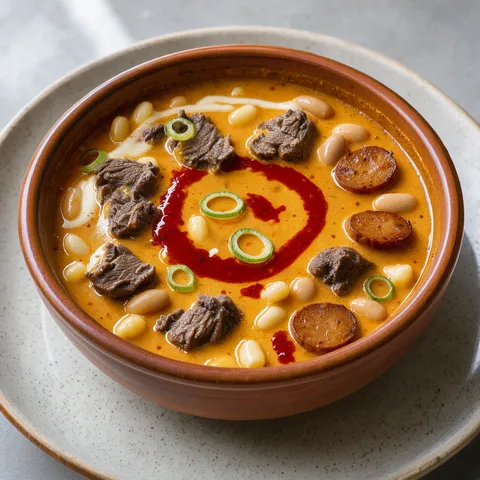 Argentine Corn and Pumpkin Stew2 hr 45 min · Main course
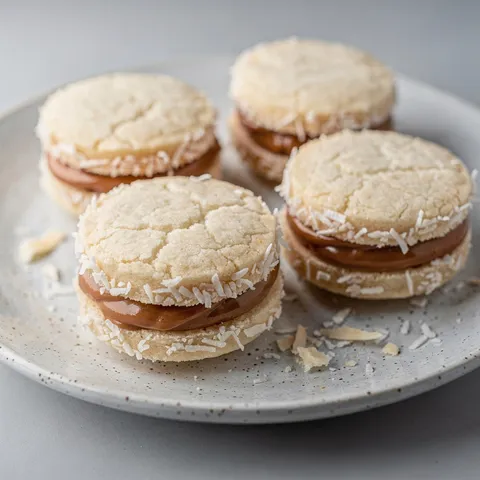 Dulce de Leche Sandwich Biscuits2 hr 15 min · Dessert
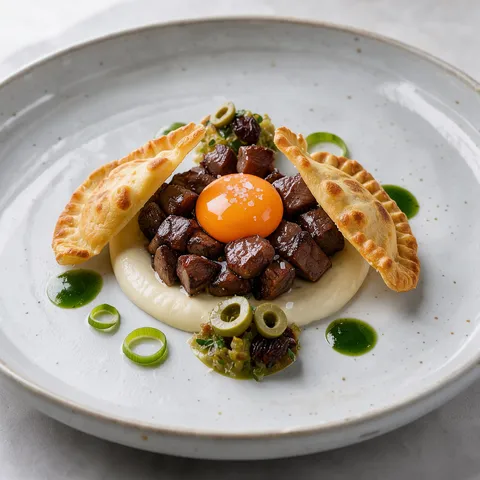 Empanadas Tucumanas 2.01 hr 25 min · Starter