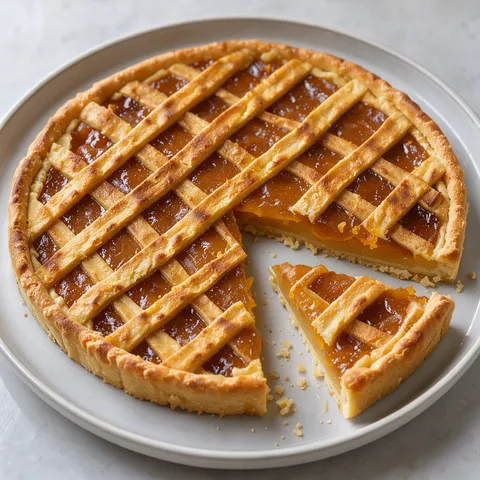
Quince Lattice Tart Pastafrola
An Argentinian dessert. Takes 2 hr 55 min, Serves 4. Difficulty: challenging.
At a glance
- Total time
- 2 hr 55 min
- Serves
- Serves 4
- Difficulty
- Challenging
- Cuisine
- Argentinian cuisine
- Dish type
- Dessert
- Diet
- Vegetarian
- Allergens
- Gluten, Milk, Eggs
Ingredients
Quince paste (dulce de membrillo)
- 800 g quince (2 large)
- 350 ml water
- 400 g caster sugar
- juice of 1 lemon
Dough
- 300 g plain flour
- 1 tsp baking powder
- a pinch of salt
- 120 g soft butter
- 100 g caster sugar
- 1 egg and 1 egg yolk (at room temperature)
- zest of 1 lemon
- 10 g butter (for the tin)
Topping
- 1 egg yolk
- 1 tbsp milk
- 3 tbsp hot water (for the paste)
Equipment
- Paring knife
- Muslin
- Heavy-based saucepan
- Stick blender
- Wooden spoon / spatula
- Mixing bowls
- Cling film
- Oven
- Tart tin
- Rolling pin / oklava
- Baking paper
- Pastry brush
- Chef's knife
- Chopping board
- Sauté pan
Method
- Boil the quince: Wash the quince and rub off the down, peel, quarter and remove the cores. Tie the peel and cores in a piece of muslin. Put the quince pieces and the muslin bundle in a heavy-based pan with 350 ml water and boil over medium-low heat, covered, for 25 min, until the quince is completely soft. The pectin in the peel and cores makes the paste set
- Purée: Squeeze the bundle against the side of the pan with a spoon and discard it. Blend the quince with its cooking liquid in the pan with a stick blender until completely smooth (about 1 kg of purée)
- Cook the paste: Transfer the purée to a wide 28 cm sauté pan, add the sugar and lemon juice, bring to the boil over medium heat, then cook over medium-low heat for about 50 min, scraping the base often with a wooden spoon. The purée spits, so use a long-handled spoon. The colour goes from pale yellow to deep amber, and a line drawn across the base with a spoon should stay open for 2-3 sec. About 500 g of paste is produced. Put 450 g in a bowl and let it cool slightly for 15 min, and set aside the remaining 50 g or so to eat with cheese
- Make the dough: While the paste cooks, mix the butter and sugar in a bowl with a wooden spoon for 2 min, until creamy. Add the egg, yolk and lemon zest. Sift in the flour, baking powder and salt and bring together briefly by hand into a soft dough. Do not overwork it, or the dough turns tough. Shape into a flat disc, wrap in cling film and rest in the fridge for 30 min
- Build the base: Preheat the oven to 180°C. Grease a 24 cm tart tin with butter. Roll out about 2/3 of the dough (390 g) between two sheets of baking paper to 4 mm, fit it into the tin and press into the sides, trim the excess and add the offcuts to the remaining dough. Prick the base in several places with a fork
- Spread the paste: Loosen the cooled paste by stirring in the 3 tbsp hot water with a wooden spoon until spreadable. Spread in an even layer over the base, to within 5 mm of the edge. Stiff paste does not spread and tears the dough
- Weave the lattice: Roll out the remaining dough (about 200 g) on baking paper to 4 mm and cut 10 strips 1.5 cm wide with a knife. Lay the strips across the paste 5 in each direction, to make a diagonal lattice, pressing the ends onto the edge of the base. It is this diagonal lattice that identifies pastafrola. Beat the egg yolk with the milk and brush it over the strips only
- Bake: Bake on the middle shelf for 35 min, until the strips and edges are golden. The paste between the lattice should stay glossy
- Cool and serve: Cool in the tin for 30 min, then remove from the tin. Cut into 10 slices with a sharp knife. Pastafrola is eaten at room temperature with afternoon tea or mate
Chef's note
Pastafrola is a lattice tart that grew out of the crostata of Italian immigrants and became the home dessert of Argentina, Uruguay and Paraguay. In Argentina the paste is usually bought as a ready-made block of quince paste; here it is cooked from scratch. Out of quince season, sweet potato paste (dulce de batata) is used in place of the quince paste. The leftover paste keeps in a closed container in the fridge for 1 week and is eaten with cheese. The tart keeps in a closed container for 3 days.
Frequently asked questions
- Why won't my quince paste set?
- The pectin in the peel and cores makes the paste set, so tie them in muslin and boil them with the quince. Cook the paste until a line drawn across the bottom of the pan stays open for 2-3 seconds.
- Why won't the paste spread onto the tart base?
- Firm paste won't spread and tears the dough. Loosen the warm paste with 3 tbsp of hot water until it is spreadable.
- Why does pastafrola dough turn tough?
- Overworking makes the dough tough. Bring the ingredients together quickly by hand and wrap in cling film to rest in the fridge.
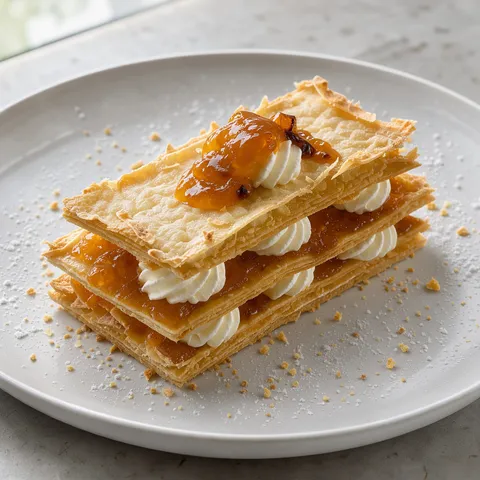 Pastafrola 2.01 hr 20 min · Dessert
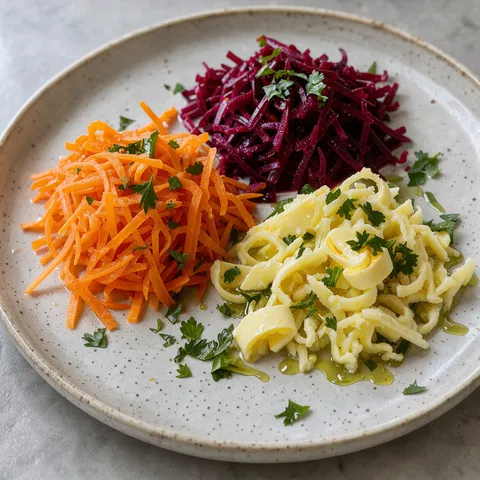 Argentine Three-Colour Grated Salad45 min · Salad
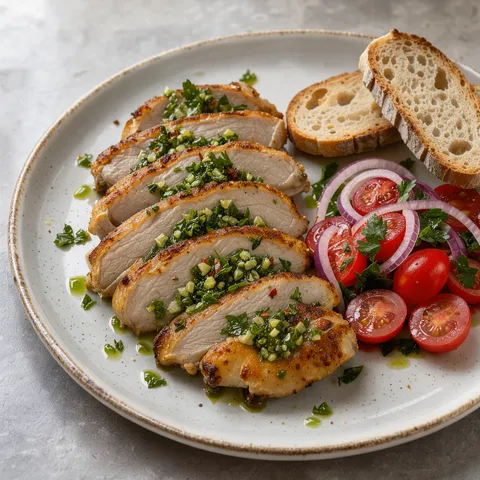 Argentine Pan-Fried Chicken with Chimichurri28 min · Main course
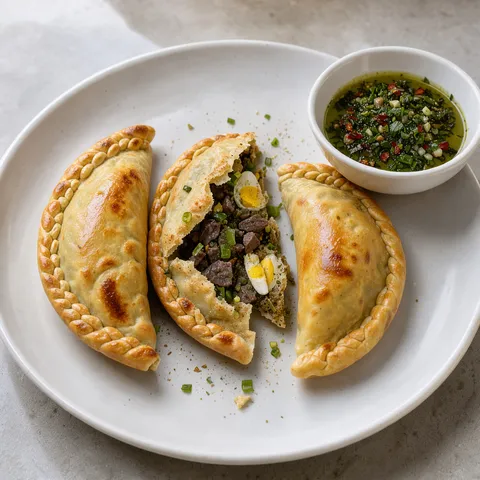 Argentine Knife-Cut Beef Empanadas1 hr 50 min · Bread & pastry
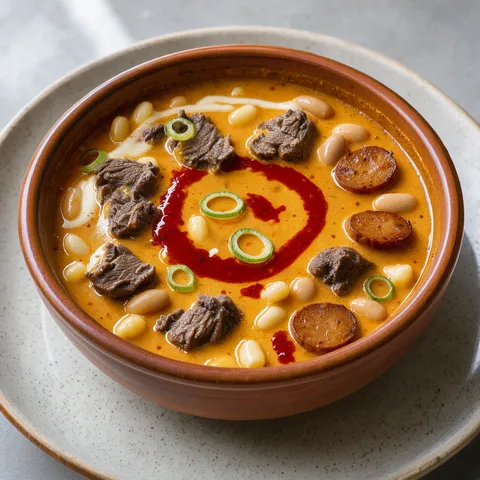 Argentine Corn and Pumpkin Stew2 hr 45 min · Main course
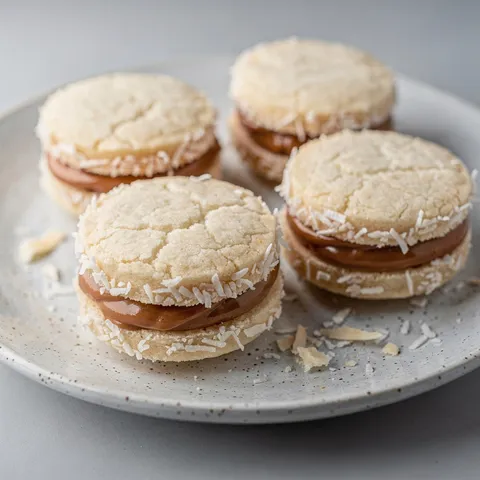 Dulce de Leche Sandwich Biscuits2 hr 15 min · Dessert
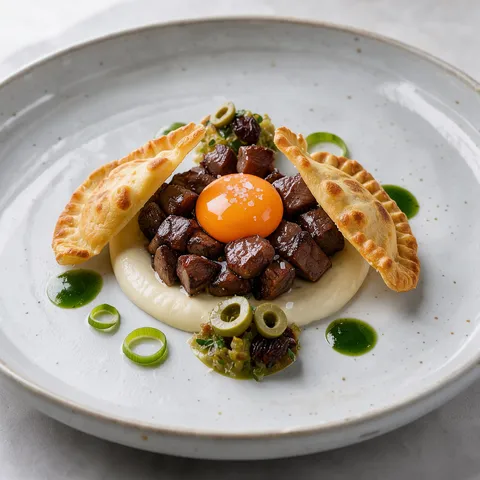 Empanadas Tucumanas 2.01 hr 25 min · Starter