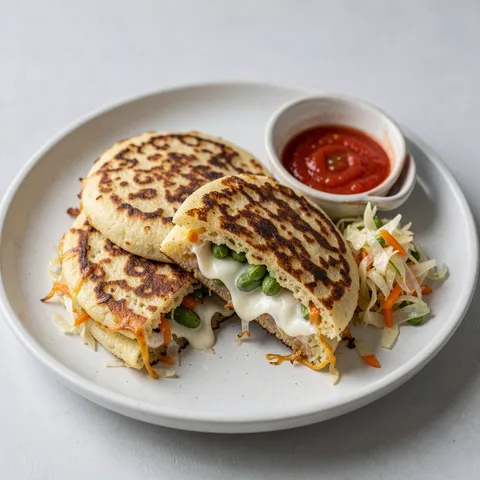
Salvadoran Stuffed Corn Cakes Pupusas de Queso y Loroco
A Salvadoran bread & pastry. Takes 1 hr 45 min · +2 hr curtido resting, 12 pieces (4 servings). Difficulty: medium.
At a glance
- Total time
- 1 hr 45 min · +2 hr curtido resting
- Serves
- 12 pieces (4 servings)
- Difficulty
- Medium
- Cuisine
- Salvadoran cuisine
- Dish type
- Bread & pastry
- Diet
- Gluten-free
- Allergens
- Milk, Eggs
Ingredients
Curtido
- 1/2 small white cabbage (400 g, very finely shredded)
- 1 carrot (grated)
- 1/2 white onion (thin rings)
- 1 jalapeño (thin rings, optional)
- 1 tsp dried oregano
- 150 ml cider vinegar
- 100 ml water
- 1 tsp salt
- 1 tsp sugar
- 1 litre boiling water
Salsa roja
- 4 ripe tomatoes (600 g)
- 1/4 onion
- 1 garlic clove
- 1/2 green pepper
- 1 tbsp sunflower oil
- 1/2 tsp salt
- 250 ml water
Dough
- 400 g masa harina (nixtamalised maize flour)
- about 550 ml lukewarm water
- 1 tsp salt
- 2 tbsp sunflower oil (for your hands)
Filling
- 300 g quesillo or mozzarella + 100 g fresh fresh curd cheese
- 80 g loroco buds (frozen or in brine, roughly chopped)
Equipment
- Mixing bowls
- Colander
- Saucepan
- Blender
- Box grater
- Cast-iron frying pan
- Saj (optional)
Method
- Make the curtido: Put the cabbage, carrot and onion in a large bowl, pour over the 1 litre of boiling water and leave for 1 min, then drain in a colander and press out the water thoroughly. This scalding removes the raw sulphurous taste of the cabbage but keeps its crunch. Add the vinegar, water, salt, sugar, oregano and jalapeño, mix, press into a jar and leave in the fridge for at least 2 hr. It is even better the next day
- Cook the salsa: Boil the tomatoes, onion, garlic and green pepper in a saucepan with the 250 ml water for 10 min, until the tomato skins split and soften. Blend until smooth. Heat the oil in the saucepan, pour in the purée, season with salt and cook over a low heat for 10 min, until it becomes a thin sauce that runs off a spoon. Salvadoran salsa is light and not spicy
- Make the filling: Finely grate the cheese or crumble it by hand, then mash it in a bowl with the loroco into a smooth paste. The cheese and loroco should be one mass, as large pieces tear the pupusa. Shape into 12 equal balls (about 40 g)
- Knead the dough: Mix the masa harina and salt and knead for 3-4 min, adding the warm water a little at a time. The dough should be soft, moist and non-sticky. If the edges crack when you flatten it in your palm, add water. Cover with a damp cloth and leave to rest for 10 min so the flour absorbs the water evenly
- Shape: Divide the dough into 12 equal balls (about 75 g). Wet your hands with oily water. Press a ball in your palm into an 8 cm cup, put a cheese ball inside and gather up the edges to seal. Pat the ball back and forth between your palms, turning it, to flatten it into a round 12-13 cm across and 8 mm thick. If the cheese shows in places, patch with a little dough
- Cook: Heat a cast-iron pan or griddle thoroughly over a medium-high heat, with no oil needed. Cook the pupusas for 3-4 min, until the underside is speckled brown and the edges look dry, then turn and cook for another 3-4 min. They are ready when the cheese has melted inside, seeps a little at the edges and the pupusa puffs slightly. The cheese that seeps out becomes a crisp lace in the pan, so do not scrape it off
- Keep warm: Keep the cooked pupusas between the folds of a cloth, where the steam keeps them soft
- Plate: Put three pupusas on each plate and open one in the middle to show the melted cheese and loroco. Add a generous pile of curtido and a small bowl of salsa roja alongside. Salvadoran pupusas are eaten by hand, with a little curtido and salsa on each bite
Chef's note
The pupusa is El Salvador's national dish, and the second Sunday of November is celebrated in the country as National Pupusa Day. Loroco is a fragrant flower bud native to Central America. Look for it frozen or in brine in shops selling imported products or online. If unavailable, make plain cheese pupusas. The variety called revueltas uses chicharrón, which is not included here.
Frequently asked questions
- Why does the pupusa dough crack at the edges?
- The dough is not moist enough. If the edges crack when you flatten it in your palm, add water. The dough should be soft, moist and not sticky.
- How do I stop the cheese leaking out of the pupusa?
- Mash the cheese and loroco into a smooth paste with no large pieces. If the cheese shows through anywhere, patch it with a little dough.
- What are pupusas eaten with?
- Traditionally they are eaten by hand with curtido, a tangy cabbage slaw, and salsa roja. Take a little curtido and salsa with each bite.
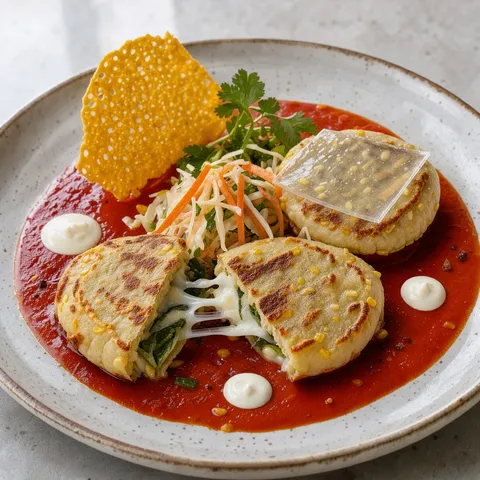 Pupusas de Queso y Loroco 2.01 hr 25 min · Starter
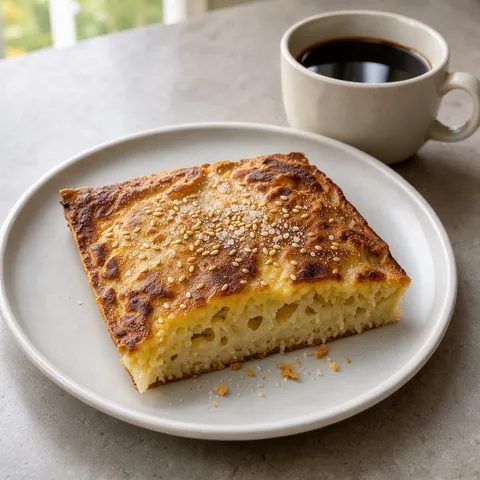 Salvadoran Rice-Flour Cheese Cake1 hr 30 min · Patisserie
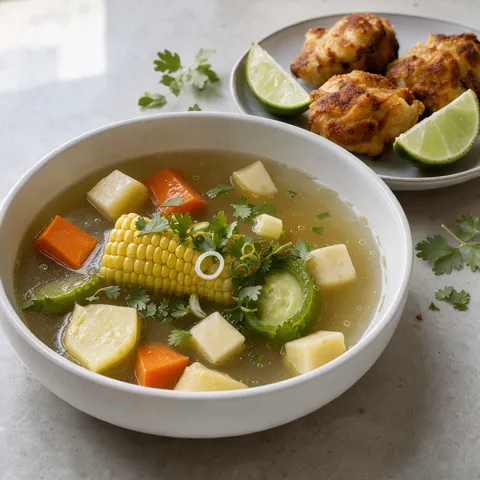 Salvadoran Free-Range Chicken Soup2 hr 10 min · Soup
 Plantain Custard Pastries1 hr 25 min · Dessert
 Salvadoran Quick Pickled Cabbage Slaw20 min · Side dish
 Salvadoran Hot Fresh Corn Drink30 min · Drink