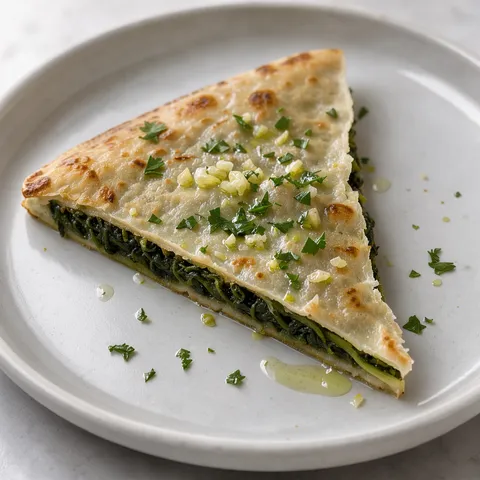
Poljica Chard Pie with Garlic Olive Oil Soparnik
A Croatian bread & pastry. Takes 1 hr 30 min, Serves 4. Difficulty: challenging.
At a glance
- Total time
- 1 hr 30 min
- Serves
- Serves 4
- Difficulty
- Challenging
- Cuisine
- Croatian cuisine
- Dish type
- Bread & pastry
- Allergens
- Gluten
Ingredients
Dough
- 500 g plain flour
- 1 tsp salt
- 2 tbsp olive oil
- about 280 ml lukewarm water
Filling
- 800 g chard (leaves and thin stalks)
- 1 bunch spring onions or 1 onion (finely chopped)
- 1/2 bunch flat-leaf parsley (finely chopped)
- 4 tbsp olive oil
- 1 tsp salt
Topping
- 4 garlic cloves (very finely chopped)
- 4 tbsp olive oil
- 1 tbsp finely chopped flat-leaf parsley
For the tray
- 1 tbsp plain flour
Equipment
- Mixing bowls
- Rolling pin / oklava
- Baking tray
- Baking paper
- Oven
- Chef's knife
- Chopping board
Method
- Knead the dough: Mix the flour and salt in a bowl and bring together by adding the olive oil and lukewarm water a little at a time. Knead on the work surface for 8 min, until soft, smooth and elastic. This unleavened dough must roll out very thin, so it should be soft and pliable, like an earlobe. Takes 10 min
- Rest the dough: Divide the dough in two, making one piece slightly larger than the other. Cover and rest for 30 min. The gluten relaxes and the dough doesn't spring back when rolled
- Prepare the chard (in parallel): Wash the chard in plenty of water, cut away the thick stalks and keep only the thin ones. Dry the leaves completely in a tea towel or salad spinner. Shred the leaves and thin stalks into very fine ribbons. Add the spring onions and parsley and toss by hand with the olive oil and salt, without crushing: the chard should stay raw. Wet chard makes the dough watery and leaves the bottom sheet soggy. Takes 15 min
- Heat the oven and roll out the base: Set the oven to its highest temperature (230-250°C) with bottom heat and heat the tray inside. Roll out the larger piece of dough on a floured surface into a circle 2 mm thick and 40 cm across. Transfer it to a sheet of floured baking paper. Takes 8 min
- Fill and seal: Spread the chard mixture evenly (about 2 cm deep) over the base, leaving a 3 cm border. Roll out the smaller piece of dough just as thin and lay it over the top. Fold the edges of the base over the top sheet and press firmly with your fingers to seal, so no steam escapes during baking. Prick the top in a few places with a fork. Takes 7 min
- Bake: Slide the soparnik, on its baking paper, onto the hot tray. Bake on the bottom shelf for 25 min, until the top is speckled brown and the base crisp. The hot tray mimics the traditional hearthstone (komin): the base cooks at once and doesn't go soggy
- Spread the garlic oil: Mix the garlic with the olive oil and parsley. As soon as the soparnik comes out of the oven, spoon it evenly over the hot surface. The hot pie lightly cooks the garlic and releases the aroma of the oil. Takes 3 min
- Plate: Rest the soparnik for 5 min, then cut it on a wooden board into the traditional diamonds or squares. Put a slice on a flat plate so the cut side shows the dark green layer of chard between the two thin sheets of dough and the glossy garlic oil on top. Serve warm. Takes 7 min
Chef's note
Soparnik is the chard pie of the Poljica region between Split and Omiš and carries protected geographical indication status in Croatia. It is traditionally baked in an open hearth (komin), set on the hot stone floor and covered with embers and ash. In a home oven, a hot tray and the highest bottom heat imitate this best. Makes one 40 cm pie, about 8 slices. It is a simple food eaten on fast days and served warm or at room temperature.
Frequently asked questions
- Why does the chard for Soparnik need to be dried thoroughly?
- Wet chard thins the filling and leaves the bottom layer doughy. Dry the leaves completely with a tea towel or in a salad spinner. Mix the filling by hand without crushing it, so the chard stays raw.
- Why is Soparnik baked on a hot tray?
- A hot tray mimics the effect of the traditional hearth stone (komin). The base cooks straight away and does not go soggy. Set the oven to its highest temperature with bottom heat.
- When do you add the garlic oil?
- Spoon it evenly over the surface as soon as the pie comes out of the oven. The hot pastry lightly cooks the garlic and releases the aroma of the oil.
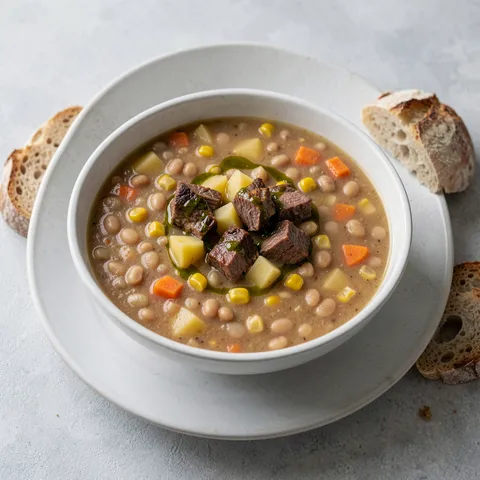 Istrian Bean and Sweetcorn Soup1 hr 55 min · Soup
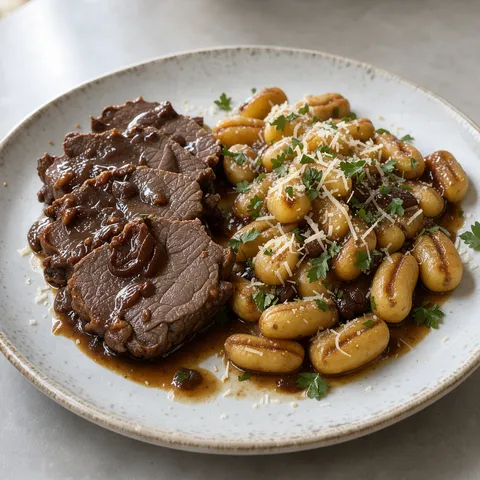 Dalmatian Beef with Prunes3 hr 30 min · Main course
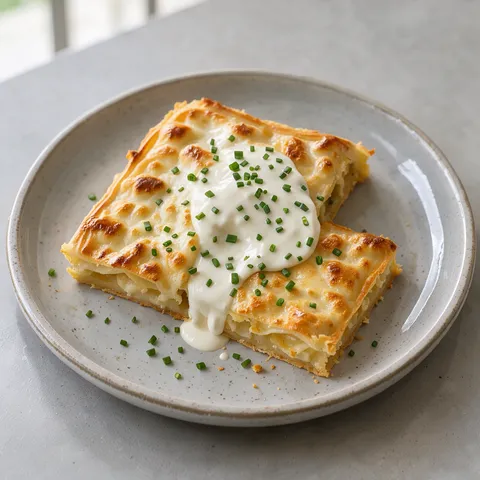 Zagorje Curd Cheese Parcels2 hr · Bread & pastry
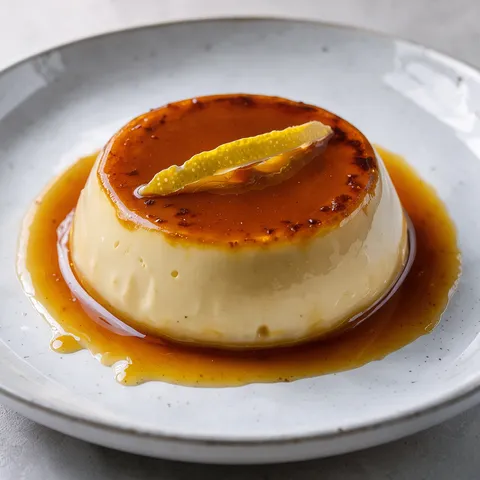 Dubrovnik Caramel Custard1 hr 20 min · Dessert
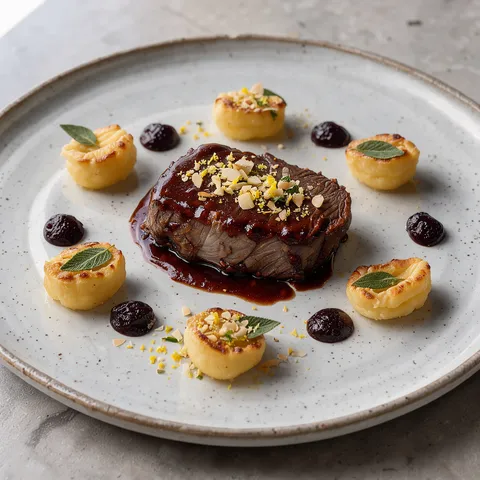 Pašticada 2.01 hr 30 min · Main course
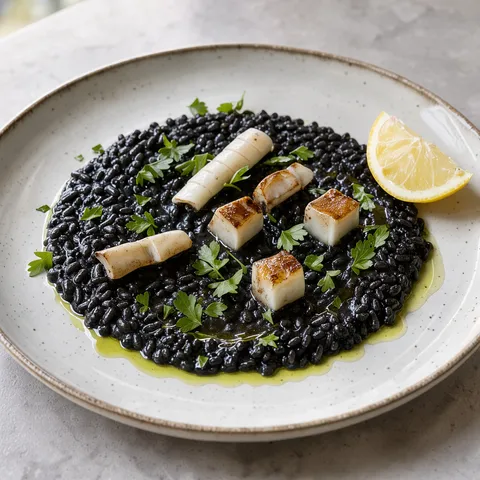 Dalmatian Black Risotto with Cuttlefish Ink1 hr · Main course