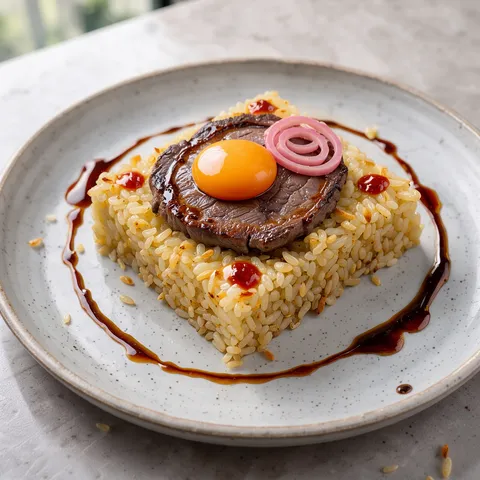
Tapsilog 2.0
A Filipino breakfast. Takes 54 min · +40 min resting, Serves 4. Difficulty: challenging.
At a glance
- Total time
- 54 min · +40 min resting
- Serves
- Serves 4
- Difficulty
- Challenging
- Cuisine
- Filipino cuisine
- Dish type
- Breakfast
- Allergens
- Gluten, Eggs, Soya, Celery
Ingredients
Cured egg yolks
- 4 egg yolks
- 100 g fine salt
- 100 g sugar
Tapa
- 450 g beef fillet (4 slices)
- 4 tbsp soy sauce
- 3 tbsp white vinegar
- 2 tbsp light brown sugar
- 3 garlic cloves
- 1/2 tsp black pepper
- 1 tbsp oil
Garlic rice brick
- 300 g rice
- 6 garlic cloves
- 3 tbsp oil
- 1 egg
- 1 tbsp cornflour
- 1/2 tsp fine salt
Shallot pickle
- 6 shallots
- 100 ml white vinegar
- 50 ml water
- 1 tbsp sugar
- 1/2 tsp salt
Chilli vinegar oil
- 4 tbsp sunflower oil
- 2 red chillies
- 1 garlic clove
- 1 tbsp white vinegar
Equipment
- Frying pan
- Saucepan
- Mixing bowls
- Rolling pin / oklava
- Baking paper
- Chopping board
- Chef's knife
- Pastry brush
- Probe thermometer (optional)
Method
- Cure the egg yolks: In a small, rimmed dish mix 100 g salt and 100 g sugar, make 4 hollows in it with a spoon, put an egg yolk in each hollow and cover the yolks with the remaining mixture. Leave for 40 min. The salt and sugar draw the water out of the yolk, so the outside of the yolk gels while the inside stays dense and creamy, the colour is bright orange, and it becomes an intense point of flavour with real weight next to the soy-vinegar tapa. The whites are not used separately and are kept for another dish (~4 min, then 40 min resting).
- Make the shallot pickle: Slice the 6 shallots into thin rings and put in a jar. Heat the 100 ml vinegar, 50 ml water, sugar and salt in a small pan and, when the sugar has dissolved, pour over the shallots. The hot brine softens the sharpness of the shallots and turns them bright pink within 20 min, giving freshness alongside the fatty meat (~5 min, during the curing).
- Cook the rice: Wash the 300 g rice and cook in a covered pan with 480 ml water over low heat for 13 min, turn off the heat and rest for 5 min, then spread thinly on a wide tray and cool for 15 min. To make the brick the rice needs to be cold and starchy. Hot rice stays mushy and falls apart in the pan (~33 min: 13 cooking, 5 resting, 15 cooling, during the curing).
- Prepare the fillet: Cut the 450 g fillet into 4 equal slices and gently flatten each slice to 8 mm thick between cling film with a rolling pin. Thin meat of even thickness cooks quickly and the marinade works in deeper, whereas thick parts stay raw and thin parts dry out (~7 min).
- Marinate the meat: Mix the soy sauce, vinegar, brown sugar, the 3 crushed garlic cloves and black pepper in a bowl, lay the meat in this liquid and leave for 20 min. The vinegar loosens the fibres of the meat, and the salty soy and sugar give browning and caramelisation on the surface. Marinating for longer leaves the surface of the meat looking boiled (marinating, 20 min).
- Prepare the rice brick mixture: Finely chop the 6 garlic cloves, fry in 2 tbsp oil over medium heat for 2 min until golden and mix with the cooled rice. Add the egg, cornflour and salt and mix by hand. The egg and cornflour bind the grains of rice together, and the brick keeps its shape when cooked (~6 min).
- Shape the brick: Press the mixture into a 20×20 cm dish lined with baking paper to a thickness of 2 cm, level the top and chill in the fridge for 10 min. The chilled mixture firms up and can be cut into neat squares with a knife (~4 min, then 10 min chilling).
- Make the glaze: Boil the marinade (with the meat taken out) in a small pan over medium heat for 5 min, until it reaches a syrupy consistency that coats the back of a spoon. The sugar and soy thicken into a glossy glaze, and because it has touched raw meat juices it must be boiled fully (~6 min, while the brick chills).
- Make the chilli vinegar oil: Finely chop the chillies and garlic and heat in a small pan with the 4 tbsp oil over low heat for 90 sec, without letting the aromatics fry. Turn off the heat, wait 30 sec and carefully add the 1 tbsp vinegar, as the hot oil may spit. The vinegar colours the oil red and leaves a hot-sour drizzle (~3 min, while the brick chills).
- Crisp up the rice bricks: Cut the chilled mixture into 4 squares, heat 1 tbsp oil in a large frying pan over medium-high heat and fry the squares in 2 batches (4 squares will not fit in one pan), 2 squares per batch, 3.5 min on each side, until golden and crisp, adding 1 tbsp more oil before the second batch, then drain on kitchen paper. The crisp outer crust contrasts with the soft rice (~14 min).
- Cook the tapa: Sear the meat in a separate pan with 1 tbsp oil over high heat, 40 sec on each side, until the edges are brown, then brush with the glaze and turn for 10 sec. Very hot, brief cooking keeps the meat pink and tender, while long cooking toughens it (~6 min).
- Prepare the yolks: Carefully lift the cured yolks out of the cure, rinse once quickly in a bowl of cold water and pat dry with kitchen paper. The outside of the yolk should be gelled and the inside dense and creamy. Rinsing removes excess salt (~3 min, while the brick chills).
- Plate: Put a rice brick in the middle of each plate, lay a slice of tapa on top at a slight angle, set a cured yolk on the tapa, arrange 5-6 shallot rings beside it and drip the chilli vinegar oil around. Draw a thin line of the remaining glaze along the edge of the meat. Serve hot (~5 min).
Chef's note
This recipe is a reinterpretation of the classic Tapsilog (marinated beef tapa, sinangag, egg): the three components are kept but their form changes. The tapa becomes thin fillet with a soy-vinegar glaze, the sinangag a crisp brick and the fried egg a cured yolk. The curing, rice and pickle run in parallel. The cured yolk is eaten raw, so for pregnant women, children and people with weakened immunity a fried egg is preferable to the salt-and-sugar cure. The classic counterpart is Tapsilog.
Frequently asked questions
- How are egg yolks cured?
- Bury the yolks in the salt and sugar mixture and leave for 40 minutes. The outside turns gel-like while the inside stays dense and creamy. Rinse once in cold water and dry before serving.
- Why isn't the beef fillet left long in the marinade?
- The vinegar loosens the meat fibres, but longer marinating leaves the surface of the meat looking boiled. In this recipe the beef marinates for 20 minutes.
- Why is the rice brick made with cold rice?
- For the brick the rice needs to be cold and starchy. Hot rice stays mushy and falls apart in the pan.
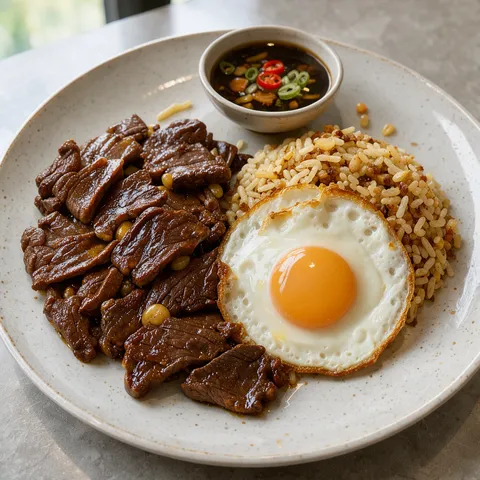 Filipino Beef Tapa Breakfast33 min · Breakfast
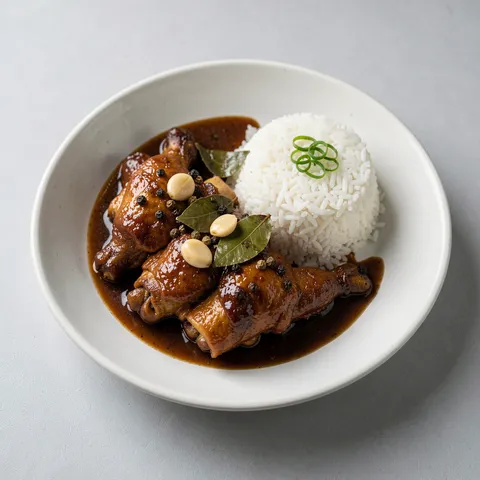 Filipino Chicken in Vinegar and Soy Sauce55 min · Main course
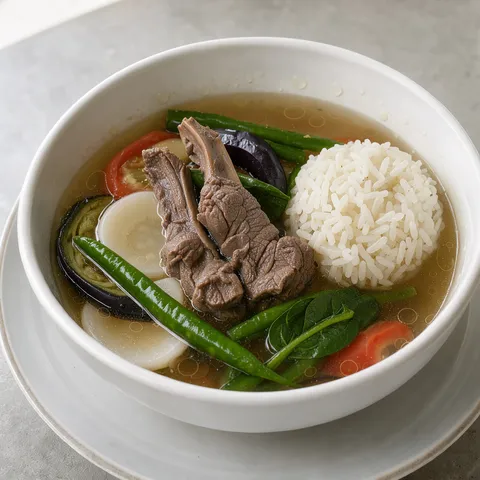 Sour Tamarind Beef Soup1 hr 20 min · Soup
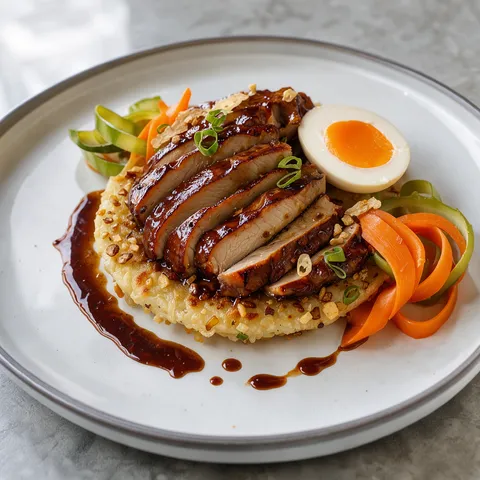 Chicken Adobo 2.01 hr 20 min · Main course
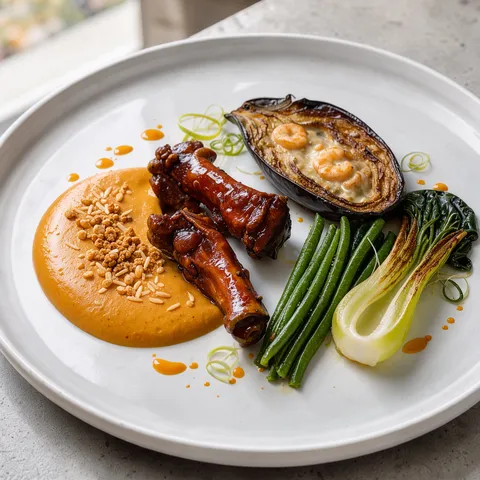 Kare-Kare 2.01 hr 30 min · Main course
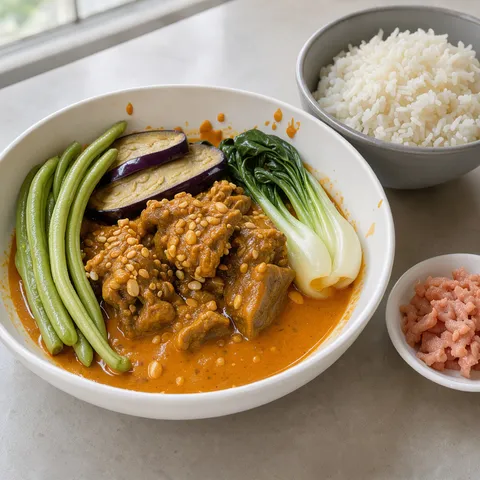 Filipino Oxtail Stew in Peanut Sauce3 hr 15 min · Main course
 Filipino Butter and Cheese Buns4 hr 10 min · Bread & pastry