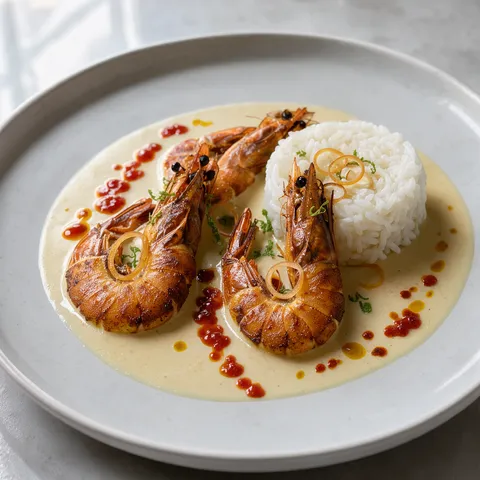
Udang Sambal Serai Bersantan 2.0
A Bruneian main course. Takes 1 hr 15 min, Serves 4. Difficulty: challenging.
At a glance
- Total time
- 1 hr 15 min
- Serves
- Serves 4
- Difficulty
- Challenging
- Cuisine
- Bruneian cuisine
- Dish type
- Main course
- Diet
- Gluten-free
- Allergens
- Milk, Crustaceans, Tree nuts
Ingredients
Prawns
- 12 large prawns (shell-on and head-on, about 700 g in total)
- 1 tbsp sunflower oil
- 1/4 tsp salt
Prawn oil
- prawn heads and shells
- 100 ml sunflower oil
- 1 dried red chilli
Lemongrass velouté
- 3 lemongrass stalks (chopped)
- 3 shallots (about 60 g, sliced)
- 2 garlic cloves
- 2 cm fresh ginger
- 1 tbsp sunflower oil
- 300 ml coconut milk
- 100 ml water
- 1 tsp tamarind paste
- 1 tsp caster sugar
- 1/2 tsp salt
- 20 g cold butter
Sambal
- 4 red chillies
- 1 shallot
- 1 garlic clove
- 1 tsp caster sugar
- a pinch of salt
- 1 tbsp lemon juice
Crispy shallots
- 4 shallots (cut into very thin rings)
- 250 ml sunflower oil
Coconut rice
- 150 g jasmine rice
- 120 ml coconut milk
- 100 ml water
- 1/4 tsp salt
To finish
- grated zest of 1 lemon
- coriander sprigs
Equipment
- Chopping board
- Chef's knife
- Mixing bowls
- Saucepan
- Fine sieve / chinois
- Stick blender
- Pestle and mortar
- Probe thermometer
- Colander
- Cast-iron frying pan
- Balloon whisk
- Cake ring / food ring
- Fine grater
- Wooden spoon / spatula
Method
- Plan the workflow: The prawn oil, velouté and rice progress at the same time on three hob rings, and the shallot crisps are made in a 16 cm saucepan when the rice is done. The prawn and sambal sauce of the classic is split here into three layers: a velvety lemongrass velouté, a raw sambal and a red oil drawn from the prawn shells
- Prepare the prawns: Pull the heads off the prawns, peel the shells leaving the tail ends on, slit the backs on a chopping board with a chef's knife and remove the intestinal veins. Keep the heads and shells in a separate bowl. Pat the prawns dry with kitchen paper and put in the fridge
- Draw the prawn oil: Heat the 100 ml oil in a small saucepan over medium heat, add the heads, shells and dried chilli and fry for 8-10 min, pressing the heads with a wooden spoon, until the shells turn dark orange and the oil turns red. Press through a fine sieve. A glossy red oil that smells of prawns remains, and it keeps for 3 days in the fridge
- Cook the rice: Wash the rice, bring to the boil in a saucepan with the coconut milk, water and salt, cover and cook over the lowest heat for 12 min, then leave to steam for 10 min. Coconut milk can catch on the bottom, so stir once at the first boil
- Sweat the velouté base: Heat the oil in a 20 cm saucepan over low-medium heat and cook the lemongrass, shallots, garlic and ginger for 5 min, turning, until soft and without colour. If they colour, the sauce turns brown and loses the fresh aroma of the lemongrass
- Cook and strain the velouté: Add the coconut milk and water, bring to a gentle boil and cook for 12 min, then add the tamarind, sugar and salt. Blend with a stick blender for 1 min until smooth and press through a fine sieve. Return to the pan and reduce for 3-4 min to a consistency that coats the back of a spoon
- Make the raw sambal: Pound the chillies, shallot, garlic, sugar and salt in a mortar for 3 min into a coarse paste and mix in the lemon juice. The raw sambal stays sharp and fresh, as a contrast to the long-cooked paste of the classic
- Crisp the shallots: Put the 250 ml oil (about 1.2 cm deep) with the shallot rings in a cold 16 cm saucepan on the hob and cook over medium heat for 8-10 min, stirring, until the shallots turn golden. The oil should be about 150°C on a thermometer. Lift out with a colander onto kitchen paper. They turn bitter after they brown, so take them out at a light golden colour
- Cook the prawns: Heat a cast-iron pan over high heat for 2 min, add the 1 tbsp oil, season the prawns with the salt and lay them in a single layer. Fry for 1 min 30 sec on one side and 1 min on the other. Take them off when the edges caramelise and the insides have just turned opaque. A thermometer reading of 60-63°C is enough
- Thicken the velouté: Finely grate the lemon zest with a microplane and set aside. Take the velouté off the heat and whisk in the cold butter. It should be glossy and silky. Do not boil it again, or the coconut milk and butter split
- Plate: Mould the coconut rice with an 8 cm ring on one side of a shallow bowl. Pour 3 tbsp of velouté beside the rice and arrange 3 prawns on it with the tails pointing up. Put a teaspoon-tip of raw sambal on each prawn and drip 6-8 drops of prawn oil onto the velouté. Finish with the crispy shallots, lemon zest and coriander sprigs
Chef's note
The prawn, lemongrass, coconut milk and hot sambal elements of the classic Udang Sambal Serai Bersantan (Bruneian Coconut Prawns) are kept. The strained, butter-enriched velouté, the oil drawn from prawn shells, the raw sambal and the crispy shallots are modern techniques. The prawn shell oil is not suitable for people with shellfish allergies.
Frequently asked questions
- Why do crisp shallots turn bitter?
- Shallots turn bitter once they go brown. Lift them out with a slotted spoon while light golden.
- At what internal temperature are the prawns cooked?
- 60-63°C on a thermometer is enough. Take the prawns off when the edges are caramelised and the middle has just turned opaque.
- Why isn't the lemongrass velouté boiled?
- If it is boiled after the butter goes in, the coconut milk and butter separate. The velouté should stay glossy and silky.
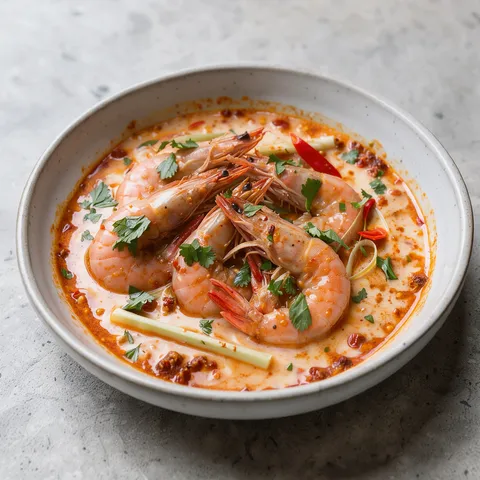 Bruneian Coconut Prawns45 min · Main course
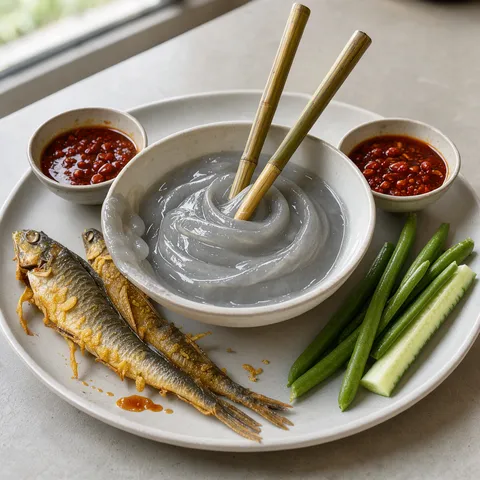 Bruneian Sago Starch Porridge1 hr · Main course
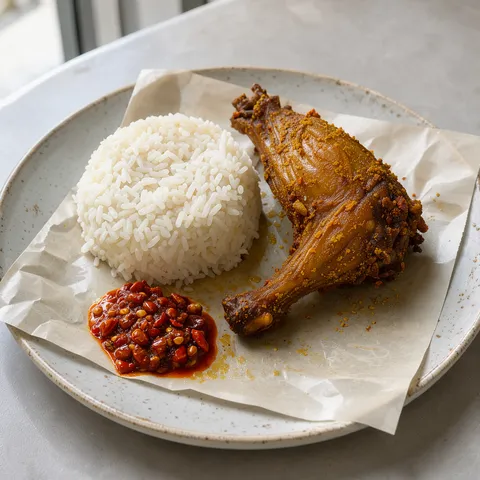 Bruneian Fried Chicken and Rice1 hr 10 min · Main course
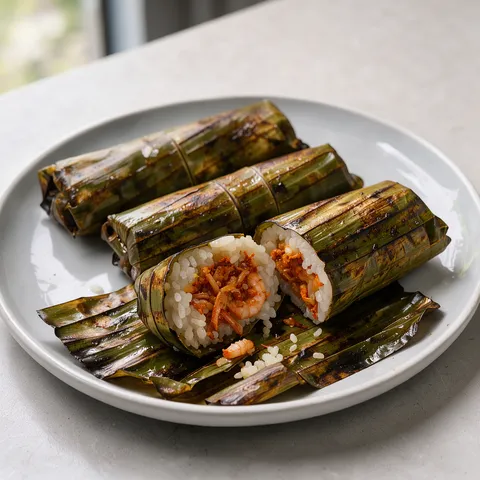 Bruneian Prawn-Filled Sticky Rice Rolls1 hr 40 min · Meze
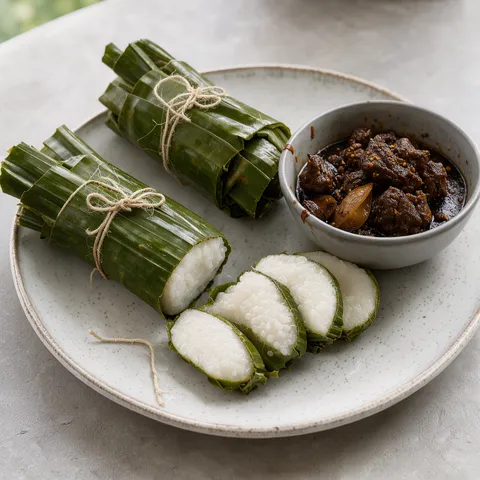 Bruneian Leaf-Wrapped Sticky Rice2 hr · Side dish
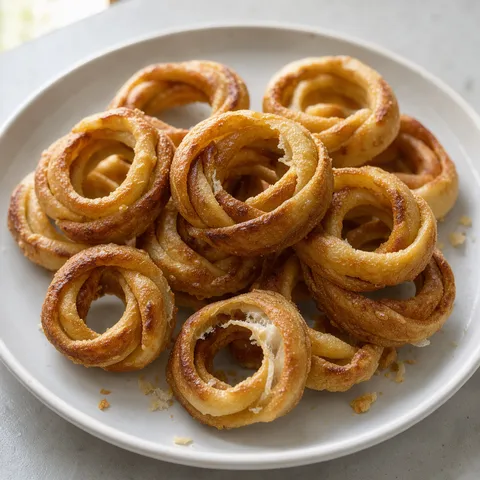 Bruneian Fried Rice Flour Rings1 hr 30 min · Dessert
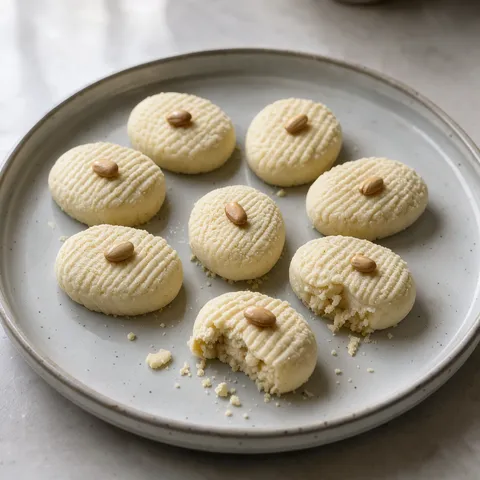 Bruneian Toasted Flour Eid Biscuits1 hr 20 min · Dessert