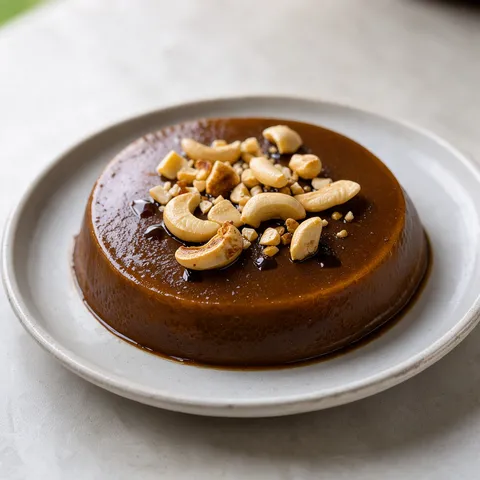
Sri Lankan Coconut Custard with Kithul Jaggery Watalappan
A Sri Lankan dessert. Takes 1 hr 5 min · +2 hr chilling, 4 servings (4 bowls). Difficulty: medium.
At a glance
- Total time
- 1 hr 5 min · +2 hr chilling
- Serves
- 4 servings (4 bowls)
- Difficulty
- Medium
- Cuisine
- Sri Lankan cuisine
- Dish type
- Dessert
- Diet
- Gluten-free
- Allergens
- Milk, Eggs, Tree nuts
Ingredients
Custard
- 200 g kithul jaggery (Sri Lankan palm sugar, or gula melaka/coconut sugar)
- 80 ml water
- 400 ml thick coconut milk
- 4 large eggs
- 2 egg yolks
- 1/2 tsp ground cardamom (freshly ground)
- 1/4 tsp nutmeg (freshly grated)
- 1/4 tsp cinnamon
- a pinch of ground cloves
- a pinch of salt
Moulds
- 4 heatproof bowls (200 ml each) or 1 dish (1 litre)
- 1 tsp butter
Topping
- 30 g raw cashews (roughly broken)
Equipment
- Saucepan
- Fine sieve / chinois
- Oven
- Baking tray
- Bain-marie bowl
- Mixing bowls
- Balloon whisk
- Box grater (optional)
Method
- Melt the jaggery: Grate the jaggery with a knife or break it up finely, put it in a small saucepan with the water and melt it completely over low heat, stirring, without letting it boil. The syrup should be dark brown with a smoky caramel smell. Strain through a fine sieve to remove any sediment and fibres, then let cool slightly
- Prepare the oven and water bath: Preheat the oven to 160°C. Grease the bowls with butter and set them in a roasting tin. Boil water in a kettle. The water bath cooks the custard gently: under direct heat the eggs curdle and the custard becomes riddled with large, uneven bubbles
- Mix the eggs: Mix the eggs and yolks in a bowl with a fork or whisk just until combined, without frothing. Over-beaten eggs leave bubbles on the surface and holes inside as they cook
- Combine the mixture: Pour the lukewarm jaggery syrup into the eggs in a thin stream, stirring. Then add the coconut milk, cardamom, nutmeg, cinnamon, cloves and salt. Pass the mixture through a fine sieve twice so no lumps of sugar or egg remain. Skim off any foam from the surface with a spoon
- Divide between the bowls: Pour the mixture evenly into the bowls and scatter a few cashews over each. Put the tin in the oven and pour boiling water into it to come halfway up the bowls. Cover the bowls loosely with foil so the surface does not dry out
- Bake: Bake at 160°C for 40-45 min. When you shake a bowl gently, the edges should be set and the centre should wobble slightly like a jelly. A knife inserted in the centre should come out clean. The signature texture of watalappan: small, slightly honeycombed holes inside from the jaggery, which are a sign of the sugar, not of overcooking, and differ from uncontrolled egg bubbles
- Chill: Lift the bowls out of the water bath and let cool slightly on a wire rack for 20 min, then chill in the fridge for at least 2 hr. As it cools the custard firms up and the spice flavours settle
- Plate: Serve in the bowl on a small plate, or run a knife around the edge and turn out onto a plate. The toasted cashew pieces should show on the dark brown, glossy surface. Drizzle a few drops of jaggery syrup alongside if you like
Chef's note
Watalappan is the dessert of the Malay community that came to Sri Lanka from Southeast Asia, and is made especially for Eid al-Fitr. Kithul jaggery is a traditional sugar made from the sap of the kithul palm and is not produced in home kitchens; if unavailable, use gula melaka or coconut sugar. Coconut milk is traditionally bought ready-made.
Frequently asked questions
- Why does watalappan end up full of holes?
- If the eggs are whisked too much or cooked in direct heat, large uneven bubbles form. A water bath cooks the custard gently.
- How can I tell when watalappan is cooked?
- The edges should be set and the centre should wobble slightly like jelly. A knife pushed into the middle should come out clean.
- Why is watalappan chilled?
- The custard firms up as it cools and the spice flavours settle. Chill the bowls in the fridge before serving.
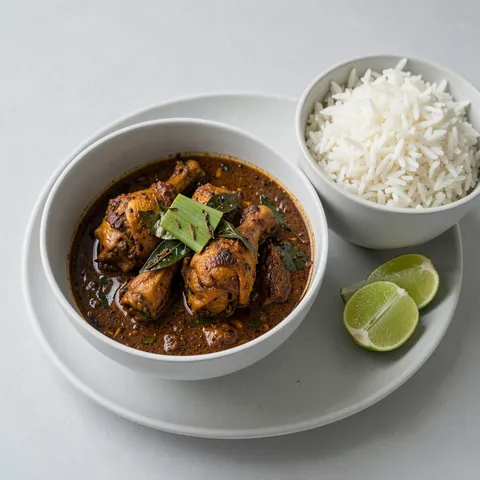 Sri Lankan Chicken Curry1 hr 15 min · Main course
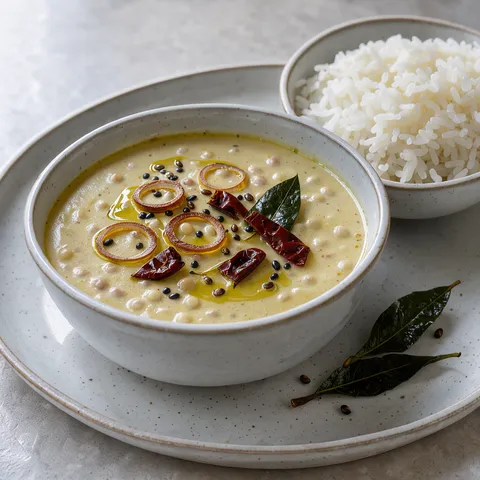 Sri Lankan Red Lentil Curry with Coconut45 min · Side dish
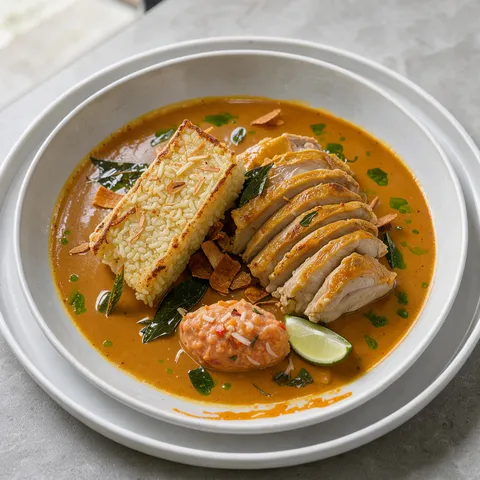 Kukul Mas Curry 2.01 hr 25 min · Main course
 Southern Sri Lankan Sour Tuna1 hr 15 min · Main course
 Pol Roti and Lunu Miris1 hr 15 min · Bread & pastry
 Sri Lankan Sweet-Sour Aubergine Pickle1 hr 5 min · Side dish