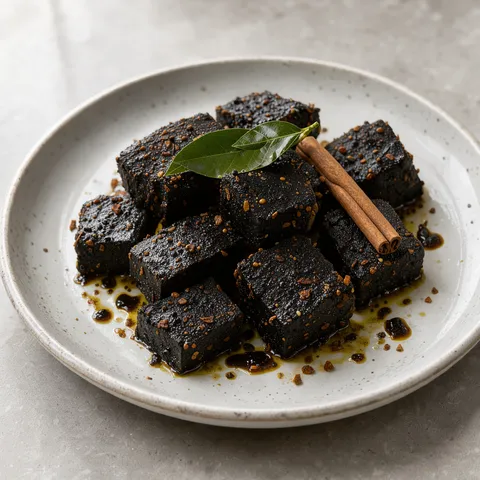
Southern Sri Lankan Sour Tuna Ambul Thiyal
A Sri Lankan main course. Takes 1 hr 15 min, Serves 4. Difficulty: medium.
At a glance
- Total time
- 1 hr 15 min
- Serves
- Serves 4
- Difficulty
- Medium
- Cuisine
- Sri Lankan cuisine
- Dish type
- Main course
- Diet
- Gluten-free
- Allergens
- Fish, Tree nuts
Ingredients
Fish
- 700 g fresh tuna (skinless, boneless, 4 cm cubes)
- 1/2 tsp salt
Goraka paste
- 6 pieces of dried goraka (about 20 g)
- 100 ml hot water
- 2 tsp black peppercorns
- 6 garlic cloves
- 20 g ginger
- 1/2 tsp chilli powder
- 1/2 tsp turmeric
- 1 tsp salt
To cook
- 15 curry leaves
- 1 piece of Ceylon cinnamon (5 cm)
- 5 cm pandan leaf (rampe)
- 1 tbsp coconut oil
- 100 ml water
Equipment
- Mixing bowls
- Pestle and mortar
- Heavy-based saucepan
- Chef's knife
- Chopping board
- Blender (optional)
- Probe thermometer (optional)
Method
- Soak the goraka: Rinse the goraka pieces and soak them in 100 ml hot water for 15 min. They are ready when soft and pliable. Do not throw away the soaking water, keep it: some of the sourness has passed into it
- Prepare the fish: While the goraka soaks, pat the tuna cubes thoroughly dry with kitchen paper, sprinkle with 1/2 tsp salt and leave for 10 min. Large cubes do not fall apart during the long, dry cooking, whereas tuna cut small dries out and turns stringy
- Pound the paste: Coarsely pound the peppercorns in a pestle and mortar, then add the garlic and ginger and keep crushing. Add the soaked goraka pieces and pound for 4-5 min to a fibrous, dark brown paste. Stir in the chilli powder, turmeric, salt and 2 tbsp of the goraka water. If you use a blender instead of a mortar, pulse briefly: the paste should be slightly grainy, not smooth
- Coat the fish: In a bowl, rub the paste onto the cubes by hand until every side has a thick coat. Turmeric stains your hands, so you can wear gloves. Leave for 10 min: the goraka acid and salt firm up the outside of the fish
- Arrange in the pan: Spread half the curry leaves, the cinnamon and the pandan over the base of a 20 cm heavy-based saucepan. Arrange the fish in a single layer and scatter the remaining curry leaves on top. Pour the remaining goraka water and 100 ml water in around the edges, scraping in the paste left in the bowl as well: the liquid should come about a quarter of the way up the cubes (about 1 cm). Drizzle the coconut oil over the top
- Cook over low heat: Cover, bring to the boil over medium heat, then cook over the lowest heat for 25 min. Do not stir with a spoon, as the fish will break: instead, hold the pan with both hands and swirl it from time to time. The sauce thickens and the fish takes on the colour of the paste
- Reduce the liquid: Uncover and keep cooking over medium-low heat for 8-10 min, swirling the pan. It is ready when the liquid has completely evaporated and the cubes are wrapped in a dark brown, almost black, glossy crust: only oil should sizzle at the bottom of the pan. If it catches, add a spoonful of water. The inside of the fish should be completely opaque and firm, and a thermometer will read above 63°C
- Rest: Take off the heat and leave, covered, for 5 min: the flavours settle and the crust firms up a little more
- Plate: Pile the cubes in a low mound on a shallow plate, leaving the curry leaves and cinnamon on top. Spoon the dark oil from the bottom of the pan over the cubes so the contrast between the dark crust and the bright green curry leaves shows
Chef's note
Ambul thiyal is a preserving dish born on Sri Lanka's southern coast, around Galle and Matara: thanks to the acidity of goraka and plenty of black pepper, it used to keep for days without a fridge. It is traditionally cooked in a clay pot (chatty), and a heavy-based saucepan gives the same slow heat. Goraka (Garcinia gummi-gutta) is dried, blackened fruit segments and is bought ready-made; if unavailable, use 2 tbsp tamarind concentrate, though the flavour will be fruitier. It keeps for up to 3 days in the fridge and tastes better the next day. It is eaten with rice, parippu and pol sambol.
Frequently asked questions
- Why is the tuna cut into large cubes?
- Large cubes don't break up in the long, dry cooking, while tuna cut small dries out and turns stringy. The cubes should be 4 cm.
- Why isn't ambul thiyal stirred while it cooks?
- Stirring with a spoon breaks the fish. Instead, every so often hold the pot with both hands and swirl it in a circular motion.
- What is goraka and why isn't the soaking water thrown away?
- Goraka is a dried fruit that gives the dish its sour taste. Some of the sourness passes into the soaking water, so it isn't thrown away and is used in the paste and in the cooking.
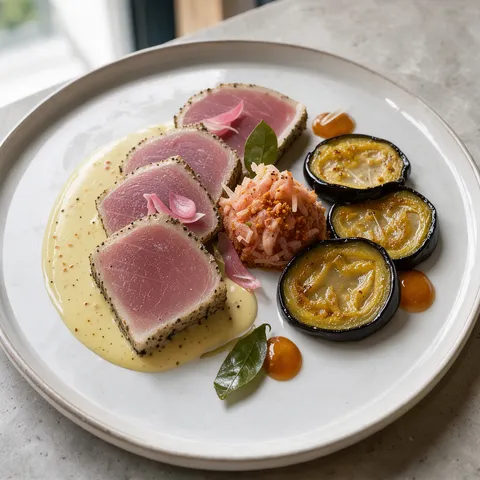 Ambul Thiyal 2.01 hr 20 min · Main course
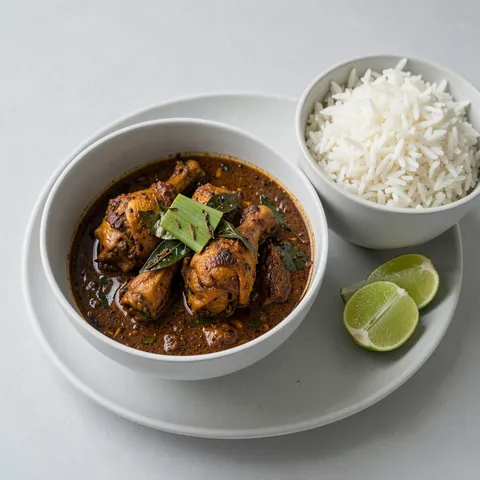 Sri Lankan Chicken Curry1 hr 15 min · Main course
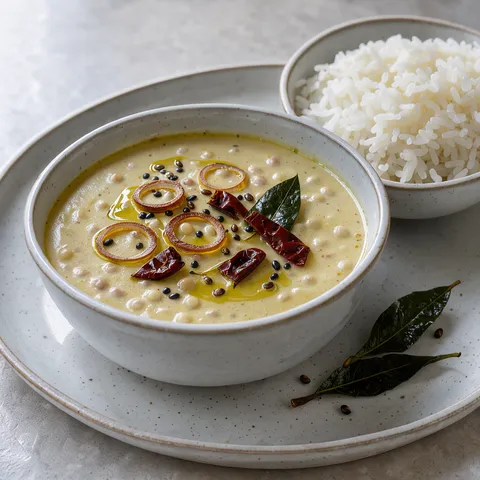 Sri Lankan Red Lentil Curry with Coconut45 min · Side dish
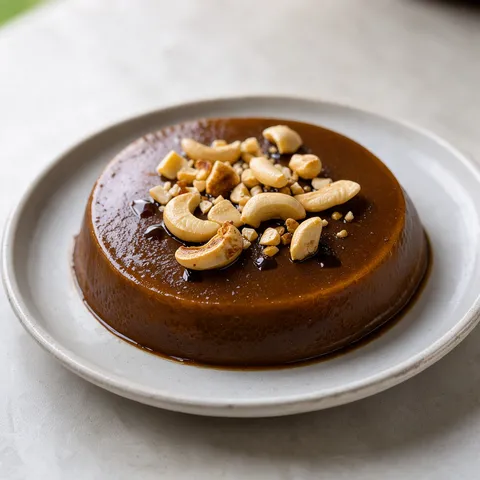 Sri Lankan Coconut Custard with Kithul Jaggery1 hr 5 min · Dessert
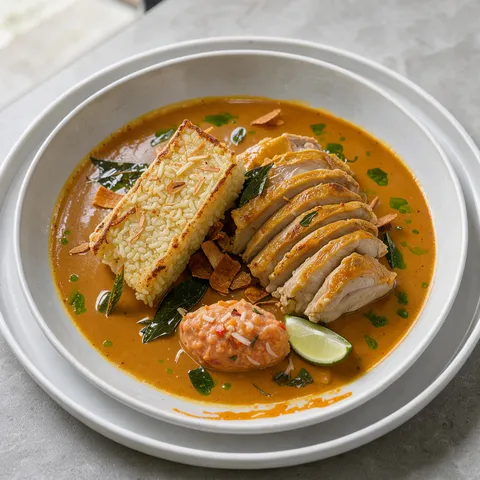 Kukul Mas Curry 2.01 hr 25 min · Main course
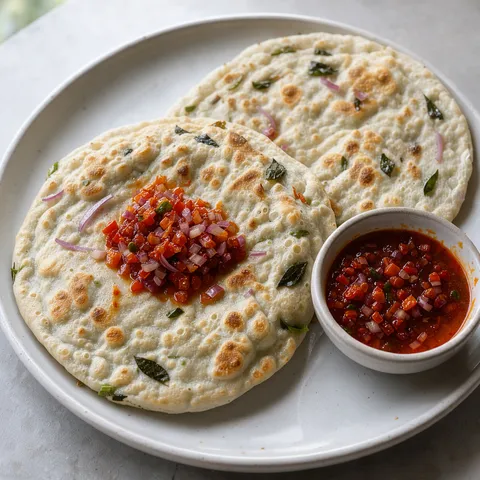 Pol Roti and Lunu Miris1 hr 15 min · Bread & pastry
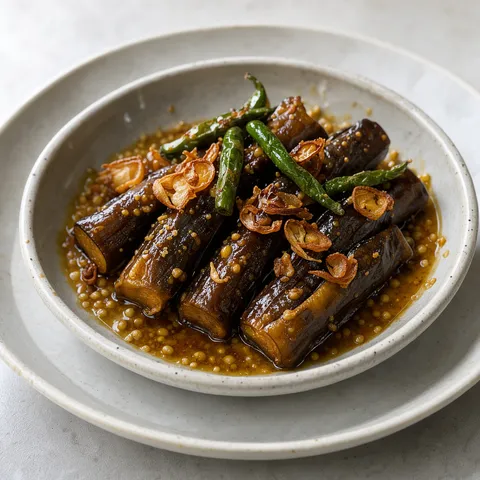 Sri Lankan Sweet-Sour Aubergine Pickle1 hr 5 min · Side dish