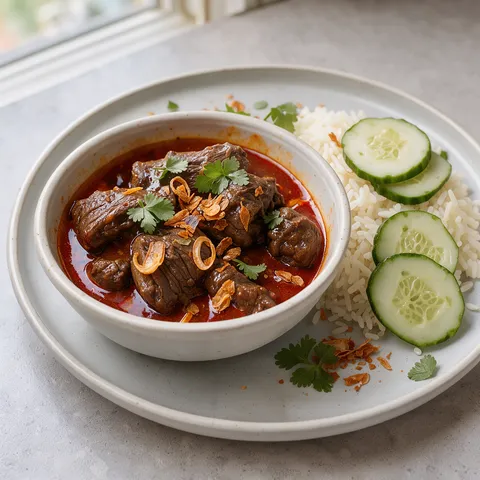
Burmese Slow-Cooked Beef Curry Amè Hnat
A Burmese main course. Takes 1 hr 45 min · +15 min marinating (ordinary pan: ~3 hr), Serves 4. Difficulty: medium.
At a glance
- Total time
- 1 hr 45 min · +15 min marinating (ordinary pan: ~3 hr)
- Serves
- Serves 4
- Difficulty
- Medium
- Cuisine
- Burmese cuisine
- Dish type
- Main course
- Diet
- Gluten-free
- Allergens
- Fish, Peanuts
Ingredients
Meat
- 900 g beef brisket or chuck (4 cm cubes)
- 1 tsp salt
- 1/2 tsp turmeric
- 1 tbsp fish sauce
Paste
- 2 large onions (about 350 g, roughly chopped)
- 8 garlic cloves
- 30 g ginger
Curry
- 80 ml groundnut oil or sunflower oil
- 2 tsp sweet paprika
- 1/2 tsp hot chilli powder
- 1 tsp garam masala
- 2 cardamom pods (crushed)
- 1 cinnamon stick (5 cm)
- 2 bay leaves
- 1 tomato (grated)
- 500 ml water
- 1 tbsp fish sauce
- 1 tsp sugar
To finish
- 2 shallots (thin rings)
- 3 tbsp sunflower oil
- 1/4 bunch coriander
To serve
- 300 g jasmine rice
- 420 ml water
- 1 cucumber (sliced)
Equipment
- Chef's knife
- Chopping board
- Mixing bowls
- Food processor
- Pressure cooker
- Wooden spoon / spatula
- Saucepan
- Frying pan
- Box grater
- Heavy-based saucepan (optional)
Method
- Marinate the meat: Rub the cubes of meat with the salt, turmeric and fish sauce in a bowl and leave for 15 min. The turmeric colours the surface of the meat and gives Burmese curries their golden tone
- Blend the paste: Blend the onions, garlic and ginger in a food processor for 3 min, to a wet, smooth paste. Burmese curries are less spiced than Indian curries, and their base is this onion and garlic paste
- Fry the paste: Put a 6-litre pressure cooker over medium heat, heat the oil and add the paste. Fry for 15 min, stirring often with a wooden spoon. The paste first releases its liquid, then starts to sizzle in the oil and turns light golden brown. This patient frying sets the sweetness and depth: if rushed, the curry tastes of raw onion
- Add the spices: Add the paprika and chilli powder, garam masala, cardamom, cinnamon and bay leaves and stir for 1 min. Add the tomato and cook for 2 min
- Coat the meat: Add the meat and turn it for 5 min, until coated in paste on every side and changed in colour
- Pressure-cook: Add the water: the cooker should be no more than half full. Close the lid, bring to pressure over medium-high heat (about 10 min), then lower the heat and cook for 35 min. Take off the heat and let the pressure release naturally (about 10 min). In an ordinary heavy-based pan, cook covered over low heat for 2 hr 15 min, adding water from time to time
- Bring back the oil: Open the lid. The meat should fall apart when pressed with a fork. Reduce the sauce uncovered over medium heat for 15 min, stirring occasionally. As the liquid evaporates, the oil rises to the top of the sauce and around the edges. In Burma this is said to be called the oil returning, and it shows that the curry is done. The sauce should be thick and deep red, clinging to the meat. Meanwhile, cook the rice: wash it twice, bring it to the boil with the 420 ml water, cook covered over low heat for 15 min, then turn off the heat and leave it to steam, covered
- Season: Add the fish sauce and sugar, stir for 2 min and check the salt. Remove the cinnamon and bay leaves
- Rest: Take off the heat and rest for 5 min: the sauce thickens a little more and the oil gathers in a glossy layer. Meanwhile, put the oil and shallot rings in a small frying pan over medium heat and fry, stirring, for 6-7 min, until golden, then transfer to kitchen paper
- Plate: Transfer the curry to a bowl, leaving some of the red oil that has gathered on top. Scatter with the fried shallots and coriander. Serve with plain rice and cucumber slices alongside
Chef's note
Amè hnat is a classic beef curry that comes to the Burmese table together with rice, soup and salad. The oil that gathers on the surface is intentional, and some of it can be skimmed off when serving.
Frequently asked questions
- What does the oil coming back mean in a Burmese curry?
- As the water evaporates, the oil rises to the top and sides of the sauce. In Burma this is described as the oil coming back, and it shows that the curry is done. The sauce should be a deep red that clings to the meat.
- Can Amè Hnat be cooked without a pressure cooker?
- Yes, in an ordinary heavy-based pot, cook covered over low heat for 2 hours 15 minutes, adding water now and then.
- Why is the onion and garlic paste fried for 15 minutes?
- This patient frying determines the sweetness and depth. If rushed, the curry tastes of raw onion.
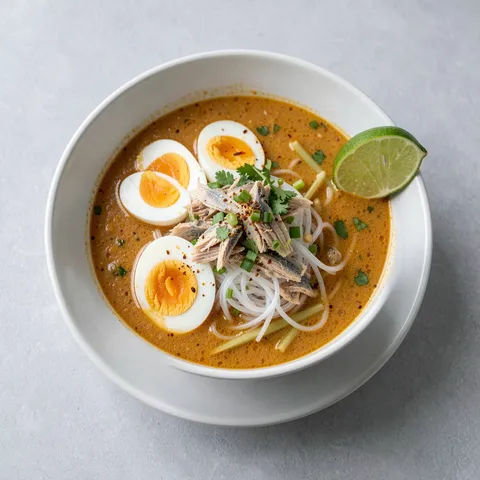 Burmese Lemongrass Fish Soup with Rice Noodles1 hr 10 min · Soup
 Burmese Fermented Tea Leaf Salad45 min · Meze
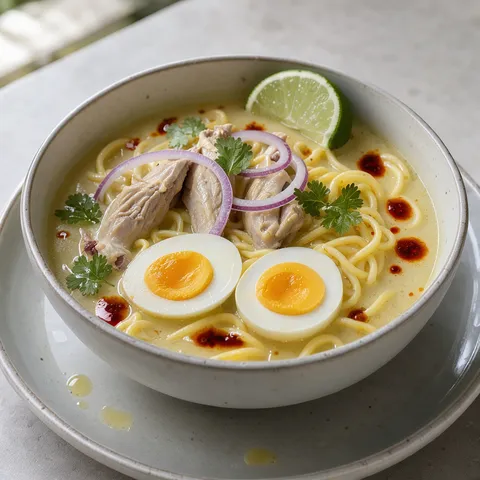 Burmese Coconut Chicken Noodle Soup1 hr 5 min · Main course
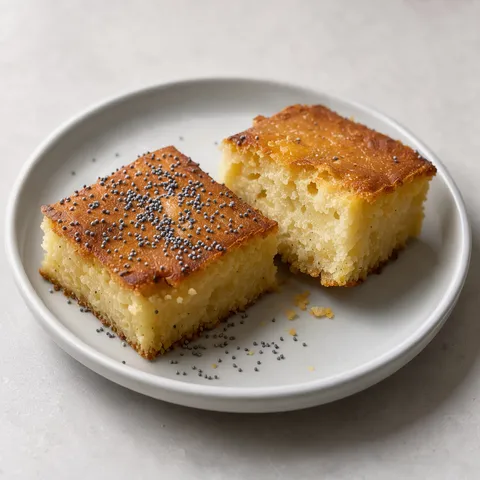 Burmese Semolina Cake with Coconut Milk1 hr 40 min · Dessert
 Mohinga 2.01 hr 25 min · Main course
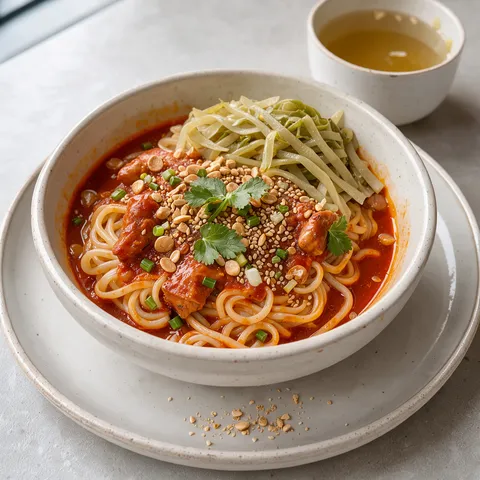 Shan Rice Noodles with Chicken Sauce55 min · Main course