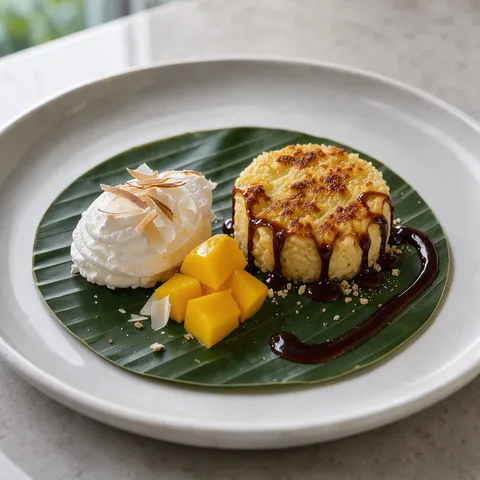
Bibingka 2.0
A Filipino dessert. Takes 1 hr 10 min, Serves 4. Difficulty: challenging.
At a glance
- Total time
- 1 hr 10 min
- Serves
- Serves 4
- Difficulty
- Challenging
- Cuisine
- Filipino cuisine
- Dish type
- Dessert
- Diet
- Gluten-free
- Allergens
- Milk, Eggs, Tree nuts
Ingredients
Moulds
- 4 soufflé dishes of 10 cm (about 250 ml each)
- 4 banana leaf circles of 12 cm (or baking paper if unavailable)
- 10 g butter (for greasing)
Brown butter
- 70 g butter
Batter
- 100 g rice flour
- 25 g glutinous rice flour
- 1 tsp baking powder
- a pinch of salt
- 2 eggs
- 75 g caster sugar
- 200 ml unsweetened coconut milk
- the brown butter (from above)
Cheese crumble
- 40 g full-fat white brined cheese (finely crumbled)
- 15 g soft butter
- 1 tbsp caster sugar
Calamansi-muscovado caramel
- 80 g muscovado or dark brown sugar
- 30 ml water
- 60 ml whipping cream (at least 30% fat)
- 1 tbsp calamansi or lime juice
- a pinch of salt
Coconut cream
- 200 ml coconut cream (at least 20% fat, chilled in the fridge)
- 1 tbsp icing sugar
- finely grated zest of 1/2 lime
Mango
- 1 ripe mango
- 1 tsp lime juice
Toasted coconut
- 20 g desiccated coconut
Equipment
- Oven
- Pastry brush
- Saucepan
- Mixing bowls
- Balloon whisk
- Chopping board
- Chef's knife
- Frying pan
- Baking tray
- Hand mixer
Method
- Prepare the oven and moulds: Preheat the oven to 200°C. Pass the banana leaf circles over a low gas flame for a few seconds so they soften and turn glossy. Brush the insides of the soufflé dishes with butter using a pastry brush and place a banana leaf circle in the bottom of each, letting the edges curl up the sides. This keeps the leaf aroma of the classic bibingka in every portion
- Make the brown butter: Melt the 70 g butter in a small saucepan over medium heat and cook for 4-5 min, stirring constantly. As soon as the foam subsides, hazelnut-brown specks form on the bottom and it smells nutty, pour it into a bowl, specks and all. The brown butter replaces the plain butter of the classic and adds a toasted depth to the coconut
- Make the batter: Whisk the rice flour, glutinous rice flour, baking powder and salt in a bowl. In another bowl, whisk the eggs and sugar for 2 min until pale, then add the coconut milk and the slightly cooled brown butter. Add the dry ingredients, whisk until lump-free and rest for 10 min so the rice flour absorbs the liquid
- Cook the caramel: While the batter rests, melt the muscovado with the water in a small saucepan over medium heat and boil for 3 min. Reduce the heat, add the cream slowly, taking care as it bubbles up, and cook for 2 min, whisking. Take off the heat and add the calamansi juice and salt. While warm, the caramel should be a sauce that runs slowly off a spoon. The sourness of the calamansi cuts through the molasses-like sugar
- Prepare the mango and coconut: Peel the mango and, on a chopping board, cut it into small 5 mm cubes with a chef's knife, then mix with the lime juice. Toast the desiccated coconut in a small dry frying pan over medium heat for 2-3 min, until golden, and transfer to a plate
- Bake: Divide the batter evenly between the soufflé dishes, filling each about halfway (130 ml), as it fills the dish when it rises. Place the dishes on a tray and bake on the middle shelf for 15 min. The surface should be risen and set but still pale
- Add the cheese crumble and caramelise: Rub the cheese, soft butter and sugar together with your fingertips into coarse crumbs. Take out the dishes and scatter the crumble over the tops. Switch the oven to the grill setting at 230°C and cook the dishes on the top shelf for 3-4 min, until the crumble browns in places and puffs up. A skewer inserted in the centre should come out clean. The salty cheese and buttery sugar topping of the classic becomes a single crunchy crumble here
- Whip the coconut cream: While the cakes are in the oven, whip the cold coconut cream, icing sugar and lime zest with an electric hand mixer for 2-3 min, until soft peaks form. The cream will not whip if it is not cold, so if it has warmed up, whip it with the bowl set inside a larger bowl full of ice. Keep in the fridge until serving
- Rest and unmould: Let the cakes cool slightly for 5 min. Run a knife around the edge of each dish, invert the cake with its leaf onto a plate, then turn it the right way up again so the crumble side is on top. The banana leaf stays under the cake like a plate
- Plate: Spoon a stripe of caramel along one side of each plate. Place the cake beside the caramel and spoon a little caramel over the top so it trickles down the crumble. Beside the cake, add a quenelle of coconut cream shaped with two spoons and scatter over the toasted coconut. Place the mango cubes in a small pile next to the cream. Serve while the cake is warm
Chef's note
The three Christmas-morning elements of bibingka, that is, the leaf aroma, the chewy rice texture and the sweet topping with salty cheese, are kept and turned into an individual plated dessert. Brown butter brings toasted depth, the calamansi muscovado caramel a sweet-sour sauce, and the mango and coconut cream freshness. As salted duck eggs are hard to find, the saltiness of the white brined cheese takes on this role. Coconut cream is traditionally bought ready-made, so keep it cold in the fridge. Small 10 cm cast-iron pans also work instead of soufflé dishes.
Frequently asked questions
- When is the brown butter ready?
- When the foam subsides and hazelnut-brown solids form at the bottom, and you can smell a nutty aroma. Tip it into a bowl, solids included.
- What if the coconut cream won't whip up?
- Cream won't whip unless it is cold. Set the bowl inside a larger bowl filled with ice and whisk.
- What can I use if I can't find banana leaf?
- You can use baking paper. If you have banana leaf, soften it by holding it over a low flame for a few seconds.
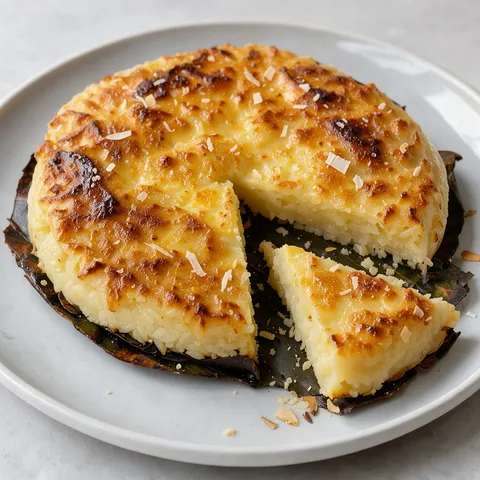 Baked Coconut Rice Cake in Banana Leaf1 hr 10 min · Dessert
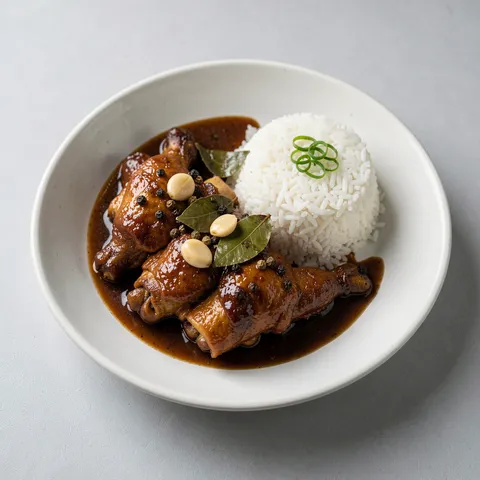 Filipino Chicken in Vinegar and Soy Sauce55 min · Main course
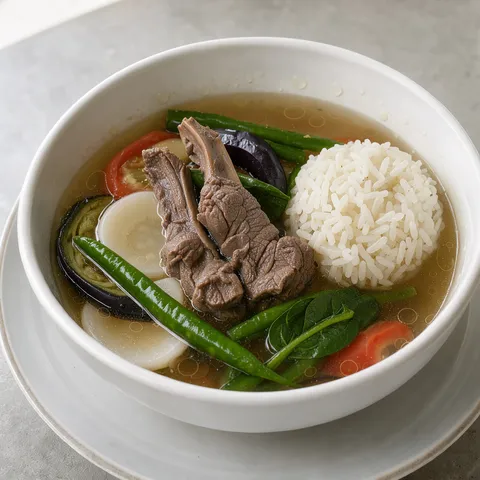 Sour Tamarind Beef Soup1 hr 20 min · Soup
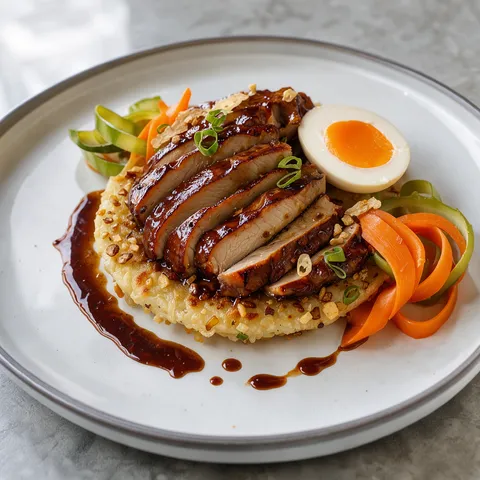 Chicken Adobo 2.01 hr 20 min · Main course
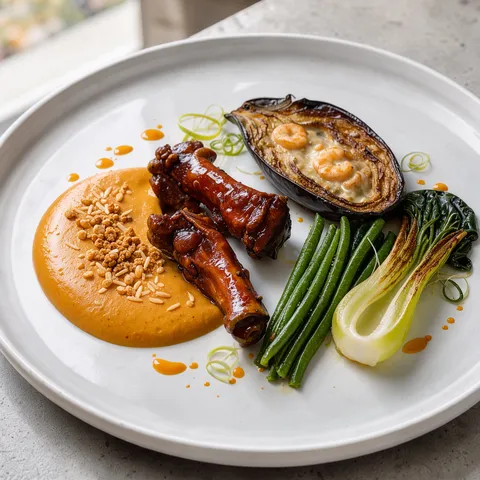 Kare-Kare 2.01 hr 30 min · Main course
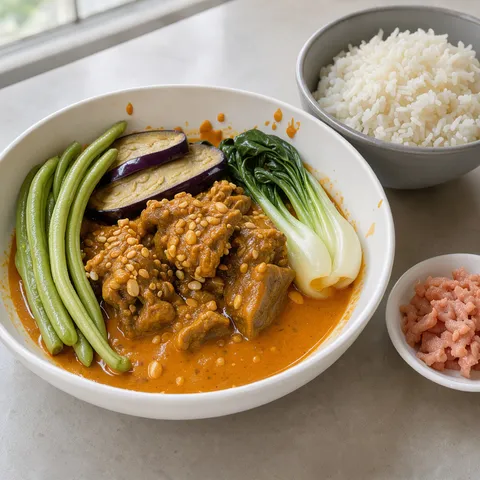 Filipino Oxtail Stew in Peanut Sauce3 hr 15 min · Main course
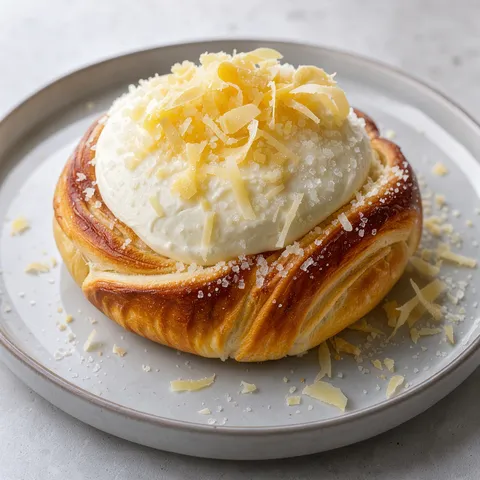 Filipino Butter and Cheese Buns4 hr 10 min · Bread & pastry