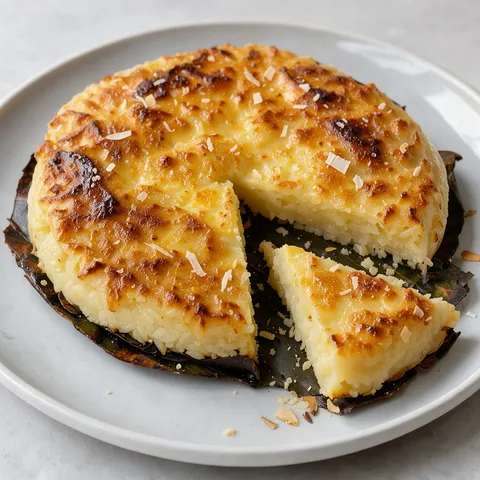
Baked Coconut Rice Cake in Banana Leaf Bibingka
A Filipino dessert. Takes 1 hr 10 min, Serves 4. Difficulty: medium.
At a glance
- Total time
- 1 hr 10 min
- Serves
- Serves 4
- Difficulty
- Medium
- Cuisine
- Filipino cuisine
- Dish type
- Dessert
- Allergens
- Gluten, Milk, Eggs, Tree nuts
Ingredients
Tin
- 2 pieces of banana leaf (or baking paper if unavailable)
- 1 tsp butter (for greasing the leaf)
Batter
- 200 g rice flour
- 50 g glutinous rice flour
- 2 tsp baking powder
- 1/4 tsp salt
- 3 eggs
- 150 g caster sugar
- 400 ml unsweetened coconut milk
- 60 g butter (melted)
Topping
- 60 g full-fat white brined cheese (finely crumbled, instead of kesong puti)
- 20 g soft butter
- 2 tbsp caster sugar
- 30 g desiccated coconut
Equipment
- Oven
- Cake tin
- Pastry brush
- Mixing bowls
- Balloon whisk
Method
- Prepare the oven and leaves: Preheat the oven to 190°C. Pass the banana leaves over a low gas flame for a few seconds, and once they darken and turn glossy they become pliable and will not tear. Wipe with a damp cloth
- Line the tin: Line a 22 cm round cake tin with the banana leaves so they cover the base completely and overhang the sides by 2-3 cm. Brush the inside of the leaves with the 1 tsp butter using a pastry brush. The leaf gives the base and sides of the cake a light, tea-like smoky aroma
- Mix the dry ingredients: Whisk the rice flour, glutinous rice flour, baking powder and salt together in a bowl. The glutinous rice flour gives bibingka a slightly chewy, moist texture
- Whisk the wet ingredients: In another bowl, whisk the eggs and sugar for 2 min, until the sugar dissolves and the mixture turns pale. Add the coconut milk and melted butter and mix
- Combine and rest: Add the dry mixture to the wet mixture and whisk until lump-free. The batter should be pourable, a little thicker than crêpe batter. Rest for 10 min, so the rice flour absorbs the liquid and the cake does not sink as it bakes
- Bake: Pour the batter into the tin and bake on the middle shelf for 20 min. The surface should be set and the edges slightly risen. Take out the tin, scatter the cheese evenly over the surface and bake for another 10 min. A skewer inserted in the centre should come out clean
- Caramelise the top: Switch the oven to the grill setting at 230°C. Brush the soft butter over the cheese with a pastry brush and sprinkle with the sugar and desiccated coconut. Grill on the top shelf for 2-3 min, until the sugar bubbles and the coconut turns golden. Keep a close eye on it, as it can burn within seconds
- Serve: Let the bibingka cool slightly in the tin for 10 min, lift it out with its leaf and cut into 8 slices. Serve warm
Chef's note
Bibingka is a rice cake closely tied to Christmas in the Philippines, and is known to be sold outside churches after the dawn masses, baked in clay ovens with coals above and below. It is traditionally topped with a slice of salted duck egg and kesong puti (fresh carabao cheese). Banana leaves are available in the freezer section of Asian shops, or use baking paper, though the aroma will be missing. A 24 cm cast-iron pan also works instead of a cake tin. Coconut milk is traditionally bought ready-made.
Frequently asked questions
- What do I do if I don't have banana leaf for bibingka?
- The recipe says you can use baking paper instead. If you use banana leaf, warm it over a flame. The leaf gives the cake a light, tea-like smoky aroma on the base and sides.
- Why is the batter rested before baking?
- The batter rests for 10 minutes so the rice flour absorbs the liquid and the cake doesn't sink as it bakes.
- How do the cheese and sugar on top caramelise?
- After the cake has baked for 20 minutes, sprinkle on the cheese and bake for 10 minutes more. Then brush with butter, sugar and coconut and grill on the top shelf for 2-3 minutes. Keep your eyes on it, as it can burn within seconds.
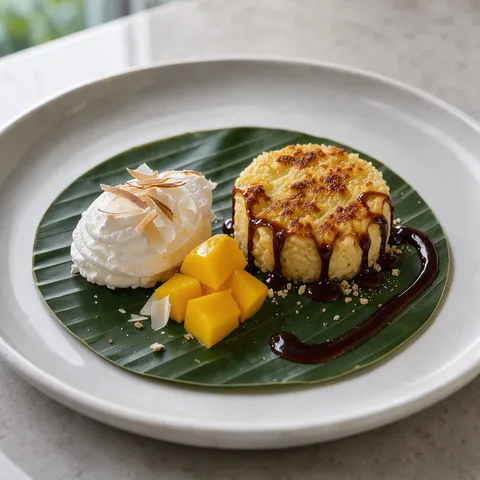 Bibingka 2.01 hr 10 min · Dessert
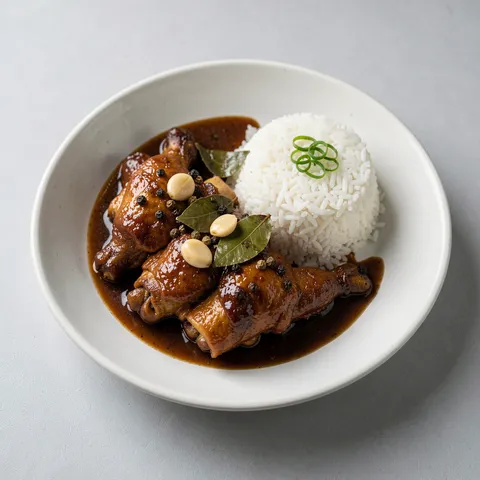 Filipino Chicken in Vinegar and Soy Sauce55 min · Main course
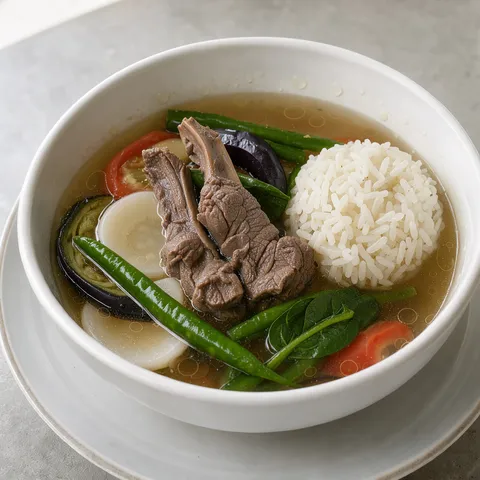 Sour Tamarind Beef Soup1 hr 20 min · Soup
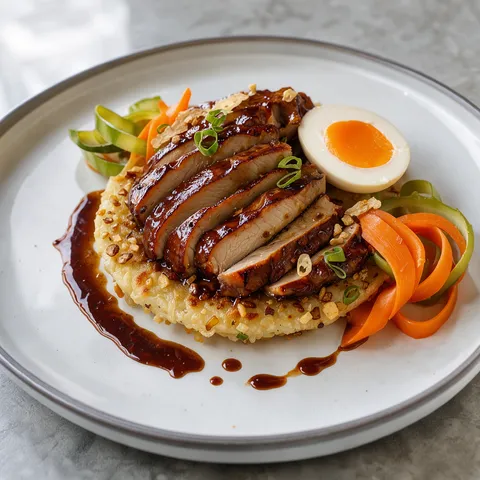 Chicken Adobo 2.01 hr 20 min · Main course
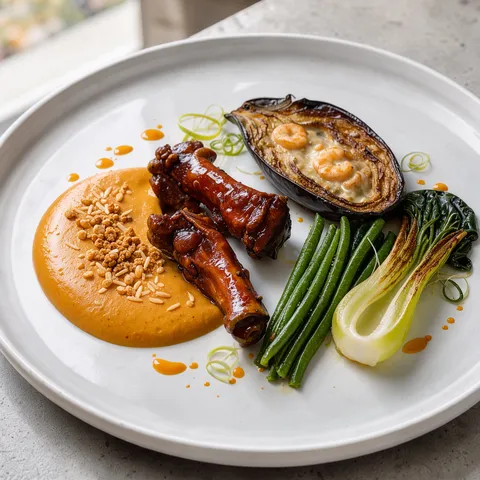 Kare-Kare 2.01 hr 30 min · Main course
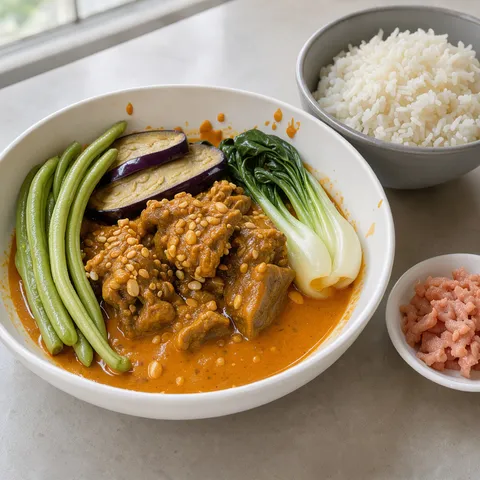 Filipino Oxtail Stew in Peanut Sauce3 hr 15 min · Main course
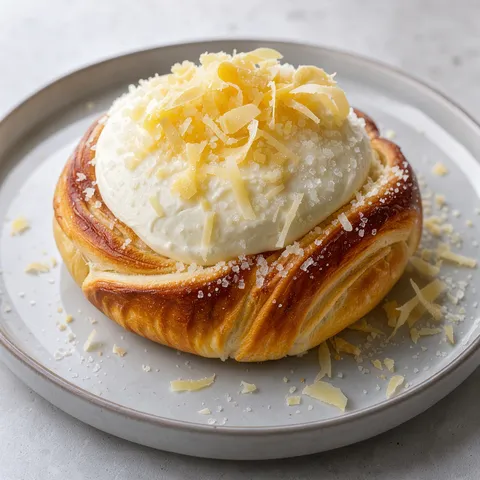 Filipino Butter and Cheese Buns4 hr 10 min · Bread & pastry