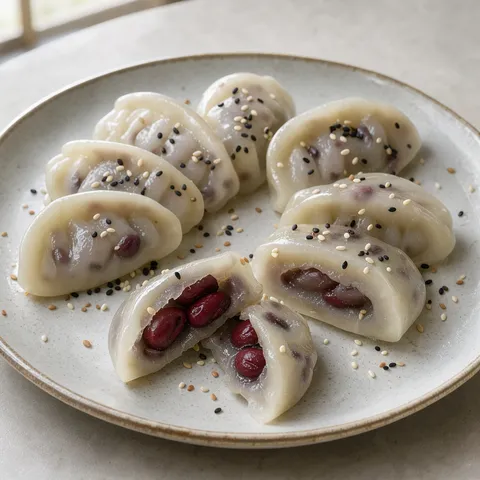
Borlotti-Filled Potato Starch Cakes Gamja-tteok
A North Korean dessert. Takes 1 hr 40 min · +8 hr soaking, Serves 4. Difficulty: medium.
At a glance
- Total time
- 1 hr 40 min · +8 hr soaking
- Serves
- Serves 4
- Difficulty
- Medium
- Cuisine
- North Korean cuisine
- Dish type
- Dessert
- Diet
- Gluten-free
- Allergens
- Fish, Sesame
Ingredients
Filling
- 120 g dried borlotti beans
- 1 litre water
- 50 g caster sugar
- a pinch of salt
Dough
- 300 g potato starch
- 1/2 tsp salt
- 1 tbsp caster sugar
- about 200 ml boiling water
To finish
- 1 tbsp sesame oil
- 1 tsp toasted sesame seeds
Equipment
- Mixing bowls
- Saucepan
- Wooden spoon / spatula
- Steamer basket
- Baking paper
- Pastry brush
- Pressure cooker (optional)
Method
- Soak the beans: Soak the beans in plenty of water in a bowl for at least 8 hr. Soaked beans cook evenly and their skins do not split
- Boil the beans: Drain the beans, bring to the boil in a pan with the 1 litre water and simmer partly covered for 40 min, until the beans crush easily between your fingers. In a pressure cooker this drops to 12 min, then let the pressure release naturally. Drain and, while still hot, mix with the sugar and salt without crushing the beans. Leave the beans whole, as they give a sweet bite
- Make the dough: In a bowl, mix the potato starch, salt and sugar. Pour in the boiling water a little at a time and knead for 5 min, first with a wooden spoon, then by hand once cool enough. The dough should be soft like play dough, smooth and come away from your hands easily. Boiling water partly gelatinises the starch and holds the dough together, while with cold water the dough crumbles
- Portion the dough: Divide the dough into 16 equal pieces (about 30 g) and keep them under a damp cloth so they do not dry out. Divide the filling into 16 as well
- Shape the cakes: Roll each piece into a ball and press it in your palm into a 7 cm disc. Place the filling in the centre, fold in half and press the edges to seal. If you like, lightly mark the surface with a fingertip. The filling stays in the centre
- Prepare the steamer: Bring the water to the boil in the bottom of the steamer, line the basket with baking paper and pierce the paper in several places. The holes let the steam through and the cakes do not stick to the paper
- Steam the cakes: Arrange the cakes 2 cm apart and steam covered over medium-high heat for 12-15 min. They are cooked when the white, opaque dough turns completely translucent and glossy. If opaque spots remain, steam for another 2-3 min. Work in two batches
- Oil and serve: While the cakes are hot, brush them with the sesame oil using a pastry brush, which stops them sticking and gives a shine. Sprinkle with the sesame seeds and serve warm. They firm up as they cool and can be re-steamed for 3 min
Chef's note
Gamja-tteok is counted among the potato cakes made in the mountainous regions of the northern Korean peninsula, especially potato-growing Ryanggang and Chagang. In the north it is said to be made with starch from frozen and thawed potatoes. Here potato starch, which is easy to find at home, is used. Gamja-jeon (Korean Grated Potato Pancakes) is made by frying grated potato in a pan, while this is a filled, steamed starch cake. Makes 16.
Frequently asked questions
- Why is boiling water used in the dough?
- Boiling water partly gelatinises the starch and holds the dough together. With cold water, the dough crumbles.
- What if gamja-tteok hardens as it cools?
- It firms up as it cools, so it can be reheated by steaming for 3 minutes.
- Why are the cakes brushed with sesame oil?
- Sesame oil brushed on while they are hot stops them sticking together and adds shine.
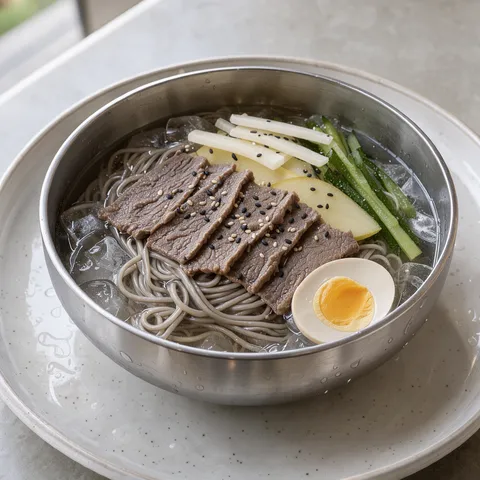 Cold Buckwheat Noodle Soup2 hr 30 min · Main course
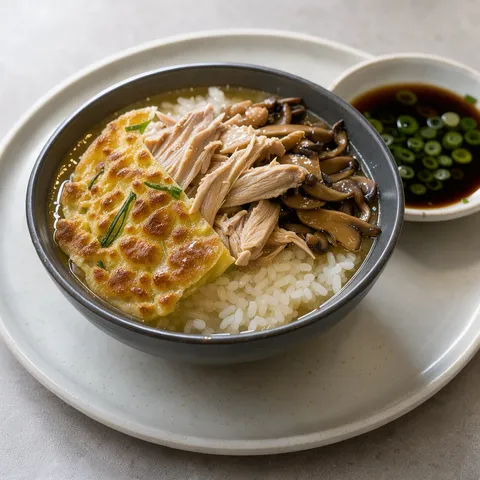 Hot Chicken Rice Soup1 hr 25 min · Main course
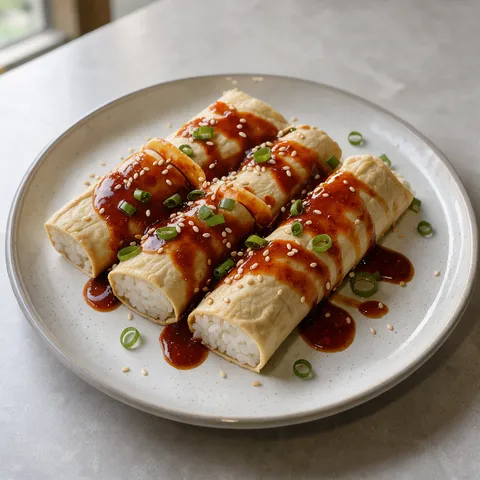 Rice Rolls in Soy Sheets50 min · Main course
 Clear Mullet Soup with Ginger1 hr 5 min · Soup
 Square Courgette and Tofu Dumplings1 hr 35 min · Bread & pastry
 Layered Fried Honey Cookies1 hr 30 min · Dessert