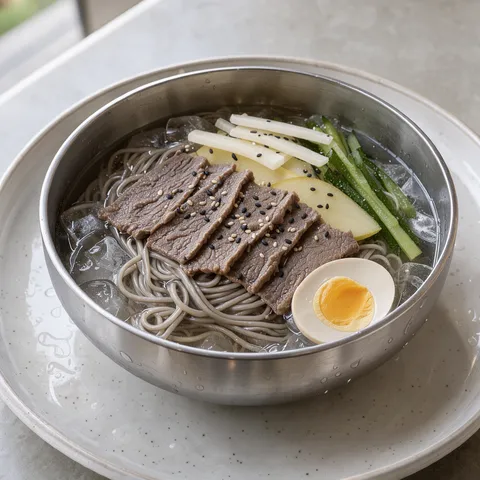
Cold Buckwheat Noodle Soup Pyongyang Naengmyeon
A North Korean main course. Takes 2 hr 30 min · +2 hr chilling (pressure cooker: 1 hr 40 min), Serves 4. Difficulty: challenging.
At a glance
- Total time
- 2 hr 30 min · +2 hr chilling (pressure cooker: 1 hr 40 min)
- Serves
- Serves 4
- Difficulty
- Challenging
- Cuisine
- North Korean cuisine
- Dish type
- Main course
- Allergens
- Gluten, Eggs, Sesame, Soya, Celery, Mustard, Sulphites
Ingredients
Beef stock
- 600 g beef brisket or shin (one piece, lean)
- 2.5 litres water
- 1 onion (halved)
- 1/2 leek (large pieces)
- 5 garlic cloves
- 3 cm ginger (sliced)
- 1/2 tsp whole black peppercorns
- 1 tsp salt
Quick radish pickle
- 300 g white radish (thin half-moons)
- 1 tsp salt
- 2 tbsp caster sugar
- 4 tbsp rice vinegar
- 300 ml water
- 1 garlic clove (sliced)
- 1 cm ginger (sliced)
Soup seasoning
- 1 tbsp light soy sauce
- 1 tsp caster sugar
- 2 tbsp rice vinegar
- 1/2 tsp salt
Noodles
- 400 g dried buckwheat naengmyeon noodles (or soba with a high buckwheat content if unavailable)
- 4 litres water
Toppings
- 2 eggs
- 1 litre water (for boiling the eggs)
- 1 small Asian pear or firm pear
- 1 cucumber
- 1/2 tsp salt (for the cucumber)
- 1 tsp toasted white sesame seeds
At the table
- 2 tsp mustard powder (made into a paste with 2 tsp warm water)
- 4 tsp rice vinegar
Equipment
- Mixing bowls
- Saucepan
- Ladle
- Fine sieve / chinois
- Cling film
- Colander
- Chef's knife
- Kitchen scissors
- Pressure cooker (optional)
Method
- Soak the meat: Leave the meat in cold water for 20 min, changing the water once. This draws out the blood and keeps the stock clear. Clarity is the most important quality of this cold soup
- Cook the stock: Put the meat in a 26 cm saucepan and bring to the boil with the 2.5 litres cold water. For the first 10 min, skim off the scum that rises to the surface carefully with a ladle. Add the onion, leek, garlic, ginger, peppercorns and the 1 tsp salt. Cook over the lowest heat, so the water only trembles, with the lid ajar for 1 hr 30 min. In a pressure cooker this stage takes 40 min, and the steam should release naturally
- Make the radish pickle: While the meat cooks, mix the radish slices with the 1 tsp salt in a bowl, leave for 15 min and pour off the liquid that comes out. Stir the water, sugar, vinegar, garlic and ginger until the sugar dissolves and pour over the radish. Leave in the fridge for at least 1 hr. The pickling liquid adds a sweet-sour, refreshing depth to the soup, and in Korea it is traditionally made with the brine of winter radish kimchi
- Separate the meat and stock: Take out the meat, leave it to cool on a plate, then wrap in cling film and put in the fridge. Strain the stock through a fine sieve into a bowl and discard the aromatics. About 1.5 litres should remain, and if less, add cold water
- Season and chill the stock: Add the soy sauce, sugar, vinegar and 1/2 tsp salt to the strained hot stock. Put the bowl inside a larger bowl full of ice and cool for 15 min, stirring, then chill in the fridge for at least 2 hr, until ice cold. Spoon off the layer of fat that sets on the surface. A soup to be served cold should taste saltier and more sour than when hot, because cold dulls flavours
- Prepare the toppings: Bring the 1 litre water to the boil in a small saucepan, boil the eggs for 10 min, transfer to iced water, peel and halve. Cut the cucumber into 6 cm matchsticks, leave with the 1/2 tsp salt for 10 min and squeeze out the liquid. Peel and core the pear and cut into thin half slices. Slice the cooled meat against the grain 3 mm thin
- Assemble the soup: Add 300 ml of the radish pickle liquid to the cold stock and check the taste. It should be balanced between sour, sweet and salty, ice cold and clear. Set the radish slices aside for the toppings
- Cook the noodles: Bring the 4 litres water to the boil, add the noodles and cook according to the packet time, usually 3-4 min. Transfer to a colander and rub with your hands under cold running water to wash off the starch completely. Then leave in iced water for 1 min and drain thoroughly. Rubbing keeps the noodles from turning slippery and sticky, and iced water gives the typical chewy firmness. Wind the noodles into 4 equal nests
- Serve: Put a noodle nest in the centre of each chilled bowl. Arrange the meat slices, radish, cucumber and pear slices and half an egg on top and sprinkle with sesame. Pour the ice-cold soup in from the edge of the bowl without breaking the nest. At the table, cut the long noodles twice with scissors, and each person adds mustard and vinegar to taste
Chef's note
Naengmyeon is a cold noodle dish identified with the north of the Korean peninsula. The version made with the clear, lightly sweet stock named after Pyongyang and buckwheat noodles is loved throughout the peninsula and eaten in winter as well as in summer. Dried naengmyeon noodles are sold in Asian grocers, and if you cannot find them, use high-buckwheat soba. Mustard powder turns pungent once made into a paste with warm water and left for 5 min. If you cannot find an Asian pear, choose a firm, juicy pear.
Frequently asked questions
- Why should naengmyeon broth taste saltier and sourer than it does when hot?
- Broth that will be served cold should taste saltier and sourer than when hot, because cold dulls flavours. So the soy sauce, sugar, vinegar and salt are added while the broth is still hot.
- Why are the noodles rubbed while rinsing under cold water?
- Rubbing stops the noodles being slippery and sticky, and the iced water gives them their typical chewy firmness.
- How do you get a clear naengmyeon broth?
- First soak the meat in cold water for 20 minutes, then skim the scum carefully for the first 10 minutes. Cook it in barely trembling water over the lowest heat.
 Hot Chicken Rice Soup1 hr 25 min · Main course
 Rice Rolls in Soy Sheets50 min · Main course
 Clear Mullet Soup with Ginger1 hr 5 min · Soup
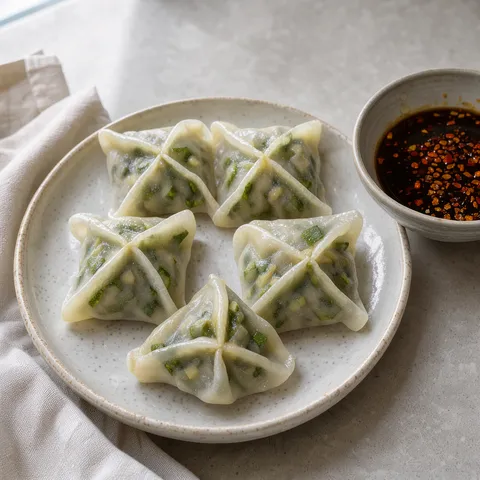 Square Courgette and Tofu Dumplings1 hr 35 min · Bread & pastry
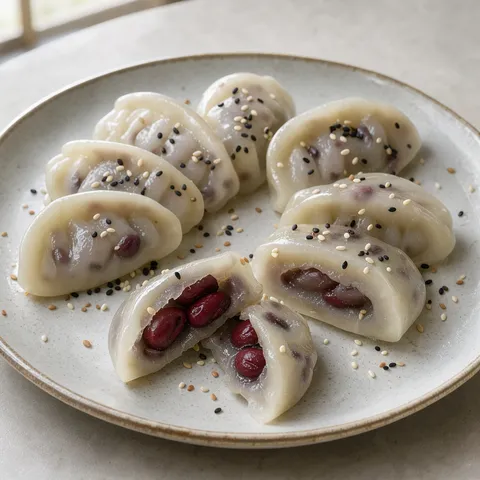 Borlotti-Filled Potato Starch Cakes1 hr 40 min · Dessert
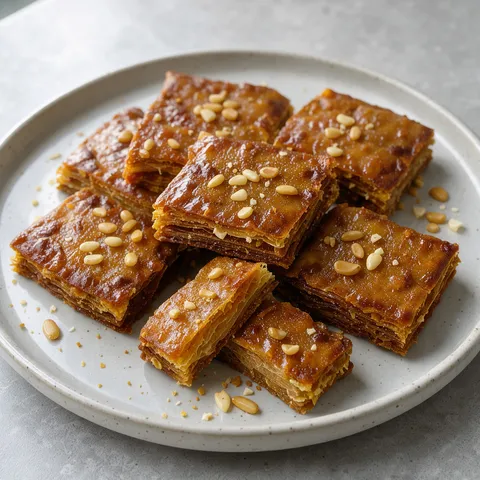 Layered Fried Honey Cookies1 hr 30 min · Dessert