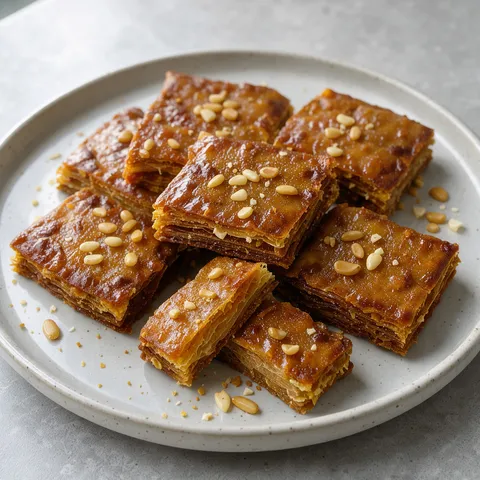
Layered Fried Honey Cookies Kaesong Yakgwa
A North Korean dessert. Takes 1 hr 30 min · +2 hr resting in syrup, Serves 4. Difficulty: medium.
At a glance
- Total time
- 1 hr 30 min · +2 hr resting in syrup
- Serves
- Serves 4
- Difficulty
- Medium
- Cuisine
- North Korean cuisine
- Dish type
- Dessert
- Diet
- Vegetarian
- Allergens
- Gluten, Sesame
Ingredients
Dough
- 300 g plain flour
- 1/4 tsp salt
- 1/4 tsp cinnamon
- a pinch of white pepper
- 50 ml sesame oil
- 70 g honey
- 50 ml soju or vodka (alcohol-free: 50 ml mixture of fresh ginger juice and water)
- 2 tbsp water
Syrup
- 200 g honey
- 100 g caster sugar
- 150 ml water
- 4 slices fresh ginger
- 1/4 tsp cinnamon
Frying
- 1 litre sunflower oil
To finish
- 2 tbsp pine nuts (roughly chopped)
Equipment
- Saucepan
- Mixing bowls
- Fine sieve / chinois
- Rolling pin / oklava
- Chopping board
- Chef's knife
- Heavy-based saucepan
- Probe thermometer
- Ladle
- Dough scraper (optional)
Method
- Make the syrup: In a pan, bring the honey, sugar, water, ginger and cinnamon to the boil over medium heat, stirring, simmer gently for 5 min and take off the heat. Remove the ginger and leave the syrup to cool slightly. The fried cookies should go into warm syrup, as boiling syrup softens the surface and breaks it up
- Rub the oil into the flour: In a bowl, mix the flour, salt, cinnamon and white pepper. Add the sesame oil and rub it into the flour between your palms for 3 min. Then sift the mixture through a fine sieve once. The oil coats the flour and limits gluten formation, which gives yakgwa its crisp, flaky texture
- Bring the dough together: Mix the honey, soju and water, pour onto the flour and bring together without kneading, pressing with a dough scraper or your hands. If you knead it, the dough turns tough and no layers form
- Make the layers: Roll the dough out with a rolling pin into a rectangle 1 cm thick, fold in half and roll out again. Repeat this folding 3 times. The layers visible at the edge of Kaesong-style mo-yakgwa (square yakgwa) come from these folds
- Cut into squares: Roll the dough out a final time to 1 cm thick and cut with a chef's knife on a chopping board into 4×4 cm squares, making about 20. Pierce 2-3 holes in the centre of each square with a fork so the middle does not puff up and stay raw as it fries
- Fry at a low heat: In a heavy-based 22 cm pan, heat the 1 litre oil (about 2.6 cm deep) to 110-120°C, checking with a thermometer. Add the squares in batches of 6-7 and fry for 10-12 min, until the layers open, the squares float to the surface and start to turn light golden at the edges. The low heat cooks the dough through to the centre and lets the layers separate
- Colour at a high heat: Lift the squares out with a slotted spoon onto a separate plate. Once all the batches are done, raise the oil to 150°C and fry all the squares again for 3-4 min, until deep amber. Lift out with a slotted spoon and drain for 1 min
- Soak in the syrup and serve: Submerge the hot squares in the warm syrup and leave for at least 2 hr, turning from time to time. The syrup seeps between the layers. Drain in a sieve for 10 min, sprinkle with the chopped pine nuts and serve
Chef's note
Yakgwa is a traditional Korean cookie made with honey and sesame oil. Kaesong's yakgwa is recognised by its square shape and flaky, layered texture, and is treated as a style of its own, Kaesong yakgwa. Traditionally it is left in the syrup overnight, while here at least 2 hr is considered enough. In an airtight container it keeps for 1 week at room temperature. Makes about 20.
Frequently asked questions
- Why isn't yakgwa dough kneaded?
- If kneaded, the dough turns tough and doesn't form layers. Just press it together to bring it into one piece.
- Why is yakgwa fried in two stages?
- Frying first at 110-120°C lets the dough cook through and the layers separate. Then it is browned at 150°C.
- Why are the fried yakgwa soaked in syrup?
- Leaving them at least 2 hours in warm syrup lets the syrup work between the layers. Let the syrup cool a little first, as boiling syrup would soften and break up the surface.
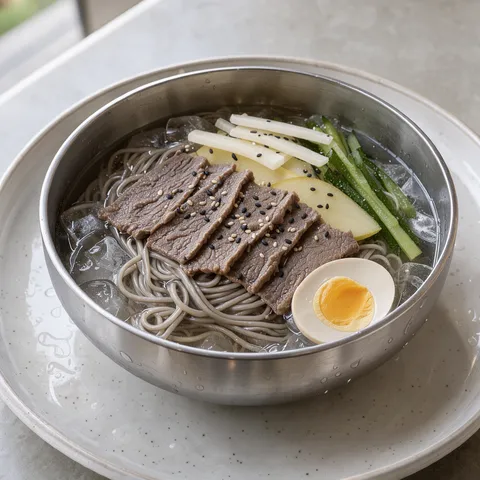 Cold Buckwheat Noodle Soup2 hr 30 min · Main course
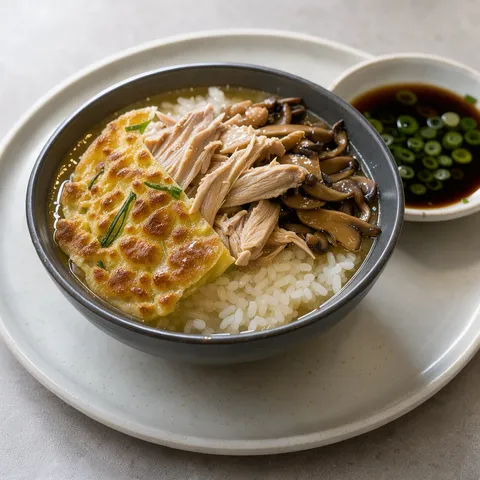 Hot Chicken Rice Soup1 hr 25 min · Main course
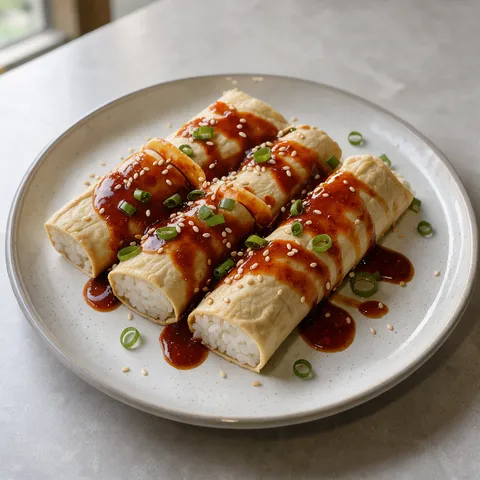 Rice Rolls in Soy Sheets50 min · Main course
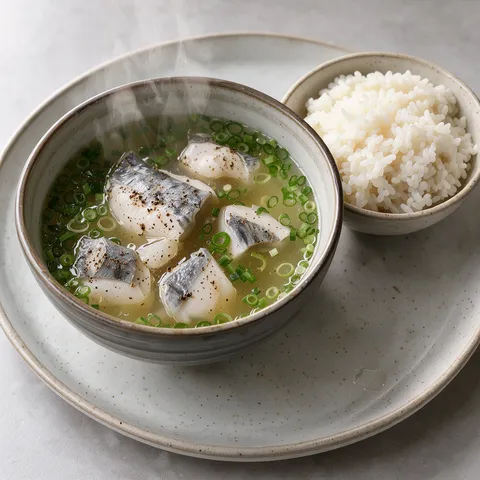 Clear Mullet Soup with Ginger1 hr 5 min · Soup
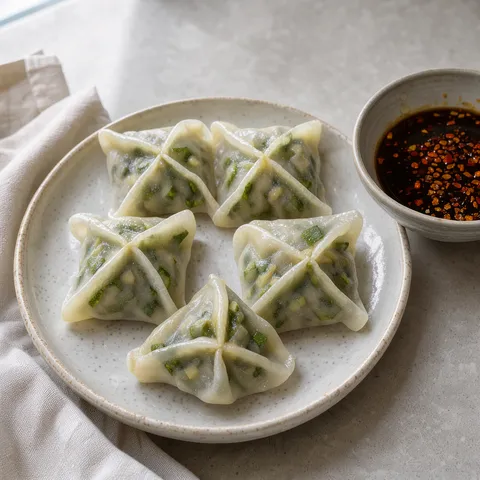 Square Courgette and Tofu Dumplings1 hr 35 min · Bread & pastry
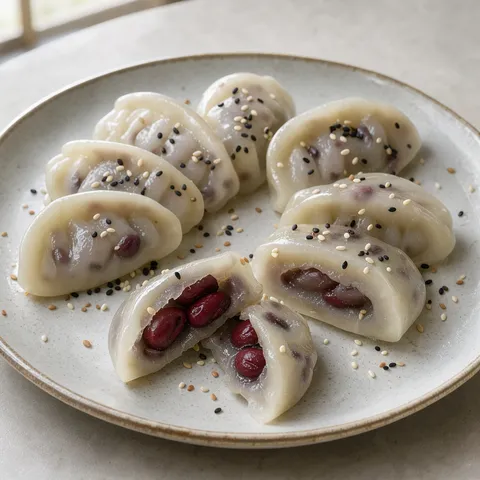 Borlotti-Filled Potato Starch Cakes1 hr 40 min · Dessert