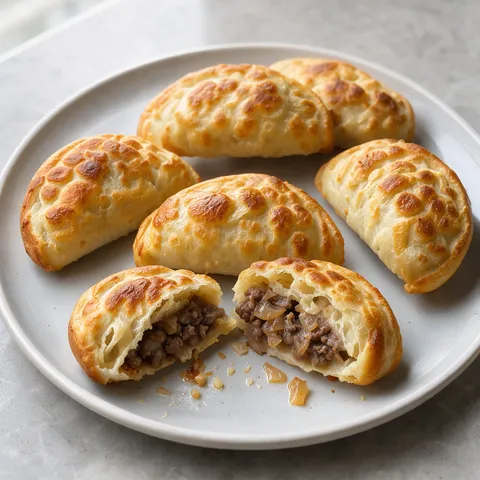
Uzbek Fried Yeasted Pastries with Mince and Onion Gumma
An Uzbek bread & pastry. Takes 1 hr 5 min · +1 hr 5 min rising, Makes 16. Difficulty: medium.
At a glance
- Total time
- 1 hr 5 min · +1 hr 5 min rising
- Serves
- Makes 16
- Difficulty
- Medium
- Cuisine
- Uzbek cuisine
- Dish type
- Bread & pastry
- Allergens
- Gluten
Ingredients
Dough
- 400 g plain flour
- 7 g fast-action dried yeast (1 sachet)
- 1 tsp caster sugar
- 1 tsp salt
- 240 ml lukewarm water (about 35°C)
- 2 tbsp sunflower oil (20 ml)
- 2 tbsp plain flour (for rolling)
Filling
- 1 tbsp sunflower oil
- 2 medium onions (small dice, about 300 g)
- 350 g medium-fat beef mince
- 1 tsp cumin
- 1 tsp salt
- 1/2 tsp black pepper
- 50 ml water
For frying
- 1.8 litres sunflower oil (about 4 cm deep in a 26 cm pan). Makes 16
Equipment
- Mixing bowls
- Cling film
- Frying pan
- Precision scales
- Baking tray
- Rolling pin / oklava
- Heavy-based saucepan
- Probe thermometer
- Colander
Method
- Knead and prove the dough: Dissolve the yeast and sugar in the lukewarm water and leave for 5 min. Put the flour and salt in a bowl, add the yeast mixture and sunflower oil and knead on the worktop for 8 min, until soft and smooth. Cover the bowl with cling film and leave in a warm place for 50 min, until doubled in size
- Cook the filling: While the dough proves, heat the sunflower oil in a 26 cm frying pan over medium heat and fry the onions for 8 min, until soft and translucent. Add the mince and cook for 6 min, breaking it up, until it changes colour. Add the cumin, salt, black pepper and water and cook for 2 min, until the filling is moist but not wet. Spread on a tray and leave to cool completely for at least 20 min. Hot filling melts the dough and tears it as you seal it
- Divide and rest: Use scales to divide the risen dough into 16 equal pieces (about 42 g each), roll into balls and rest on a floured tray, covered, for 10 min
- Roll out and fill: Roll a ball out on a floured worktop with a rolling pin into a round 12 cm across and about 3 mm thick. Put a sixteenth of the filling (1 heaped tbsp, about 34 g) in the centre. Fold the round in half into a half-moon and seal by pressing the edges firmly with your fingers. Flatten the sealed pastry slightly in your palm. Any air left inside makes it puff up and burst during frying
- Second prove: Arrange the shaped gumma on a floured tray, cover and leave to puff up for 15 min
- Heat the oil: Meanwhile, heat the frying oil in a deep, heavy-based pan 26 cm across over medium heat to 170°C on a thermometer (about 12 min). If the oil is too hot, the outside darkens while the inside of the dough stays raw
- Fry: Fry the gumma in four batches of four, 2 min on each side, until deep golden and puffed. Four gumma fit in a 26 cm pan without touching. Turn once with tongs, lift out with a slotted spoon or spider and transfer to a tray lined with kitchen paper. Let the oil return to 170°C between batches
- Serve: Rest for 5 min and serve hot: the filling is very hot. In Uzbekistan gumma is usually eaten with hot tea
Chef's note
Gumma is a yeasted pastry fried and sold at street stalls and markets in Uzbekistan, filled with mince, liver or potato. For the liver version, replace half the mince with finely diced beef or lamb liver. For a softer dough, replace half the water with lukewarm milk. The frying oil can be strained and reused once, stored in a sealed container.
Frequently asked questions
- Why do the Gumma burst when frying?
- If air is trapped inside, the pastry puffs up and bursts in the oil. Press the air out with your hand as you seal, and pinch the edges firmly with your fingers.
- Why must the filling be completely cool?
- Hot filling melts the dough and makes it tear as you seal. Spread the cooked filling on a tray and cool it for at least 20 minutes.
- Why does the oil temperature matter?
- If the oil is too hot, the outside darkens and the dough inside stays raw. The recipe says to bring the oil to 170°C with a thermometer and let it return to that temperature between batches.
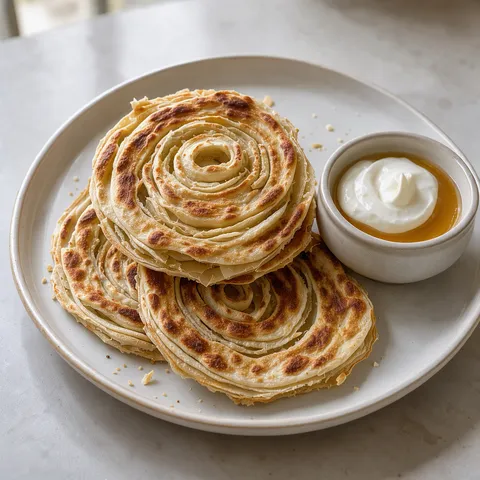 Uzbek Layered Butter Flatbread51 min · Breakfast
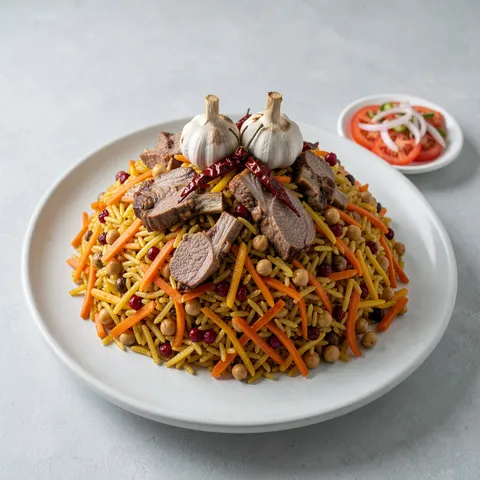 Uzbek Plov2 hr 30 min · Main course
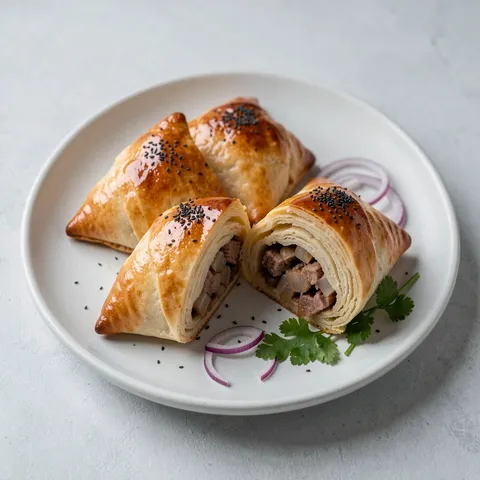 Uzbek Pastries with Lamb and Tail Fat2 hr 45 min · Bread & pastry
 Hand-Pulled Noodles2 hr 15 min · Main course
 Uzbek Plov 2.01 hr 30 min · Main course
 Uzbek Layered Lamb and Vegetable Stew2 hr 10 min · Main course