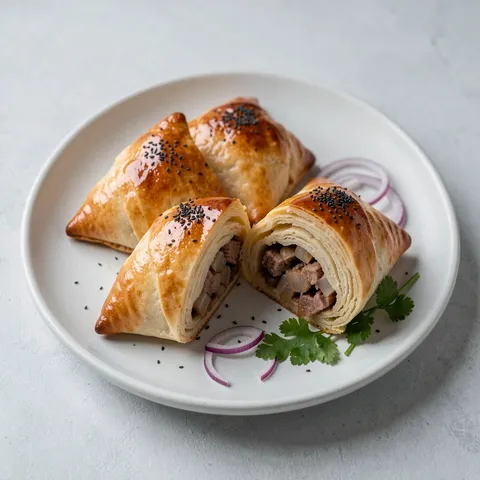
Uzbek Pastries with Lamb and Tail Fat Samsa
An Uzbek bread & pastry. Takes 2 hr 45 min, 8 servings (16 pieces). Difficulty: challenging.
At a glance
- Total time
- 2 hr 45 min
- Serves
- 8 servings (16 pieces)
- Difficulty
- Challenging
- Cuisine
- Uzbek cuisine
- Dish type
- Bread & pastry
- Allergens
- Gluten, Milk, Eggs, Sesame, Celery
Ingredients
Dough
- 500 g plain flour
- 250 ml cold water
- 1 tsp salt
Laminating fat
- 120 g butter or clarified butter (ghee) (at room temperature, soft)
Filling
- 600 g boneless lamb (shoulder or leg, diced into 5 mm cubes with a knife)
- 150 g lamb tail fat (finely chopped with a knife)
- 400 g onions (finely diced)
- 1.5 tsp salt
- 1 tsp black pepper
- 1.5 tsp whole cumin (zira)
- 60 ml iced water
Topping
- 1 egg yolk
- 1 tbsp milk
- 1 tbsp nigella seeds or sesame seeds
Equipment
- Mixing bowls
- Rolling pin / oklava
- Cling film
- Chef's knife
- Pastry brush
- Baking tray
- Baking paper
- Oven
- Probe thermometer (optional)
Method
- Knead the dough: Mix the flour and salt, add the cold water and knead for 10 min to a firm dough. Leave to rest, covered, for 30 min
- Laminate: Divide the dough in two. Roll out each piece on a floured work surface with a rolling pin to about 70×50 cm, as thin as possible (1-1.5 mm). Spread half the soft butter over each in a thin, even layer. Roll each one up tightly, starting from a long side. Wrap the rolls in cling film and chill in the fridge for 30 min. In the oven these layers separate in the steam from the fat, giving samsa its flaky texture
- Make the filling: Cut the lamb and tail fat into small cubes with a knife. Meat put through a mincer clumps as it cooks, while hand-cut meat stays juicy and separate. Add the onion, salt, pepper and cumin and knead by hand for 2 min, then add the iced water and mix. The onion and iced water give the filling steam and juiciness
- Cut: Cut each cold roll into 8 equal pieces (about 8-9 cm), 16 pieces in total. Stand each piece cut side (spiral) up on the work surface and press down with your palm. Keeping the spiral on top means the layers show on the surface of the pastry once baked
- Roll out: Roll each piece out with a rolling pin into a round 14 cm across, leaving the centre slightly thicker than the edges. The thick centre carries the heavy filling so the underside does not tear
- Fill and shape: Put about 70 g filling in the centre. Fold the pastry in from three sides towards the centre and press the adjoining edges together to form a neat triangle. Seal the joins firmly with your finger. Turn the samsa over, seam side down, and arrange on a tray lined with baking paper
- Preheat the oven: Set it to 230°C and heat for at least 30 min with a pizza stone or an upturned heavy baking tray inside. This is how the high wall heat of a tandoor is mimicked at home
- Glaze: Brush the tops of the samsa with the egg yolk and milk mixture and sprinkle nigella or sesame seeds in the centre
- Bake: Slide the samsa on their paper onto the hot stone. Bake at 230°C for 15 min, then lower to 200°C and bake for another 15-20 min. The top should be deep golden and the base brown and crisp. The meat inside should reach at least 71°C: if a little fat and meat juice seeps out from underneath, the filling is cooked
- Rest: Rest the samsa on a wire rack for 5 min. During this time the juices inside settle and do not spurt out at the first bite
- Plate: Arrange the samsa in rows on a large wooden board or white plate as triangles, tips up. Cut one in half and put it at the front so the flaky pastry and juicy lamb filling show. Serve with thin red onion rings, coriander leaves and hot green tea
Chef's note
In Uzbek markets samsa is sold straight out of the tandoor, where it is baked stuck to the wall. The shape varies from city to city, with the triangle the most common. Tail fat is the source of the juiciness of samsa: you can reduce it, but if you leave it out entirely the filling turns out dry. A pumpkin version (kovok samsa) is also common. Makes 16, serves 8.
Frequently asked questions
- Why is the filling for Samsa chopped by knife?
- Meat put through a mincer clumps together as it cooks. Hand-chopped meat stays juicy and loose.
- How does Samsa get its flaky layers?
- Soft butter is spread over the rolled-out dough, which is then rolled up and chilled. In the oven the steam from the fat separates these layers and gives a flaky texture.
- What temperature do you bake Samsa at?
- Bake at 230°C for 15 minutes, then at 200°C for 15-20 minutes. The oven is preheated with a pizza stone, and the meat inside should reach at least 71°C.
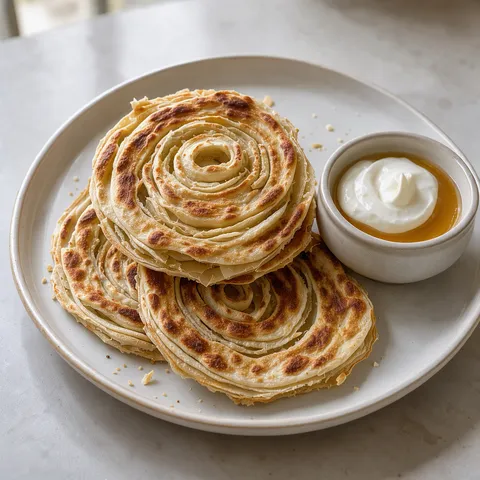 Uzbek Layered Butter Flatbread51 min · Breakfast
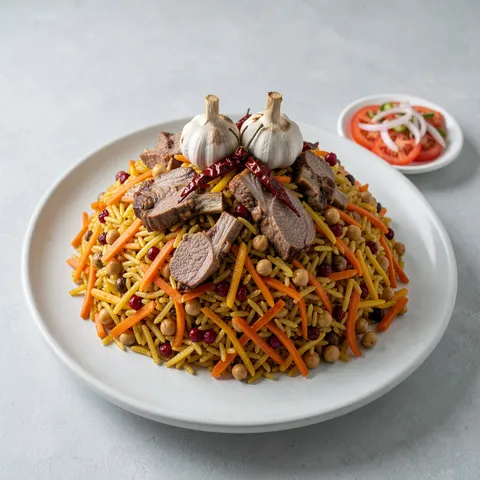 Uzbek Plov2 hr 30 min · Main course
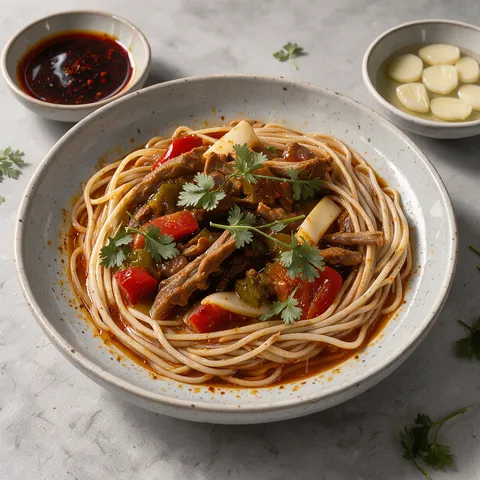 Hand-Pulled Noodles2 hr 15 min · Main course
 Uzbek Plov 2.01 hr 30 min · Main course
 Uzbek Layered Lamb and Vegetable Stew2 hr 10 min · Main course
 Uzbek Stamped Tandoor Bread2 hr 30 min · Bread & pastry