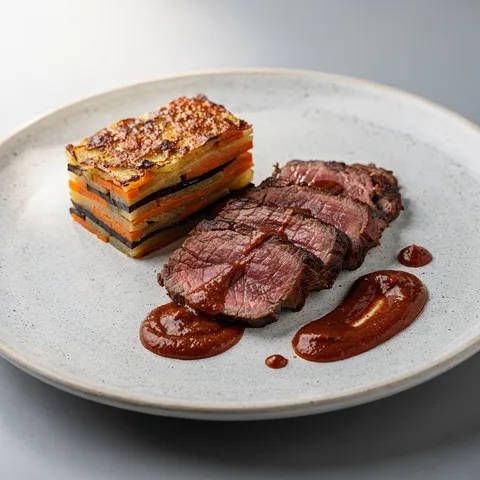
Dimlama 2.0
An Uzbek main course. Takes 1 hr 30 min, Serves 4. Difficulty: challenging.
At a glance
- Total time
- 1 hr 30 min
- Serves
- Serves 4
- Difficulty
- Challenging
- Cuisine
- Uzbek cuisine
- Dish type
- Main course
- Diet
- Gluten-free
- Allergens
- Milk, Celery
Ingredients
Vegetable pressé
- 1 large potato (about 250 g)
- 2 medium carrots (about 250 g)
- 1 small aubergine (about 150 g)
- 60 g melted butter
- 1 tsp cumin (crushed in your palm)
- 1 tsp salt
- 1/2 tsp black pepper
Lamb
- 600 g lamb loin fillet (4 pieces)
- 1 tsp cumin seeds
- 1 tsp coriander seeds
- 1/2 tsp black peppercorns
- 6 g salt
- 1 tbsp sunflower oil
- 15 g butter
Dimlama sauce
- 3 ripe tomatoes (halved)
- 1 red pepper
- 1 onion (quartered)
- 1 head of garlic (halved horizontally)
- 1 tbsp sunflower oil
- 150 ml Lamb Jus (Basics)
- 15 g cold butter
- salt
Herb oil
- 20 g coriander
- 15 g dill
- 10 g purple basil
- 120 ml sunflower oil
Cabbage
- 4 inner cabbage leaves
- 1 tsp sunflower oil
- flaky salt
To finish
- purple basil shoots
- a small pinch of cumin seeds
Equipment
- Oven
- Baking tray
- Mandoline
- Mixing bowls
- Baking paper
- Cake tin
- Saucepan
- Blender
- Muslin
- Frying pan
- Pestle and mortar
- Fine sieve / chinois
- Cast-iron frying pan
- Probe thermometer
- Chef's knife
- Chopping board
Method
- Preheat the oven and char the vegetables: Preheat the oven to 210°C. For the sauce, rub the tomatoes, pepper, onion and garlic head with the oil, arrange them on a baking tray and roast for 25 min, until charred at the edges and completely soft. Charring concentrates the sweetness of the vegetables
- Slice the pressé vegetables: While they roast, peel the potato, carrots and aubergine and slice them lengthways 2 mm thick on a mandoline. Use the mandoline with its hand guard. Thin slices cook evenly and stick together layer by layer. Toss the slices in a bowl with the melted butter, cumin, salt and black pepper. Takes 10 min
- Build the pressé: Line a 20×10 cm loaf tin with baking paper and arrange the slices in layers, repeating potato, carrot, aubergine and pressing each layer down with your fingers. Cover the top with baking paper. Bake at 210°C, alongside the roasting tray, for 40 min, until a knife passes through the layers without resistance. The layered, steamed vegetables of classic dimlama become a sliceable block here
- Make the herb oil: While the pressé bakes, blanch the coriander, dill and basil in boiling water for 10 sec, transfer to iced water, then squeeze and pat dry. Blend with the oil for 2 min and strain through muslin
- Pound the lamb spices: Toast the cumin, coriander seeds and peppercorns in a dry frying pan for 1 min, until fragrant, then pound coarsely in a pestle and mortar. Pat the lamb fillets dry, season with the salt, coat with the spices and leave at room temperature
- Make the dimlama sauce: Put the charred tomatoes, pepper and onion in a blender, squeeze in the garlic cloves from their skins and blend with the lamb jus for 1 min, until smooth. Strain through a fine sieve into a saucepan and reduce over medium heat for 8 min, until it coats the back of a spoon. Take off the heat, whisk in the cold butter and season with salt. This sauce is a concentrated version of the meat and vegetable juices that collect at the bottom of the pot in the classic
- Press the pressé: Take the tin out of the oven. Place a piece of cardboard of the same size, or a second tin, on the paper, put a 1 kg weight on it and press for 15 min. The layers fuse together and become sliceable. Then unmould and use a sharp knife to cut 4 rectangles of 10×5 cm
- Char the cabbage: Heat a cast-iron frying pan over high heat. Rub the cabbage leaves with the oil and press them into the pan for 1-2 min, until charred at the edges and softened. Sprinkle with flaky salt and set aside
- Cook the lamb: Return the same pan to medium-high heat and add the oil. Sear the fillets for 2 min on each side, 8 min in total, then add the butter and spoon the foaming butter over them. When a thermometer reads 56°C inside, transfer to a board and rest for 8 min. Meanwhile, fry the pressé rectangles in the same pan on their wide sides for 2 min each, until a golden crust forms
- Slice: Cut each lamb fillet into 3 slices and sprinkle flaky salt over the cut sides
- Plate: Spoon two spoonfuls of dimlama sauce onto the left half of a warmed flat plate and drag the back of the spoon through it to make a thick stripe. Stand a pressé rectangle upright on the stripe with a cut side, showing the coloured layers, facing out. Arrange the lamb slices beside it, leaning against each other. Lay a charred cabbage leaf next to the lamb in a loose wave. Dot 5-6 green drops of herb oil around the sauce. Finish with a few cumin seeds and purple basil shoots
Chef's note
In classic dimlama the meat and vegetables steam in layers in the same pot and merge into a single flavour. In this version the layers are made visible: the vegetables become a sliceable pressé, the rich liquid at the bottom of the pot a glossy sauce, and the cabbage lid on top a charred leaf. The lamb is cooked pink, while the cumin and coriander seeds of the classic are kept as a crust. The pressé can be made a day ahead and kept pressed in the fridge, then sliced and fried just before serving.
Frequently asked questions
- Why does the pressé in Dimlama 2.0 hold together when cut?
- When the cooked vegetable layers come out of the oven, a weight is put on top and pressed for 15 minutes. In that time the layers fuse together, and the block can be cut into 10x5 cm rectangles with a sharp knife.
- How do you cook lamb loin fillet so it stays pink?
- The fillets are seared in the pan for 8 minutes in total, turning them, and taken out onto a board when the thermometer reads 56°C inside. Resting for 8 minutes keeps the meat pink and juicy.
- Why does it matter to slice the pressé vegetables 2 mm thick?
- Thin slices cook evenly and stick together layer by layer. Use a mandoline with its guard for the slicing.
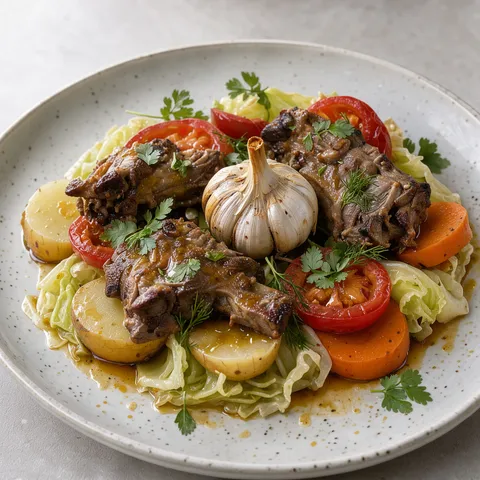 Uzbek Layered Lamb and Vegetable Stew2 hr 10 min · Main course
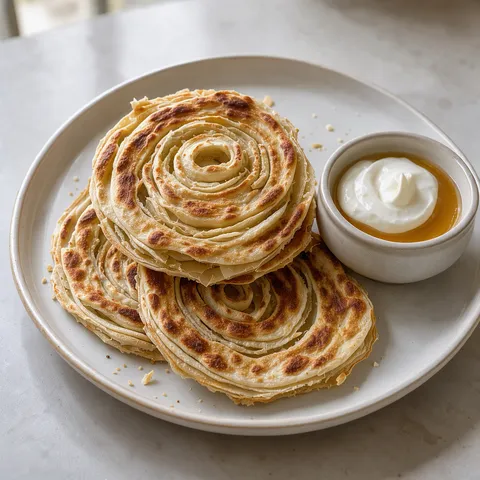 Uzbek Layered Butter Flatbread51 min · Breakfast
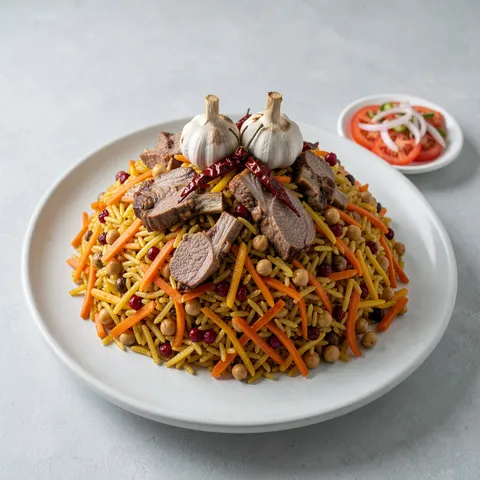 Uzbek Plov2 hr 30 min · Main course
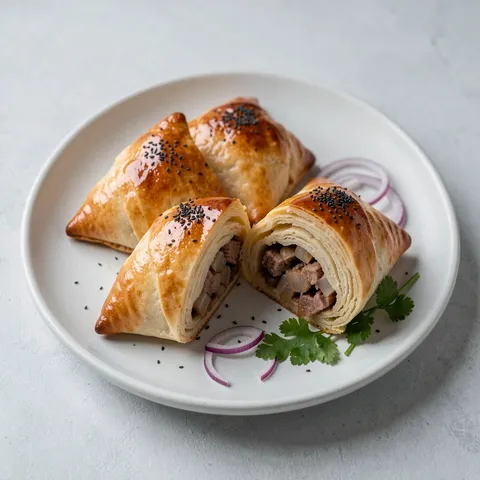 Uzbek Pastries with Lamb and Tail Fat2 hr 45 min · Bread & pastry
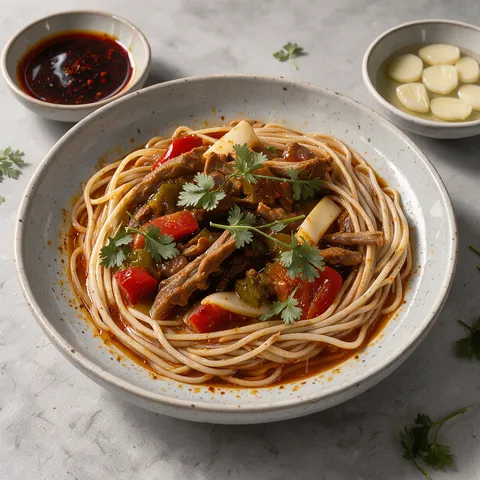 Hand-Pulled Noodles2 hr 15 min · Main course
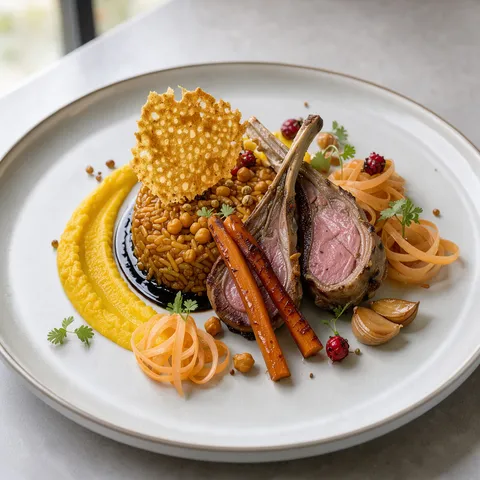 Uzbek Plov 2.01 hr 30 min · Main course
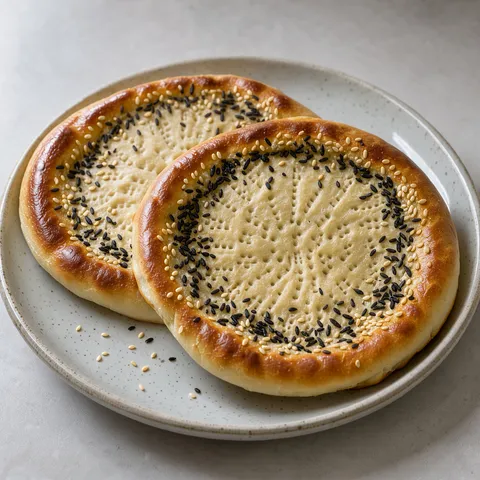 Uzbek Stamped Tandoor Bread2 hr 30 min · Bread & pastry